Sometimes in life the hardest truths are simultaneously the hardest to avoid and the hardest to confront. In Brexit the hardest truth is also the plainest: we must extend the entire process.
Brexit appears to have done the unthinkable in recent weeks, and disappeared from the headlines. Since the European Union summit at the end of March, news has been fleeting, and overshadowed by international events. But while developments have paused, the clock has not. We are now just six months from the October summit, when the entire deal must be signed off—and in many ways no closer to our destination now than the day we started the journey.
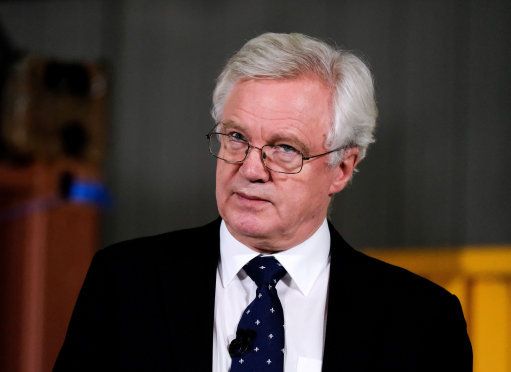
Each day, new minor revelations serve to remind us that the government is locked in a battle with reality itself. Brexit secretary David Davis still affirms that a full trade deal can be more or less fully concluded in six months, despite the average free trade agreement (FTA) requiring many years of intricate negotiation, and offering far less than the services access he is seeking. The UK’s wish to diverge from its new trade partner rather than more closely integrate with it actually complicates, not facilitates, the process. As some of us have noted for almost a year, Davis’s most extraordinary feature is not that he routinely delivers such Panglossian braggadocio, but that he really believes it. Needless to say, the EU does not.
Away from the all-consuming demand of the EU trade deal, hundreds of existing international agreements must still be signed off or re-negotiated with third countries before the transition period begins next March. The EU has requested that the UK be treated as part of the bloc until 2020, but international partners are under no obligation to comply. Some of these deals may be straightforward, and others anything but. Will Korea continue to allow the UK to use EU-made parts to build its cars and still qualify for tariff liberalisation under the rules-of-origin requirements? What if, as some reports suggest, it demands the right to use Chinese parts to reach its own threshold when exporting here?
“While developments have paused, the clock has not”Numerous items pertaining to the withdrawal and transition still require agreement with the EU, including on citizens’ rights, security arrangements and management of EU agencies. But of course the most pressing outstanding issue is the least resolvable: the Irish border. Recent reports indicate that the UK is as far from finding a solution as it was last August, when officials in Brussels and Dublin openly dismissed (and even mocked) its “imaginative” technological proposals.
Some UK officials privately concede that the final answer will look much like the “backstop” option agreed last December, and the back-stop will look much like the EU’s version of it—that is, Northern Ireland (and thus the UK) will effectively remain in the customs union and single market for goods. But as the government cannot admit that, still less openly plan for it, the Wizard of Oz continues its futile pretence behind the curtain while real people’s livelihoods slip ever closer towards the cliff-edge.
Parliament’s Brexit committee is prepared to identify the disaster and name its only possible short-term cure: extension. Ideally, this would be an extension of Article 50, so we can negotiate the terms of withdrawal sensibly and comprehensively while still participating in the EU’s decision-making bodies and committing ourselves to the current and future budget. If this proves impossible, the next-best solution is to extend the transition period. Almost nobody with any understanding of the EU thinks that the entire deal can be completed and implemented by 1st January 2021. Indeed, even if a deal were to be miraculously negotiated in that time, it would require a genuine implementation period, not the government’s sham version, to begin at that point and last a couple of further years.
“The government is staking our economic future at a political roulette table”The trouble with the transition is little discussed now, but guaranteed to become a blockbuster problem as Brexit approaches. Simply: it has no legal provision for extension. As things stand, if we have not signed the final deal by the end of 2020—which we almost certainly won’t—we plunge over the cliff. When confronted with this predicament, senior MPs quietly suggest there may be a political fix. But that is a hope, not a guarantee. It also depends entirely on the mercy of other leaders who, after three years, will have other priorities. This is the opposite of taking back control. It is in fact staking the country’s entire economic future at a political roulette table.
One idea doing the rounds is that a bungled transition period could effectively give birth to an “association agreement,” which will look suspiciously like a transition period continued indefinitely. That is, the single market and customs union, plus numerous agencies and elements of political integration, but without any meaningful oversight or decision-making.
Proponents frequently cite Ukraine as an example—not least because its deep and comprehensive FTA set in motion the strengthened alignment of goods and services (but not free movement of people) that brings it into a European economic space. But the raison d’etre of Ukraine’s association agreement is to integrate, not diverge; and the two sides excluded free movement of people for economic and political reasons which bear no relation to the UK-EU dynamic. More to the point, the entire purpose of Brexit, according to its architects, is to leave the building, not retreat into a waiting room.
And thus “Brexit in name only,” or BINO. Like being forced to sit in a waiting room with only Dennis the Menace for company when you are busy and impatient and hate comics, BINO seems calibrated to be despised. Remainers will decry the lack of UK influence, and Leavers the lack of freedom. Nobody wants a vassal state, and nobody voted for one. And you have to stay in the waiting room forever.
Brexit is hard, but its truth is plain: we are not ready now, and we will not be ready in six months. The government can see that truth as plainly as anyone else. Rather than confront it, however, or share even the slightest hint of it with the public, it continues the march towards the cliff. That is its right. But the British public may want the choice not to follow it over the edge.