The television show The Crown was full of factual inaccuracies: in every episode and every scene mere historical detail yielded to dramatic purpose. The programme was compelling, but it was not a documentary.
But in one respect The Crown conveyed a truth about the British monarchy: its sense of its own precariousness. When Elizabeth II was born in 1926, the king was still emperor and the United Kingdom was technically still (just about) that of Great Britain and Ireland (and not Northern Ireland).
As Elizabeth grew up, she saw the kingdom reconfigured, the empire converted into a commonwealth, and hosts of monarchies around the world come to an end, often violently. At ten she watched her uncle being forced from the throne by a combination of church and state; in her teens she saw the health of her father break under the strain of an unwanted kingship.
It is only British exceptionalism that makes one think that “of course” the British monarchy would survive the postwar period. One suspects she never took it for granted.
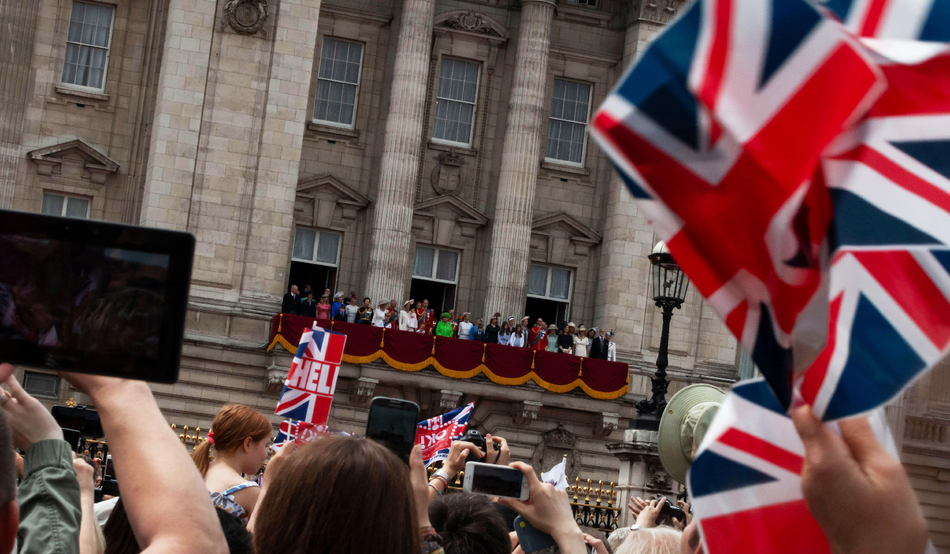
The roles of the Crown and the royal family generally were therefore reworked. The notion of what became known as “the firm” was adopted. Members of the wider family were deployed into roles in national (and Commonwealth) life: charity work here, official ceremonies there. The royals were to become familiar parts of our world. To adapt Parkinson’s law, the royal family expanded to fill the Buckingham Palace balcony available.
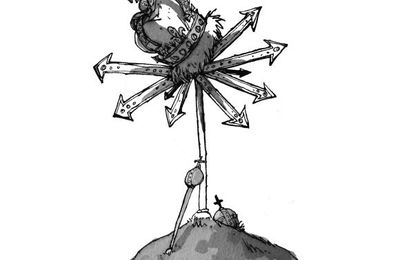
In one way this manoeuvre can be seen to have worked: the Crown is still here while other monarchies are not, and even the Commonwealth has survived at least in name. But it was at a cost, for the wider “firm” approach co-existed with a popular media that had readers and viewers who were avid for news, if not scandal. The broader the base of the monarchy, the broader the scope for trouble.
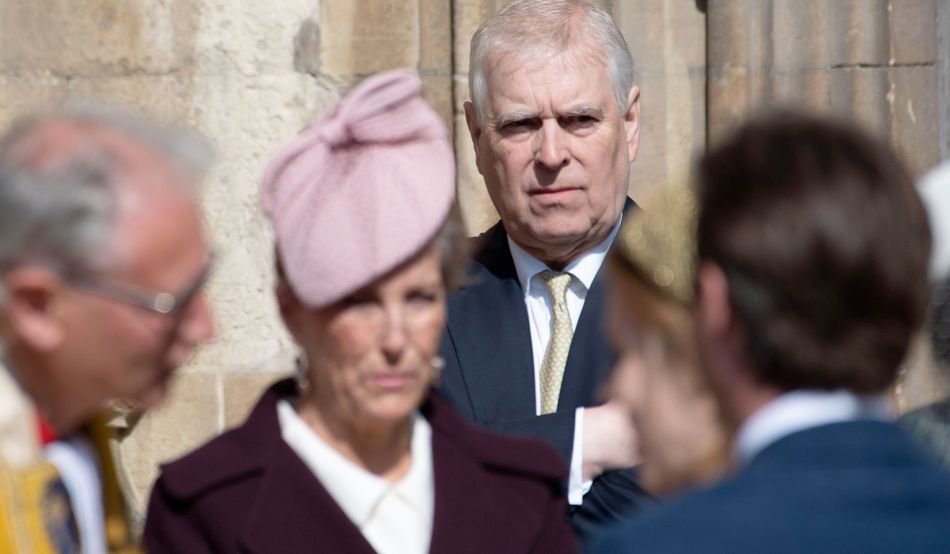
The British monarchy is likely to survive the current events. As in 1936, the institution of the monarchy will discard an individual in its own interests. The manner it does so will be different: Edward VIII was jettisoned with the gift of a dukedom, while Andrew is being cut loose with his dukedom being taken away.
A slimmed-down, more casual monarchy is now taking shape, with the heir to the throne if not on a bicycle, then a regular at a non-glamorous Midlands football club. The extended family shots at Buckingham Palace are unlikely to be repeated soon, if ever. The “firm” phase of the monarchy appears to be over. The hangers-on can go and hang.
But even if the outward manifestations of the monarchy change, the Crown is still a fundamental part of our national life both in theory and practice.
To the extent the constitution of the United Kingdom has any organising principle, it is the Crown. This provides the powers of parliament, the executive, and the judiciary. Acts of parliament still require royal assent; the prime minister’s powers still come largely from the royal prerogative; High Court judges still sit at the Royal Courts of Justice.
And in practice, the monarchy still matters. It was only the press interceptions of the royal household’s telephones that led to the hacking scandal that shook British politics and media. It was the king who was deployed to quieten a turbulent US president. The Crown can still make a significant difference to public affairs.
To replace the Crown with a republic, while preferable in principle, would be a massive and time-consuming undertaking in a polity that struggles badly to even make mild reforms to the hereditary element in the House of Lords. Whatever happens to Andrew, few politicians would want to devote the time and effort to fundamentally reworking our constitution while Charles and William remain personally popular.
But the “firm” is dead. The royal family’s expedient to survive in the postwar world has come to its inglorious end. And, as in 1936 and at many times before, the British Crown will seek to continue and survive, when so many other monarchies have not, even if this means showing that members of the immediate royal family are not above the law.