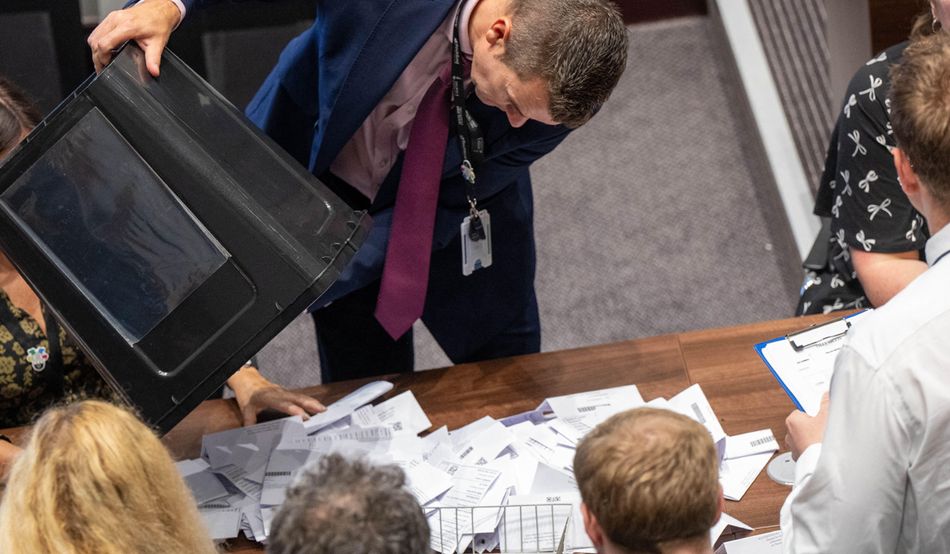
The decision to cancel local elections, which were uncancelled on Monday, was a highly partisan and undemocratic move of which the government should be ashamed. And with it, Labour has gifted its rival Reform UK a political opportunity. Nigel Farage is claiming victory, accusing Keir Starmer of having “tried to stop 4.6m people voting on May 7th”. The government will now have to cover Reform’s legal costs; the party reportedly spent at least £100,000 challenging the decision.
Under Labour’s previous plan, May elections were to be nixed in 30 councils that will be abolished under a forthcoming reorganisation of local government. Arguably the largest change to English local authorities in half a century, it will scrap England’s archaic “two-tier” system, where decisions for services sit across two authorities (Scotland and Wales moved way from the arrangement in the 1990s).
The rationale for cancelling these upcoming elections was technocratic and superficial. In December, Alison McGovern, minister for local government and homelessness, invited councils undergoing reorganisation to request a delay to local elections if doing so would “release essential capacity”. McGovern had described council elections as “resource intensive”.
Before this week’s U-turn, Reform sources told me that the party had instructed a KC to mount a High Court legal challenge to the proposed cancellation of elections. One source said that Reform HQ was “cautiously optimistic” that this would force the government to think again, and they were proved right. The High Court had been due to hear the case on Thursday.
There had been precedent for cancelling elections under similar circumstances. Elections in North Yorkshire, Cumbria and Somerset were postponed for 12 months in 2021 because these authorities were also undergoing reorganisation. Elections were postponed nationwide because of Covid-19 the year before that. In 2001, local elections were moved from May to June because of foot and mouth disease.
But this time it appears that the government had been disingenuous. Let’s not forget that the Ministry for Housing, Communities and Local Government went so far as to brand media reports that the elections have been cancelled as “misleading”. Further, this week’s U-turn seems to present clear evidence that, having made its decision, the government then received legal advice that the move shouldn’t go ahead. The government should publish this legal advice.
Nine council elections were also postponed last year because of the local government reorganisation, and all nine will be going ahead now in May. During the First and Second World Wars council elections were delayed for longer. In British history it is highly unusual, to say the least, for elections to be postponed for two years in a row. As Vijay Rangarajan, chief executive of the Electoral Commission, warned in December when the government first announced its plans, there “is a clear conflict of interest in asking existing Councils to decide how long it will be before they are answerable to voters.”
When democracy is under threat, as it has been here, who defends it? Reform UK, a party with a track record of fielding parliamentary and council candidates without a single vote being cast by its own members, led the pack. Following the government’s delay, Farage joined the Electoral Commission, the (Labour) chair of the Local Government Select Committee, the District Councils Network and the Local Government Information Unit in rebuking Starmer.
The Liberal Democrats were highly critical, too, dubbing the planned cancellations a “stitch up to deny people their votes in May”, orchestrated by Labour and the Conservatives (both parties stand to lose the most). As the Institute for Government thinktank points out, Labour councillors would indeed have benefited from the delay: 21 of the 30 elections which would have been postponed were in councils run by Labour. Five were Conservative-led. The Lib Dem local government spokesperson, Zöe Franklin, told me that “ministers should not have the power to simply delay democracy with the stroke of a pen.” Lib Dem leader Ed Davey had written to the Equalities and Human Rights Commission to ask it to investigate, and the party was calling on the government to change the law so MPs could vote on any decisions to delay elections. While none of Reform’s councils were due to see elections delayed, two Liberal Democrats councils were.
When you consider the impact of postponing local races, the government’s decision was plainly absurd. Take the case of East Sussex. Its elections were first cancelled in May 2025 under the planned reorganisation. Its mayoral election (which covers Sussex and Brighton) has now been postponed until 2028, also due to the reorganisation, and rescheduled local elections in May 2026 were then cancelled, given that new authorities will be created in 2027. Now that the elections will take place this May, no party has yet lined up candidates. Parties in all the 30 affected councils will be frantically doing so now. The quality of politicians will suffer as a result.
Depending on their party allegiances, councillors in the authorities where elections were to be postponed may have been grateful to retain their seat for another 12 months, while also being wary about the legitimacy of doing so. Many Labour councillors are now privately afraid of losing their seats to Reform come spring.
Even with cancelled elections, Reform was quietly expecting to double the number of council seats it holds in England—currently more than 900. Polling indicates that Reform could win an additional 129 seats in the elections that have now been reinstated. On Monday, Farage declared a “victory for democracy in this country”. This will surely only boost Reform’s chances. The party is even confident it will take half a dozen councils in London’s “outer doughnut”, which includes areas like Hillingdon, Bexley and Havering. One of Havering’s MPs, Andrew Rosindell, recently defected to Reform; his constituency office is based at, er, Margaret Thatcher House.
The lessons were already there for the taking. Starmer need only have looked at Thatcher’s decision to cancel the Greater London Council (GLC) elections in 1985—ostensibly because legislation was in progress to abolish the GLC a year later. This move was seen by many as a nakedly political attempt to avoid the elections becoming a referendum on her decision to get rid of the London authority. History will view this latest sorry saga as an unnecessary battle—one in which Reform took on the Labour government and won, and in which the party of illiberal populism became the champion of democracy.