Slowly, from freshly shovelled graves, they wake, arms stretched out, eyes rolled back. How could this be? Had they not been killed? And yet on they march, forming new thinktanks, writing scathing op-eds, refusing to die. They are the liberals—the most feared of the political undead.
An endless stream of obituaries for liberalism have been published this past decade. Any two-bit pundit can wax lyrical about the demerits of this political philosophy, whose proponents believe in individual rights, civil liberties, democracy and, traditionally at least, free markets. Too individualistic, too technocratic, too sneering, too woke, it is, in a word, unfashionable.
Attacks have come from the left, particularly the resurgent Blue Labour movement, as well as the right, inspired by the democracy-sceptical views of technologists such as Curtis Yarvin. Attacks have even come from so-called self-hating liberals, who blamed “woke” for the fall of Kamala Harris.
And if anything exemplified the first 18 months of Keir Starmer’s government, it was a double-barrelled offensive against liberalism. Social liberals, hoping for release after a decade of Brexit-inflected jingoism, were instead appalled by a rhetorical and policy attack on people who have legally moved to the UK. Economic liberals—in the free-market sense— found a Number 10 suspicious of business and the European single market.
Yet, still they rise. That’s the thing about zombies: they’re not really dead. In fact, the defenestration of one of liberalism’s most powerful detractors, Starmer’s former adviser Morgan McSweeney, has led to a veritable glasnost on social liberalism. The prime minister’s aggressive response to Manchester United chairman Jim Ratcliffe’s foray into far-right rhetoric is just the first example. A softening with Europe appears on the horizon.
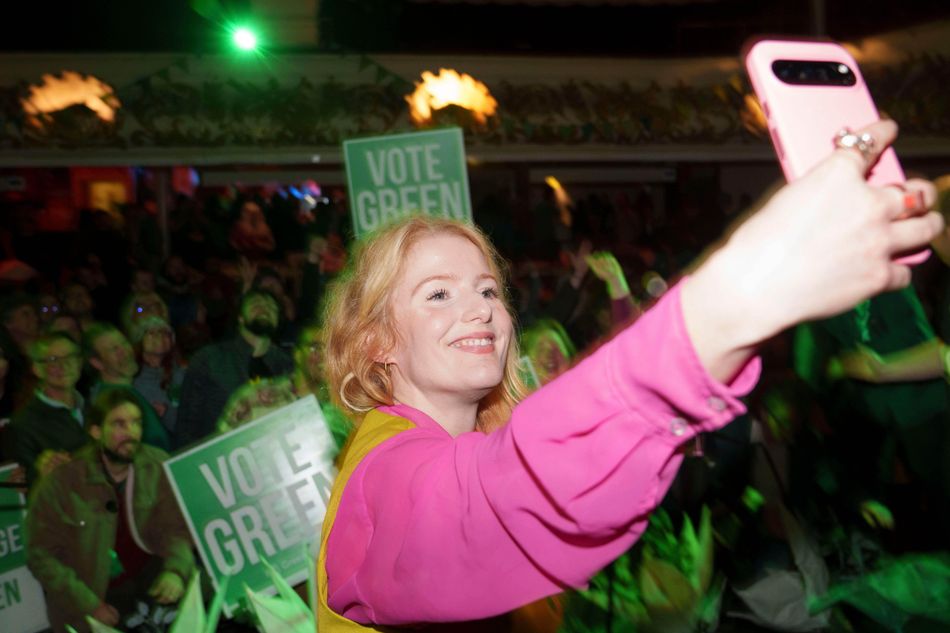
Zombie liberalism is stirring again in more obvious places, too. The Lib Dems may be stalling in the polls, but their council byelection successes continue apace and they have more MPs in Westminster than they have had for a century. Zack Polanski’s Greens have surged on an unapologetic defence of social liberalism, though I suppose no one would mistake them for free marketeers.
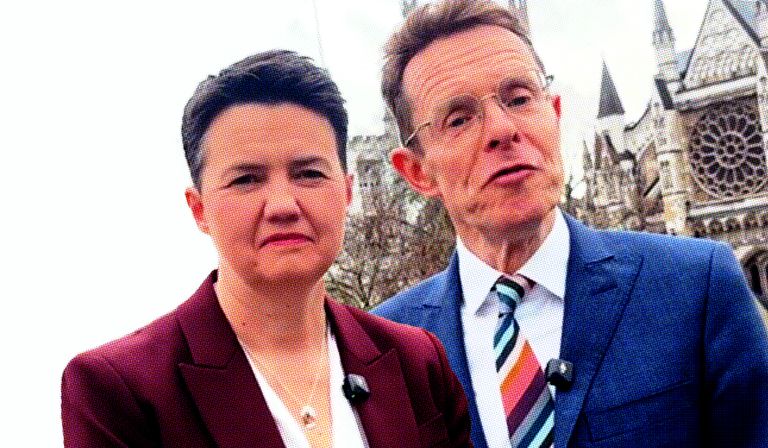
Even among the Conservatives, whose relationship with liberalism has often been, as they say, “complicated”, a wave of the undead has been disinterred. The campaign group Prosper, led by former West Midlands mayor Andy Street and former Scottish Conservative leader Ruth Davidson, was recently founded to press for a more moderate—dare one say, liberal—approach to Tory politics. The zombie bona fides of Prosper can be seen in the fact that among 70 supporters named on the group’s website, 67 have titles starting with the word “former”. Truly, the dead have risen.
It is the emergence of the defiantly illiberal Reform UK that has woken the undead. The many victories of social liberalism over the past half-century—gay rights, gender equality, anti-racism— have inspired enemies. In my own analysis of British Election Study data, I find Reform voters on average believe white people are more discriminated against than ethnic minorities and that gays, lesbians and transgender people actually receive positive discrimination. And despite occasional Thatcherite moments, Reform supporters are no great fans of free markets. Indeed, Reform has a Trumpian view of trade, finance and industry. That is, it’s all fine so long as you can paint it in red, white and blue.
Reform was the political success story of 2025. There are plenty of illiberals in the UK. Pollsters often point to the top-left quadrant of the political compass, people who are economically statist and socially conservative, as the winning combination. Certainly, that’s what people say they want.
This is exactly the cohort that Starmer aimed at under the infamous McSweeney strategy. And look where it got him. Similarly, Boris Johnson tried that mix with levelling up and Brexit. After winning him an election it proved an impossible approach to governing. Try as they might, the post-liberal survivors of the zombie apocalypse can barely eke out a political living. They turn on each other. To paraphrase Tolstoy, all liberals are the same, but all post-liberal tribes are different. Except in that, to date, other than the indefatigable Nigel Farage, none has lasted long.
The truth is that zombie liberalism never dies, despite shovels to the head and shots through the heart, because there is something inevitable about liberalism. Markets always creep in, because they come from individuals trying to sneak around the rules and strictures of the state. And despite the best efforts of conservatives, the desires of individuals to live life how and where they want seems to win out over conformity. As fans of the 28 Days Later series know, it just takes one drop of zombie blood to start a zombie takeover.
So yes, liberalism is unfashionable. Who, after all, would support the zombies? The politically popular thing to do is denounce liberalism, talk about nation, flag and family, or solidarity and class consciousness. I’m sure there’s some votes in that. There are most definitely newspaper columns.
And yet, it’s liberalism that has given people what they want—the freedom to live and work how and where they want, to love whom they want. It marches on inexorably and unthinkingly, with a zombie’s sense of self-reflection. An unstoppable virus, perhaps, but one that keeps spreading, despite what people tell pollsters. Empty-headed and heartless, perhaps, but when in office, zombie governments seem to win elections. So as for me (and yes reader, I’m one of them), I’ll be cheering on the zombies.