Dear comrade,
If you are reading this before you have reached the top of the greasy pole—good. Successful prime ministers depend on the preparations they make before they arrive at Number 10, not just the decisions they take afterwards.
It will be crucial to learn from Keir Starmer’s mistakes. Listing them is the easy bit. The crisis that has engulfed him deserves an explanation. How did he end up disliked by so many voters and alienating so many of his own MPs?
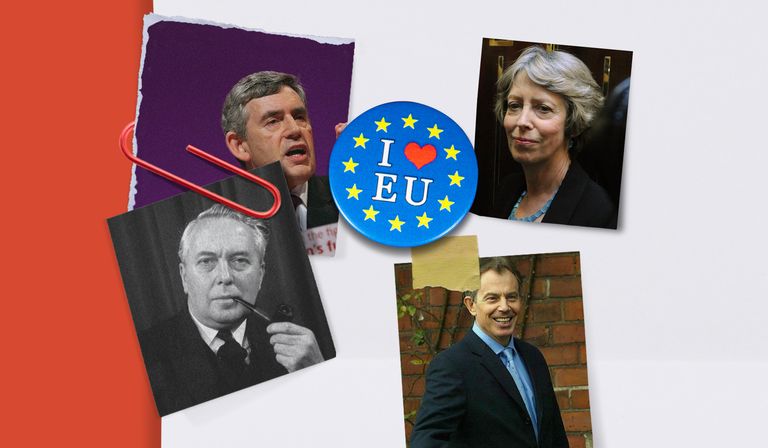
Labour’s own history supplies some revealing answers. In more than half a century of reporting and analysing British politics, I have met every Labour leader since Harold Wilson. My relationships have been extensive with some of them, more fragmentary with others.
Each had his own ways. John Smith loved irreverent gossip; Gordon Brown eschewed frivolity. Michael Foot enjoyed “a small treble whisky” before dinner. Neil Kinnock wasn’t keen on having to wear his “uniform”—dark suit, plain white shirt and sober tie.
I didn’t always have the friendliest encounters with Labour leaders.
More seriously, there was the evening when James Callaghan told me how his feud with Roy Jenkins had saved Wilson in the late 1960s. Callaghan said he wanted to mount a challenge to Wilson’s leadership, but held back solely because he feared that the job would go to Jenkins. Among other things, this episode illustrates Labour’s history of inertia. The Conservatives have deposed three leaders in the past seven years. Labour has deposed none since the Second World War with the debatable exception of Tony Blair, who actually agreed to bow out ahead of time. Could deadlock between Starmer’s rivals keep his premiership on life support?
I didn’t always have the friendliest encounters with Labour leaders. From 1980 to 1982, Jeremy Corbyn and I clashed most months at local party meetings in Hornsey and Wood Green. Corbyn (then a trade union official) and I were both members. I thought then, and have thought ever since, that he should never have been a member of the party, let alone its leader. He should have belonged to a party that wanted to overthrow the capitalist system, not one that sought to improve it. His expulsion came 40 years too late.
I did, however, see more eye-to-eye with Corbyn’s predecessors. In 1983, I travelled with Neil Kinnock to Strasbourg, where he launched his modernisation of the party by telling Labour’s MEPs that he would no longer back withdrawal from the common market. A decade later, good wine lubricated my long talks with Blair, then a member of the shadow cabinet, as he began to define the project that became New Labour.
During the 2015 election campaign, I briefed Ed Miliband on YouGov’s latest polls. Our final polling (like almost everyone else’s) showed Labour and the Conservatives neck-and-neck. I told him that Labour might have enough MPs in a hung parliament to take him to Downing Street. Sorry, Ed.
The conversation that surprised me most was with Callaghan, towards the end of his life. At the time, he was the only person to have held all four of the great offices of state—chancellor of the Exchequer and home and foreign secretary, as well as prime minister. I asked him which achievement had given him his greatest satisfaction. “Cat’s eyes,” he told me. As a junior transport minister in the late 1940s, he ordered these small reflectors to be installed in roads throughout Britain. They enabled drivers at night, especially in fog, to see the course of the road ahead, and saved countless lives.
Yes, the records of Labour’s leaders vary, from the triumphant to the catastrophic. Together they fill a rich catalogue of lessons that Starmer should have heeded. Here are five he hasn’t. Perhaps you, Labour’s next prime minister, will.
1. Plan how to be PM, not just how to become PM
In 1997, Labour did more than run an outstandingly successful election campaign. Before polling day, Blair himself had been closely involved in plans for Labour’s first term. Alastair Campbell drew up a communications grid for Labour’s first 100 days, to plan media activity ahead of time. Patricia Hewitt, who had been Neil Kinnock’s press secretary and would later become a cabinet minister, organised a programme of induction courses for shadow ministers at Oxford’s Templeton College. It covered the realities of life in government and how to implement, not just announce, their policies.
All this meant that Blair’s first weeks, indeed days, achieved much. They included the independence of the Bank of England; referendums to set up Scotland’s parliament and the Welsh assembly; the establishment of the Department for International Development; signing up to the European Union’s Social Chapter, which guaranteed workers’ rights including a 48-hour limit to the working week; and the unveiling of plans for a minimum wage, literacy and numeracy hours in state schools, a human rights act. Most dramatically, Brown, the new chancellor, gave the Bank of England the power to set interest rates, having said nothing about this before election day.
There were hiccups of course. Tax credits, the centrepiece of Labour’s commitment to welfare reform, proved to be more complex to operate than expected. Their rollout was not completed until 2003. More generally, new ministers took time to adjust to the culture of Whitehall. In the runup to the 2024 election, Starmer had the opportunity to learn from both the strengths and shortcomings of the Blair government’s preparations for and first steps in government. Hewitt’s offer to reprise the Oxford induction courses was turned down. There was no first-100-days grid, and no systematic attempt to prepare new ministers for the tasks of either implementing manifesto commitments or dealing with civil servants.
It’s not that no work was done. Teams of party staff prepared detailed policy briefings for each shadow cabinet minister. The problem was that this was never integrated into the work of Starmer’s own team in parliament.
We now know the result: chaotic infighting in Downing Street and policy announcements that unravelled quickly
We now know the result: chaotic infighting in Downing Street and a succession of policy announcements that unravelled quickly—such as changes to the winter fuel allowance, increases to employers’ national insurance, and botched welfare reform.
Social care has had a different fate. Labour’s election manifesto promised to “create a National Care Service”. It did not say when, what it would cost or how it would be funded. Labour had a policy without a plan, something as useful as a car without an engine. Only now, belatedly, has Louise Casey been set the task of coming up with that plan and reporting before the next election.
As Starmer’s successor, you will not have had the luxury of leading the party in opposition. This makes it all the more vital to decide now on two or three things that you will do in your first 100 days, and to do the planning now in order to get them right first time. Do hit the ground running, but don’t stumble.
2. Don’t delay the tough decisions
In 1964, Labour returned to office after 13 years in opposition. The fledgling government’s weak financial inheritance posed a stark choice: devalue the pound or take other tough decisions to defend sterling. On their first evening in office, Harold Wilson, the new prime minister, and James Callaghan, his chancellor, ruled out devaluation. The Labour government of Clement Attlee had devalued the pound in 1949, and Wilson did not want to be saddled with the reputation of leading the devaluation party.
Instead, Callaghan imposed a 15 per cent import surcharge and raised income, national insurance, petrol duty and company taxation. These, together with a loan from foreign central banks, allowed the government to weather the immediate storm. But less than two years later, sterling again came under attack. More crisis measures were imposed, though again no devaluation. In November 1967, Wilson and Callaghan finally bowed to the inevitable, devaluing the pound by 14 per cent. Two years and seven months later, Labour was voted out of office.
As soon as you become prime minister, seize the initiative and do something bold
Like Wilson, Starmer inherited an economy in trouble. Like Wilson, he resisted the most obvious measure: broad-based tax rises this time, rather than devaluation. Raising tax rates would have meant breaking an election promise. Like Wilson and Callaghan, Starmer and Rachel Reeves set out a range of other measures. Yet again, a new Labour government’s initial decision has landed it in trouble later on.
One of Labour’s might-have-beens is also relevant here. In 1992, Kinnock planned an audacious move had he won the general election that year. The UK was then in the EU’s exchange rate mechanism (ERM). The pound’s value was fixed. Unknown to John Smith, then shadow chancellor, Kinnock planned with John Eatwell, his economic adviser, to seek a 12 per cent devaluation of the pound within the ERM and reduce the UK’s main interest rate from 10 to 6 per cent if Labour proved victorious at the polls. Eatwell privately consulted Paris and Berlin to make sure they were not caught by surprise. Meanwhile, Kinnock knew that Smith would not like this plan; a dispute, and possible resignation, ahead of election day would have been disastrous. Had Labour won, Kinnock would then have had the power to act, however. Either Smith would have agreed, or he would have been replaced by Gordon Brown.
The rights and wrongs of that—politically and economically—are open to debate. The point here is that the UK was hampered by an overvalued pound and high interest rates, and Kinnock was prepared to act immediately.
As soon as you become prime minister, you should seize the initiative and do something bold—maybe on the UK’s relations with Europe, or taxation, or funding a big increase in defence spending. It will be your moment of maximum power.
3. Honour Labour’s past
After Attlee’s government fell in 1951, pride in its achievements persisted—the National Health Service, national insurance and so on. The Wilson and Callaghan governments provoked more mixed memories. Yet the Sixties and Seventies were decades when Labour enacted important social reforms on gender and race equality, abortion, gay rights and the death penalty. These remain an enduring testament to progressive values.
The Blair/Brown years have received far less credit. Since 2010, Ed Miliband, Jeremy Corbyn and Keir Starmer have been reluctant to proclaim the successes of New Labour, which include a sharp reduction in child poverty, the virtual elimination of rough sleeping, dramatically reduced hospital waiting times and the commitment to increase overseas aid. The legacy of the Iraq war and internal party arguments about Blair’s support for globalisation and economic liberalism loom over their achievements. Miliband defeated his Blairite-brother David by offering a tilt to the left. Corbyn went further. In one notable BBC interview with Andrew Marr in 2018, Corbyn declined to acknowledge any benefits of market capitalism.
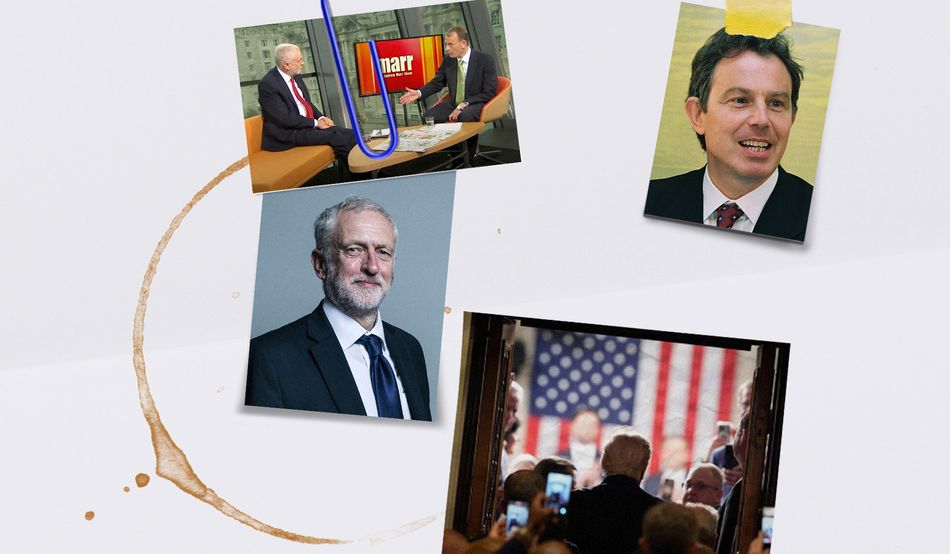
Having become leader and expelled Corbyn from his party, Starmer had an opportunity to put that right and to laud Labour’s successes from 1997 to 2010. He recoiled from doing so. For example, the Sure Start programme was immensely popular in providing support for families with young children, especially in deprived areas. Wound down during the Conservative years, it has now been restored. Instead of reviving the Sure Start brand, the current government calls it “Best Start”.
Pride in Labour’s past seems not to have been part of Starmer’s armoury. It should be part of yours. Which leads to the fourth lesson for your premiership.
4. Admit your mistakes
Wilson never recovered from what he told the public on 19th November 1967. In a TV and radio broadcast that evening, after sterling’s value had been cut by 14 per cent against other currencies, he said, “It does not mean that the pound here in Britain, in your pocket or purse or in your bank, has been devalued.” Voters felt he was trying to fool them.
In 2000, Blair acted differently when the state pension was raised by only 75p per week—the amount needed to offset the unusually small inflation rate at the time. The backlash was fierce. In his memoirs, he recalled: “I decided at the 2000 party conference to apologise and eat a portion of humble pie. We had some blowback from Gordon and Alistair Darling [Chief Secretary to the Treasury] who felt it dangerous to admit we were wrong; but I felt it was worth it. Anyway, we were wrong!”
In this regard, Starmer has followed Wilson rather than Blair. Time and again, he and Reeves have insisted they were keeping their election promise not to raise tax rates. As with Wilson, theirs was a narrow truth that, to voters, concealed a larger lie about taxes rising.
Perhaps Starmer’s most bizarre claim was the explanation he gave for restoring winter fuel payments last May for pensioners on below average incomes. Reeves had previously scrapped the benefit for all but the poorest. Starmer’s reason for the partial U-turn was that the original cuts had offended too many voters and upset too many Labour MPs, but he told parliament that his change of heart had nothing to do with that. It was simply because the economy was picking up. “That is why we want to ensure that more pensioners are eligible for winter fuel payments as we go forward,” he said on 21st May 2025.
According to YouGov polling in February, just 22 per cent of voters now regard Starmer as trustworthy.
Better to admit mistakes and suffer embarrassment. Voters want a prime minister they can trust. Once acquired, a reputation for dishonesty is almost impossible to shake off.
5. Present a coherent vision of the UK’s future
In 1963, Wilson told Labour’s annual party conference: “We are restating our socialism in terms of the scientific revolution,” to be forged in “the white heat of this revolution”. Less well remembered was his intention to copy “the ruthless application of scientific techniques in Soviet industry”. Like many in the west at that time, Wilson was unaware that the Soviet system was hopelessly inefficient. But at least Wilson’s speech repositioned Labour as a modernising party of the future; he won four of the five general elections he fought as leader.
Kinnock deserves more credit than he generally gets for persuading the left to accept the market system. In careful stages, he led Labour away from its lingering socialist dreams. In 1995, Blair built on Kinnock’s work, persuading the party to ditch its constitutional commitment to traditional common-ownership socialism. In government, Blair and Brown developed a version of social democracy in which an active state would both encourage market-led growth and achieve social justice. Not every party activist was happy but, for the first time, Labour won three clear majorities in a row.
They were lucky, of course. Steady growth, globalisation and the peace dividend—reductions in defence spending as a share of GDP after the end of the Cold War—made New Labour’s ambitions affordable. Starmer has none of those advantages. Given these circumstances, his record is revealing. During Starmer’s campaign to become Labour leader, he proposed “common ownership of rail, mail, energy and water”; higher taxes for the top 5 per cent of earners; and the abolition of tuition fees, Universal Credit and the House of Lords.
Times are tough. Tell a clear story and set out a distinctive project for progressive politics
His pitch ignored one the great lessons from the Foot and Corbyn eras: an avowedly left-wing leader has yet to become prime minister. In any case, Starmer didn’t mean it. He simply said what was necessary to become party leader (just as he worked out how to win the 2024 election, not what to do if he won). Once he became leader, he dropped all those commitments without any apparent anguish or embarrassment. The result is a void. Beyond warm words, Starmer failed to define an alternative vision for the centre-left.
You need to put that right. Times are tough. That is all the more reason to tell a clear story and set out a distinctive project for progressive politics over the next decade.
This applies above all to the UK’s relations with Europe and the wider world. Before becoming party leader, when Starmer was Labour’s spokesman on Brexit, he stood up to Corbyn, most notably at the party conference in 2018, when he backed a second referendum that might enable the UK to remain in the EU after all.
After becoming leader—and since the UK left the EU—Starmer has rowed back. Labour’s 2024 manifesto promised to “make Brexit work”. There would be “no return to the single market, the customs union or freedom of movement”. Since the election, his government has sent mixed messages. He wants pro-Europeans to think that he would go as far as possible to remove trade barriers, while reassuring pro-Brexit voters that he is still on their side.
A more fundamental issue is at stake, however. The debate labelled “Europe” is really about the UK’s identity and place in the world. In his speech last month to the Munich Security Conference, Starmer made a strong case for greater cooperation in trade and defence. He said “the status quo is not fit for purpose” and offered specific ways to change it. He described the pieces of a jigsaw, but not the picture they comprised when put together.
On his flight to Beijing in January, Starmer was asked about the speech that had electrified the World Economic Forum in Davos. Mark Carney, Canada’s prime minister, spoke of “a rupture in the world order” and called for “the middle powers” to stand up to the United States, Russia and China. Starmer’s response? “I’m a pragmatist, a British pragmatist applying common sense.”
Pragmatism is a technique, not a strategy. You will come to office at a time when the UK’s role in Europe and beyond is raising large questions. These deserve suitably large answers.
That the UK needs new leadership is clear. Starmer’s allies say that he is still the best option Labour has. Their argument is that he has had to struggle with a grim economic inheritance and the turmoil of Donald Trump’s second term and the impact of the Ukraine war on Europe’s security. Mistakes have been made, but he has climbed a steep learning curve; he has three years to put things right and deserves the chance to do so.
This is not a trivial argument. It deserves to be taken seriously. However, Labour’s own history of successes and failures contains clear lessons for anyone aspiring to lead the party effectively. Starmer has shown little interest in learning them. For instance, nobody familiar with Labour’s progressive traditions and fights for equality would have drafted a speech warning that this country was fast becoming “an island of strangers”. Any senior Labour politician aware of those traditions would have instantly deleted or refused to say those words.
When Starmer does go, you will need to reconnect with Labour’s past and its core values. The challenges will be huge. I cannot guarantee success, merely wish you good luck!