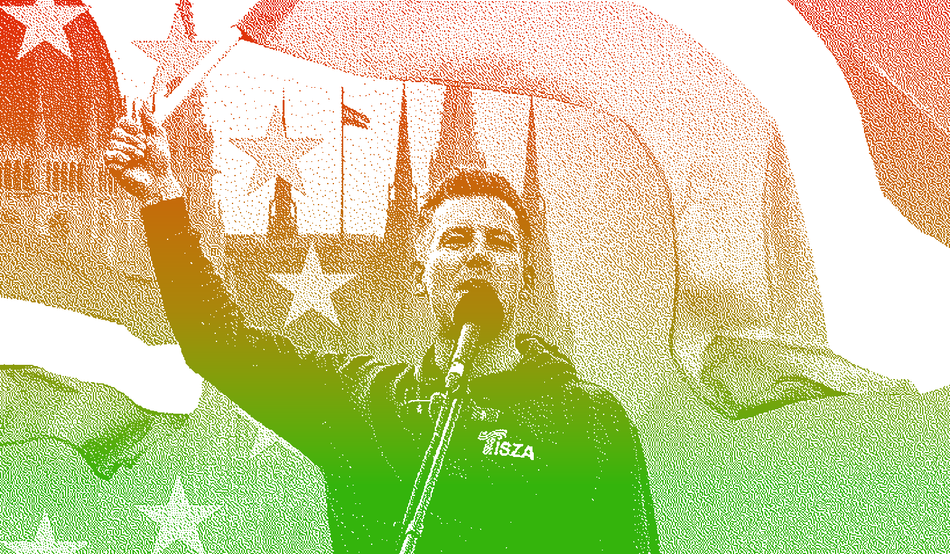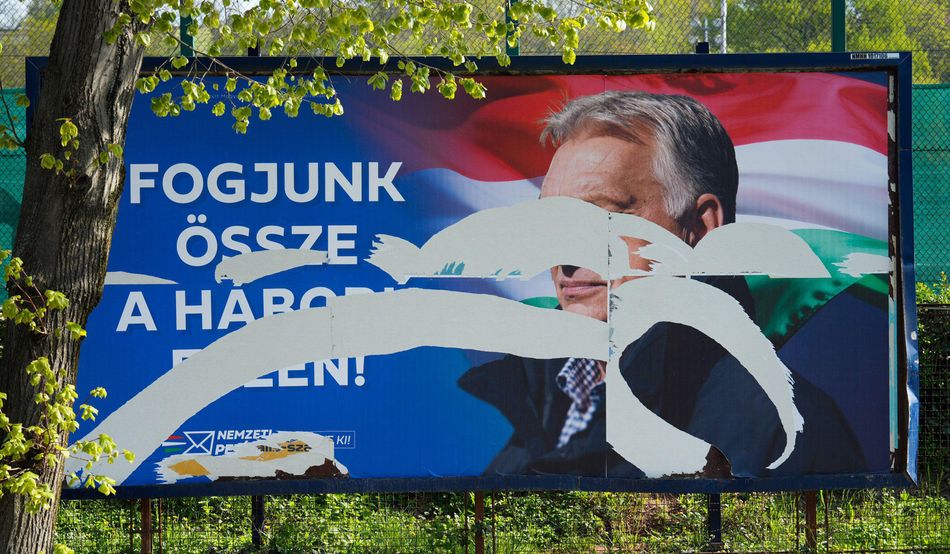
On Sunday, nearly 80 per cent of Hungarian voters went to the polls to deliver the most decisive democratic verdict in the country’s history. Péter Magyar’s Tisza party won a constitutional majority, ending Viktor Orbán’s 16-year rule. Three hours after polls closed, Orbán conceded with unexpected grace. Hungary had answered, with a resounding “yes” the question of whether a competitive authoritarian system can be defeated at the ballot box.
The geopolitical consequences are immediate. Hungary's systematic use of the European Union veto as a political weapon will end. This includes blocking aid to Ukraine, delays to Russian sanctions and wholesale obstruction to EU enlargement. Approximately 90bn euros in EU financial assistance to Kyiv that has been held hostage by Budapest can now move forward. Nato loses an unreliable ally and gains a willing partner in its place. Vladimir Putin loses the main tool he relied on to divide Europe from within. For the first time in a decade, the EU can function without a permanent spoiler at the table.
The democratic world is right to celebrate. Hungary’s election result is a striking blow to populist authoritarians around the globe. But the hard part now begins. Can Hungary rebuild a functioning democracy from the ruins of one that was methodically hollowed out from within? This is a question which matters far beyond Budapest.
There is little precedent for this. Though political scientists have spent decades studying how democracies die, there is far less scholarship on how they come back to life. Poland’s 2023 restoration offers the closest parallel, but even here there are important differences: Tusk’s coalition inherited a system captured for eight years, not 16, and it doesn’t have a free hand to make radical change as he currently governs without a supermajority. Magyar inherits a country where the constitution was rewritten to serve one party. The judiciary was stacked at every level; public media was transformed into a propaganda apparatus; and the prosecutor general, court presidents, and state audit office were hand-picked by the outgoing regime with terms designed to outlast a single election.
Poland’s experience also offers a cautionary lesson. Tusk’s government moved quickly on judicial independence and public media, but faced accusations that dismantling illiberal institutions risked replicating the methods that created them. The dilemma is real. How do you overhaul an authoritarian system without resorting to methods contrary to the rule of law? Magyar’s supermajority gives him the power to undo what Orbán built, but it is also a temptation. The legitimacy of democratic restoration depends on whether it is perceived as restoration or revenge.
Four challenges will test this balance immediately. First, Hungary needs a new constitution. It should be drafted and adopted following an inclusive, consultative process with citizens and civil society. Orbán’s was a constitution designed to entrench power. The replacement must be designed to disperse it.
Second, judicial independence must be restored. The Constitutional Court and Supreme Court must be reconstituted since Orbán stacked both with loyalists whose mandates extend years into the future. The new government must establish a transparent and autonomous process for selecting judges, one that is permanently insulated from partisan influence. Reconstituting the courts will also require getting the balance right between accountability and reconciliation. The guidance from countries that have navigated democratic transitions is instructive here. Credible accountability is essential but must be grounded in law. Judges who enabled institutional abuse should face consequences through transparent proceedings. Those who served honourably should not be subjected to blanket purges.
Third, public media, which became a mouthpiece for Orbán, needs a new governance model. It must be hermetically sealed from political pressure regardless of who holds power.
Finally, the government must dismantle the legal architecture Orbán erected to suffocate independent civic life. Over 16 years, his government adopted laws modelled on Russia’s “foreign agent” legislation. These imposed onerous reporting requirements on NGOs and stigmatised them as agents of foreign influence. Regulatory bodies were used as instruments of harassment. Universities were forced out of the country. Civil society was targeted systematically as an enemy of the state. The new government must move swiftly to repeal these laws and restore the conditions under which independent organisations can operate freely.
The international community has obligations, too. The EU’s rule-of-law conditionality mechanism played a role in Orban’s defeat through its freezing of 17bn euros in critical funding for Hungary. That lesson should inform how the EU approaches democratic erosion elsewhere. The bloc must now move urgently to release these funds as Hungary meets its reform milestones. This should be paired with technical assistance for judicial independence and anti-corruption enforcement. The cost of failing to support Hungary’s transition will be measured by the message it sends to every citizen weighing whether the fight for democracy is worth the effort. Fellow EU member states should offer support and treat Hungary’s transition as a shared European project. The United States must also engage constructively. Respecting the will of the Hungarian people is essential for a strong transatlantic relationship. Hungary’s new leadership has been clear that it wants good relations with Washington, regardless of who is sitting in the White House.
What happened on Sunday was extraordinary. A country once regarded as the global case study for democratic decay now serves as a model for its rebirth. The lessons of Hungary’s transformation extend far beyond its borders. For the world’s competitive authoritarians—from Washington to Ankara, from New Delhi to Belgrade—Orbán’s fall is a warning that captured institutions, weaponised media and gerrymandered electoral maps can buy time, but they cannot indefinitely paper over the gap between propaganda and people’s lived experience.
When hospitals crumble, inflation bites and corruption enriches a connected few, voters eventually punish those responsible. No amount of manufactured enemies can redirect that anger forever. As long as people can cast their vote freely, change is possible. Democratic movements everywhere should take heart.