Viktor Orbán was the most serious internal threat to the European Union since Brexit. That’s the reason why Brexiter-in-chief Nigel Farage hailed the Hungarian strongman as “the future of Europe”. It’s why he was lionised by the continent’s homegrown hard-right populists, led by Marine Le Pen, Slovakia’s Robert Fico and Alice Weidel (head of Germany’s AfD). And it’s why Putin and Trump, in their common cause to undermine European unity and liberal democracy, were such keen cheerleaders. Ahead of Hungary’s election, Trump even sent his vice-president, JD Vance, to Budapest on a last-minute rescue mission in support of their pet EU disrupter.
Thankfully, the pro-EU forces of liberal democratic virtue not only won, but smashed it.
As with Brexit a decade ago, there was huge and protracted Orbán-induced anxiety, verging on panic, among Europe’s sensible, moderate leadership. A decade ago the fear was that Brexit might lead to further EU “exits” from other member states seized by populist leaders. With Orbán, the fear was that he might sabotage the EU from within. If yet another election victory in Budapest was followed by copycat populist governments joining Orbán thereafter, this would provoke paralysis in Brussels and destroy the EU’s democratic credentials.
Instead the EU has once again triumphed. It has done so in the same way that Angela Merkel, Emmanuel Macron, Ursula von der Leyen and Donald Tusk (then president of the European Council, now liberal prime minister of Poland) successfully tackled Brexit in the five years between the 2016 referendum and the implementation of the Brexit treaty in 2021. That is, by the EU’s mainstream majority playing a patient game and not over-reacting, and by devising Brussels workarounds to deal with the wayward member state. All this while maintaining unity and sticking firmly to democratic values and practices, thereby allowing the insurgency to burn out.
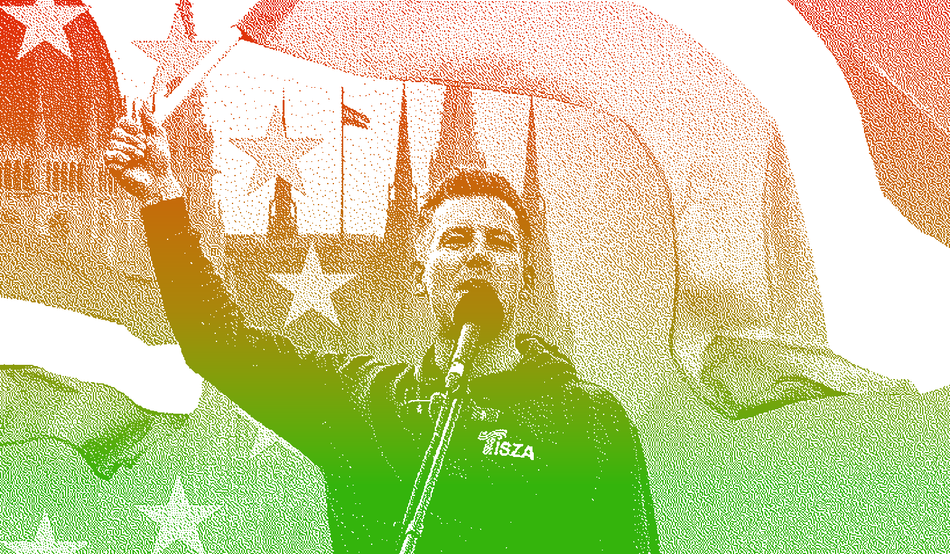
Unfortunately, in the case of Brexit, while Europe’s leaders successfully cauterised the wound so far as all 27 EU members besides the UK were concerned, they weren’t able to create the conditions for the UK itself to remain in the Union, for the short term, at least. The defeat of Orbán is far more comprehensive. Not only has the dangerous populist been expelled, but Hungary has rejoined the EU mainstream overnight. And it all happened through one of the greatest democratic exercises in European history. Fittingly, as the election results came through on Sunday night, the anti-Orbán crowds in Budapest chanted “Europe, Europe, Europe.”
What makes the victory all the sweeter is that the EU itself was probably decisive in preventing Orbán from attempting to go from strong authoritarianism to outright dictatorship. While Hungary remained a member of the EU, for all his erosions of democracy and the rule of law, Orbán couldn’t go the whole hog and suppress opposition parties and/or rig elections to the point where the government couldn’t lose them. It must be at least possible, given all else he did to undermine his opponents, that Orbán would have attempted to cross this Rubicon to dictatorship, maybe on the pretext of the Ukraine war, had it not been categorically incompatible with EU membership. The EU’s freezing of funds to Hungary, in response to the flagrantly anti-democratic measures Orbán actually implemented, also weakened him substantially and gave Hungary’s new leader, Peter Magyar, a potent rallying cry.
So what next for the EU after the Orbán nightmare?
The optimistic view is that Orbánism—hard-right populism seeking to subvert the liberal-democratic EU from within—is now dead. Just as Brexit was such an obvious disaster for the UK that no one else has dared copy it since the implosion of Orbánism will discourage other hard-right populists from copycat EU subversion ventures, including love-ins with Putin and Trump.
If this optimistic view prevails, it doesn’t mean that populists never win elections or take office. Rather it means that having done so, they don’t then seek to undermine the EU or align with Russia (which is the same thing). Italy’s Giorgia Meloni is the tentative model for this form of populism-lite. Tellingly, she sent a message of support to Orbán, but never backed any of his attempts to paralyse or undermine the EU, including his anti-Ukrainian stratagems.
Meloni herself is up for re-election next year. After Orbán’s evisceration she is even less likely now to attempt a serious play against Brussels and Ukraine, and/or towards Trump or Putin.
The EU’s crucial swing elections next year are in France and Poland. Post-Orbán, the populists in both countries may have been weakened. But even if they win, in particular, if Le Pen or Jordan Bardella succeed Macron in France, the hope is that their playbook vis-a-vis the EU is more akin to Meloni, not Orbán. The pro-EU solidity of Friedrich Merz in Berlin is another crucial building block.
But there is no room for complacency. To “make assurance doubly sure” it is essential that, post-Orbán, the EU doubles down on its support for Volodymyr Zelensky. Urgent changes are needed to the EU’s modus operandi to extend majority voting to the EU’s common foreign and security policy, to prevent a recurrence of a single-state veto to common action. The EU also needs to develop, rapidly, far stronger agendas for European defence alongside Nato and for economic growth.
Who knows, if the EU succeeds in turning Orbán’s defeat into positive movements along these lines, the huge latent support in the UK for rejoining the EU may become a new form of populism to vie with Farage and his Reform UK. “Europe, Europe, Europe” could be its slogan.