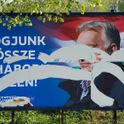
We are passing through a storm that is shattering the markers of the world we thought we knew. That storm, an illiberal authoritarian counter-revolution against the liberal state and its postwar achievements, is sweeping across Europe. One of the major strongholds of that revolution is Viktor Orbán’s Hungary. On 12th April, Hungary will hold an election that will act as a referendum on what the counter-revolution has achieved so far. The electoral verdict there may tell us where history is headed next.
Orbán, Europe’s longest serving head of government, is running for a sixth mandate. He has made himself the most reliable ally of Vladimir Putin and Donald Trump in Europe, as well as the leading ideological avatar of illiberal authoritarian nationalism on the continent. He faces a challenger, Péter Magyar’s Tisza party, which, from a standing start in 2024, is currently running nine points clear in the polls. Magyar is a man of the centre-right, a 45-year-old defector from Orbán’s party who broke with Fidesz when the regime pardoned a paedophile sex offender from within its own ranks. Moral disgust with the regime, together with dismay at Hungary’s deteriorating economic position, have kept Tisza polling ahead for more than a year.
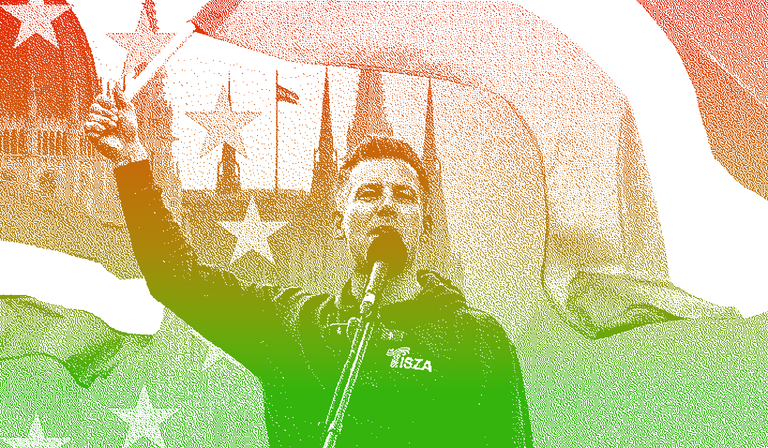
Magyar has gained several million devoted supporters by leaving the Budapest bubble and turning up, often standing on the back of a truck, to speak in town squares and village halls throughout the countryside. He has promised to return Hungary to Europe, to restore the rule of law and to end 16 years of systemic corruption. To increase his chances, he has followed neither Orbán’s demonisation of Volodymyr Zelensky nor his frantic claims that Zelensky will drag Hungary into a war with Russia, but he has echoed Orbán’s refusal to fund the Ukrainians and lined his party up against immigration. No one can be sure whether he will stick with this cautious shadowing of Orbán’s policies in power but, if he does win, he will have to respond to his supporters’ longing for a break, a new start, a change of regime.
A victory for Magyar and defeat for Orbán on 12th April would mean that the rising tide of authoritarian illiberalism in Europe has gone into reverse. Far-right parties and leaders across Europe—Marine Le Pen and Jordan Bardella in France, Geert Wilders in the Netherlands and the AfD in Germany—would have lost their most influential role model. Putin would have to rethink the attempts of his troll factories to interfere in European elections. In Washington, the president would have to contemplate the defeat of his most loyal European ally. All of these actors would have to reassess their ruling narrative that history was deserting the liberal elites and shifting in their direction. An election in a faraway country has thus become a referendum on the momentum behind the European illiberal right, the penetration of Russian disinformation into European elections and the strength of Trump’s alliance with the “patriotic parties” in Europe.
Orbán’s fate may tell us much about the future of the authoritarian trend, but his past lays bare the illusions of the liberal narrative that illiberalism seeks to displace. For western liberals, 1989 meant the reunification of western and eastern Europe under a common democratic banner, led in the east by heroic figures like Václav Havel. The leaders that eastern Europe actually elected—Jaroslaw Kaczynski in Poland, Vladimir Mečiar in Slovakia, Václav Klaus in Czechia (then the Czech Republic) and Orbán in Hungary—were conservative nationalists whose political instincts were rooted in eastern Europe’s authoritarian political legacy, stretching through the Communist period back into the 1920s.
Orbán is a creature of that legacy, but he was not always a conservative nationalist. A chameleon opportunist, he rose with the liberal tide and his early years seemed to confirm the triumph of the liberal narrative. He came to prominence in the summer of 1989, as a student activist who stood up in Heroes’ Square in Budapest and dared to call for the withdrawal of Soviet troops. George Soros liked what he saw and gave the young activist a scholarship to the University of Oxford. Fidesz, the political movement Orbán led, was young and liberal but, as early as 1994, it began a rightward shift which brought it into government in 1998 and made Orbán prime minister at the age of 35. Having led Hungary into the European Union, Orbán was crushed by electoral defeat in 2002 and vowed never to allow liberal institutions to deny him victory again.
After eight years in the political desert, spent rebuilding the party apparatus in the countryside from nothing, he was propelled back into power in 2010 by the financial crisis. This crisis, coming so soon after joining the EU, did much to disillusion eastern Europeans with European institutions. After accession, the region was flooded by banks and insurance companies selling gullible citizens mortgages and loans denominated in more expensive euros. Thousands of young Hungarians who earned forints were left underwater. Having ridden to power on this issue, Orbán forced the banks to bail out some of their mortgage holders. This victory created the political persona that gave him four more electoral victories. He became the gutsy Hungarian everyman who stood up to Brussels and the banks. The anti-European, antiglobalist nationalism at the core of his appeal was born. He grafted onto this economic base a Christian family policy, hostile to gays and lesbians and backed up with subsidies to encourage young couples to serve the nation by having children and reversing the country’s precipitous demographic decline.
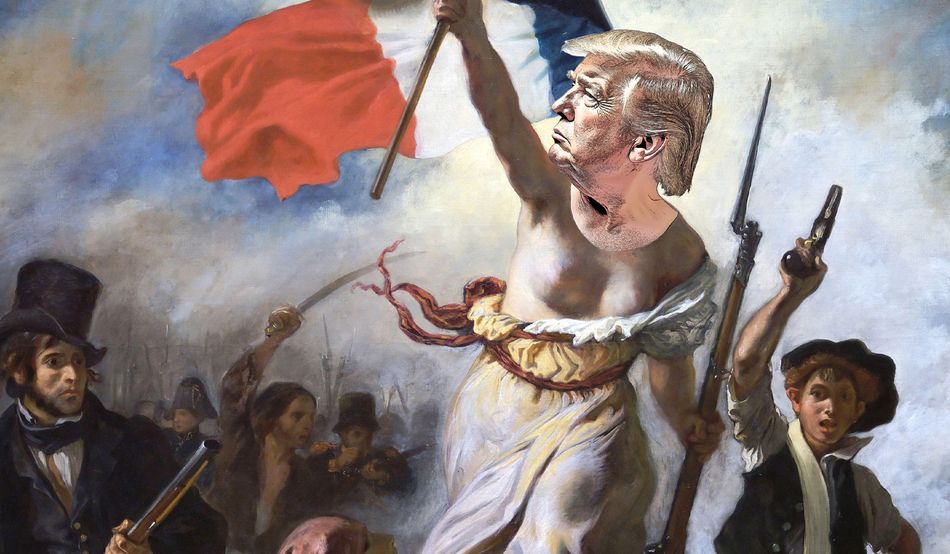
After 2010, he pioneered the use of democracy to undermine democracy, using a constitutional majority to strip the Constitutional Court of its powers, gerrymander the electoral system, seize control of state media and sell off private media to his supporters. By the summer of 2014, he was publicly celebrating his constitutional revolution as the creation of a new political form called “illiberal democracy”. In stripping out the liberal checks and balances that are supposed to save majority rule from tyranny, he created the model for bigger illiberal authoritarians like Donald Trump. He was the first European leader to see Trump as a kindred spirit and the first head of government to endorse him in the 2016 US election.
Like Steve Bannon, the Maga agitator, Orbán understood that “politics is downstream from culture”. This insight turned Orbán from just another eastern European authoritarian into the ideological avatar of an illiberal counter-revolution. While Orbán’s authoritarian instincts are inherited from the Communist era of János Kádár—and before that, from Admiral Horthy’s antisemitic rule in the 1920s and 1930s—he realised that ideological domination was a more effective means of control than the old authoritarian reliance on police terror. There are no political prisoners in Orbán’s Hungary, but there is no escape from his regime’s omnipresent and suffocating media strategy, which depends on the unending invention and vilification of hate figures. The first target was the EU bureaucracy in Brussels, re-imagined as a hydra-headed monster threatening plucky little Hungary. Orbán even dared to liken Brussels’ mild and ineffective influence over Hungary to Moscow’s iron control over its Soviet satellites. Having taken Hungary into Europe, Orbán managed the trick of holding power for 16 years by vilifying Europe from Monday to Friday, then cashing Europe’s subsidies on the weekends.
Having turned Brussels into the necessary enemy, Orbán moved on to demonise Soros, Jewish Holocaust survivor, billionaire hedge fund speculator, most famous living Hungarian, prominent donor to liberal causes and the young Orbán’s early sponsor. Soros provided the funding for Central European University (CEU), a graduate school created by liberal dissidents in 1991 to bring academic social science and the humanities to a country that had known neither academic freedom nor ideological diversity since 1945. Facing a re-election campaign in 18 months and in need of an enemy to rally his forces, Orbán decided in 2016 that he would campaign to drive Soros and all his works out of Hungary.
CEU, where I served as president and rector from 2016 until 2021, couldn’t be attacked for its academic performance, since international comparisons recurrently ranked it as the best university in its field in Hungary. It couldn’t be attacked for being a liberal party school, for it stayed out of Hungarian politics, did not attack the government and did its best to host a diversity of ideological voices. Instead, Orbán outlawed CEU on the grounds that it lacked a campus in the United States, the other country where it was accredited.
The timing of Orbán’s attack on CEU, right after Trump’s election in November 2016, illuminates how the fledgling alliance of illiberal authoritarians operated to support each other. Orbán would never have dared to attack a US-accredited institution, had he not been sure that a Trump administration would never defend a school funded by Soros.
CEU resisted Orbán’s attack on academic freedom and discovered it had the people of Budapest behind it. In May 2017, 70,000 people marched past the university into the square in front of the parliament buildings, chanting, “free universities in a free society”. It was the largest demonstration in the city since 1989, and the Budapest crowd understood the attack on CEU was an attack on what remained of their democracy, as well as an attempt to destroy the autonomy of Hungary’s entire academic system, its two-century-old Academy of Sciences and its network of state-run universities. Orbán successfully expelled CEU, forcing it to move to Vienna, and brought the entire Hungarian university system under tight ideological control. American politicians soon began to make pilgrimages to Budapest to learn from the master; when Trump inaugurated his second term with a comprehensive attack on America’s Ivy League, it’s not fanciful to think that it was Orbán who first seeded the idea that universities would make a good target.
Orbán’s major innovation as an illiberal authoritarian has been to reframe the battle with liberalism as a Kulturkampf—cultural struggle. Unlike any other leading figure of the political hard right, his regime funds conservative research institutes, thinktanks and universities, both in Budapest and Brussels. These institutions provide generous stipends to the growing ranks of young conservative ideologues and thinkers from Europe and North America. They are illiberal authoritarianism’s training ground and their researchers regard the battle with liberalism as much more than a seminar room debate. It is a fight to the death with enemies who must be crushed at the ballot box, but also routed in the field of ideas.
Through this investment in cultural struggle and ideology, the leader of a small country in eastern Europe has leveraged himself into becoming the leading figure of the conservative counter-revolutionary intelligentsia that spans Europe and North America. The American Conservative Political Action Committee (CPAC) has met five times in Budapest, most recently this March. At CPAC, these self-styled antiglobalist “patriots” proudly declare: “We are the sand in the machine, the stick in the spokes and the thorn under the nail.” This coy embrace of embattled victimhood conceals the reality that the movement holds power in Washington, Budapest and Rome already, competes for power in Germany, France and the UK, and on American campuses is busy suppressing the academic freedom and institutional autonomy it professes to defend.
Trump has provided Orbán with a model of how to deny the plain facts of electoral defeat
Tisza’s rise in the polls threatens Budapest’s position as the capital of the authoritarian counter-revolution, just as an unpopular war in Iran threatens Trump’s hold on his own Maga base. If Tisza does win, it will lay bare a deeper weakness in the whole conservative counter-revolutionary project. For what Tisza has exploited is a longing for a government that does not derive its energy from the demonisation of enemies. One of Tisza’s most successful slogans has been “Not left, not right, only Hungarians”. At their rallies, Magyar tells them to reach out and take the hand of the person next to them. They sing Hungarian folk songs together and Hungarian flags fly everywhere; Magyar has been successful in refusing to cede national patriotic appeal to the Orbán camp. Tisza is trying to reinvent a new kind of patriotism, one rooted not in loathing of fellow Hungarians or entitled liberals elsewhere, but in recovering what Hungarians want to share across the discredited political divides of the past. One of the party’s most successful slogans—“Don’t Be Afraid”—is actually an appeal to rebuild civic trust among strangers.
No one knows whether this appeal to the better angels of Hungarian life will succeed, but there is certainly a hardheaded calculation at work here. Magyar and Tisza have spotted a mistake in Orbán’s political performance: he’s left the centre vacant in his relentless drive to mobilise his base. It’s in Orbán’s nature to fight, to rule by provoking division, enmity and suspicion of others. But it’s also his nemesis. It’s just possible that it’s the nemesis of an American president too.
Nemesis, however, is not in the hands of the gods, but in the hands of ordinary voters. Orbán rode to victory by exploiting disillusion with Europe after the financial crisis of 2010. He stayed in power until the Covid crisis by presiding over an economy delivering between 2 and 5 per cent growth a year. In that period, he created his “national bourgeoisie”, a middle class tied to Fidesz by their dependence on favours, contracts and preferential deals from the state coffers. The Orbán system solidified his electoral base by making them economically dependent on state-funded largesse. A movement which in 1989 was full of idealistic twentysomethings committed to freedom had rigidified by the 2020s into an aging and cynical cadre of hacks, each methodically skimming from the state contracts they doled out to supporters. The corruption is not occasional. It is systematic, the very means by which authority is exercised and Orbán’s rule perpetuated. Now that the economy is struggling at nearly zero growth and the treasury cupboard is bare, the regime’s stealing seems less like an unchangeable fact of life and more an unaffordable arrogance.
Orbán remains skilled at presenting himself, especially in a still village-based society, as the carefree, colloquial football-playing village boy he once was, but the whole country knows his father owns a Hapsburg-era estate on the edge of the village; all Hungarians can laugh that Orbán’s village has a narrow-gauge railway and a football stadium several times the capacity of the village itself. The public knows his children own Budapest hotels and large chunks of real estate at home and abroad. The Orbán family’s personal corruption has long been an accepted feature of the folklore of Hungarian politics. Everybody knows about it and everybody once accepted it, as they once accepted the dachas of the Communist nomenklatura on the shores of Lake Balaton, but with Tisza leading in the polls, Hungarians are discovering that the corruption is suddenly insufferable.
The unanswerable questions about the future are whether disgust and hope will turn enough people out to the polls to defeat Orbán, and whether he will cede power if he loses. Trump has provided him with a model of how to deny the plain facts of electoral defeat. So Orbán might try to hang on, and then the outcome may depend on whether other European leaders give him a push, or whether Tisza supporters decide to challenge him in the streets. Memories of Budapest 1956 make such a confrontation a dreaded outcome. If Tisza wins, but only narrowly, Orbán may decide to relinquish power, go into opposition and plot how to bring the new government down, return to power and then announce, with a smile on his face, “I told you so.”
If Tisza wins, euphoria will be brief. In government, the party would have to avoid drowning when the dam of pent-up expectation bursts. Its supporters may demand revenge on a hated regime, and that may deepen the hatreds and divisions in Hungarian society. There will be expectations that hospitals, railways, schools and care homes, neglected for 16 years, will be repaired and rebuilt. The new government will face these pressures with a depleted treasury and will depend heavily on the EU releasing the billions they’ve held back from Hungary for violations of the rule of law.
At time of writing, no one knows what the result will be, but whatever it is, it will be a straw in the wind indicating the direction of travel for larger historical forces. Before the midterm elections in the US, before the French presidential elections in 2027, before an election in the UK which will decide whether its existing parties have to make way for Reform, there will be an election in a faraway country, in the backyard of Europe, that will tell us all which way the winds of history are blowing.