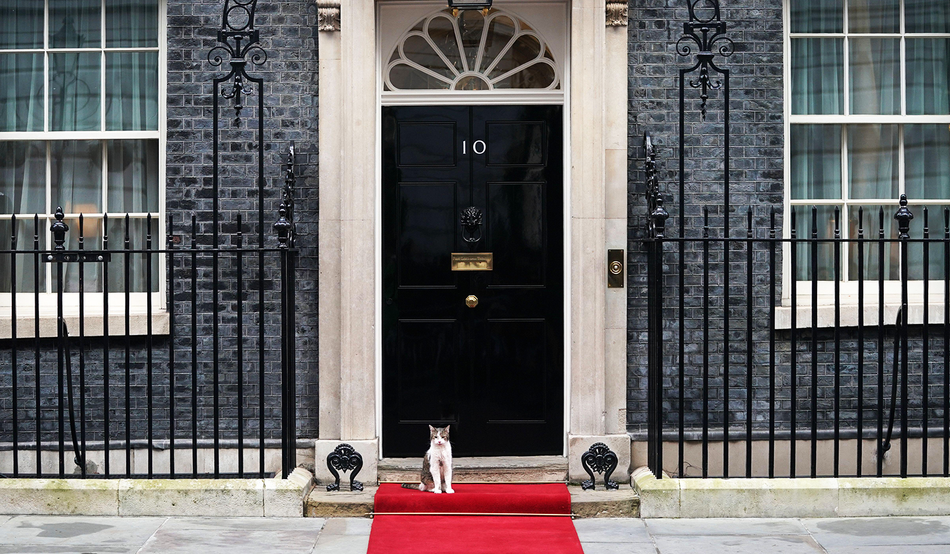
Number 10’s famous front entrance has become the most notorious revolving door in Europe. We have had as many prime ministers in the last 10 years as in the previous 40. The United Kingdom is the “new Italy”, now infamous for constant changes of government.
And the instability is getting worse. The two big issues in current British politics are an attempted coup within the Labour party against Keir Starmer, who has been in Number 10 for less than two years, and the likelihood of arch-populist Nigel Farage replacing whoever holds the keys at the next general election in just three years’ time.
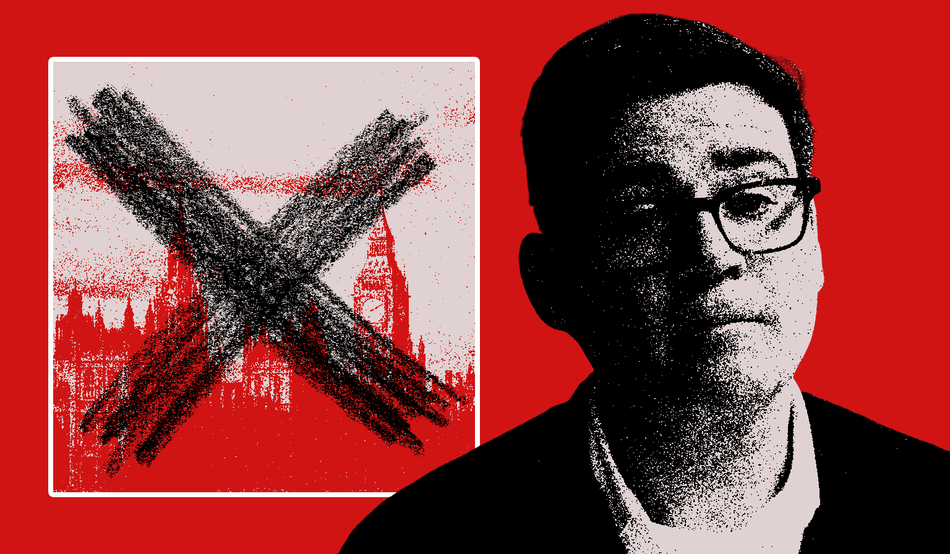
The politics of the past week has been dominated by these two stories. The upcoming Makerfield byelection, scheduled for 18th June, is being held for the sole purpose of enabling Andy Burnham to launch an immediate Labour leadership challenge to Starmer. And the controversy about Farage’s latest claim, following the murder of 18-year-old Henry Nowak, that the police are systemically biased against the white population is fuelled by alarmism that someone holding such incendiary anti-immigrant views is leading the polls and could soon be our prime minister.
Makerfield is lose-lose not only for Starmer but for any hope that the Downing Street revolving door is slowing. If Burnham wins, he has said that he will challenge Starmer as soon as possible. But if he loses it would be a shattering Labour electoral defeat directly at the hands of Reform UK, hugely boosting Farage and almost certainly precipitating a Labour leadership challenge in any event.
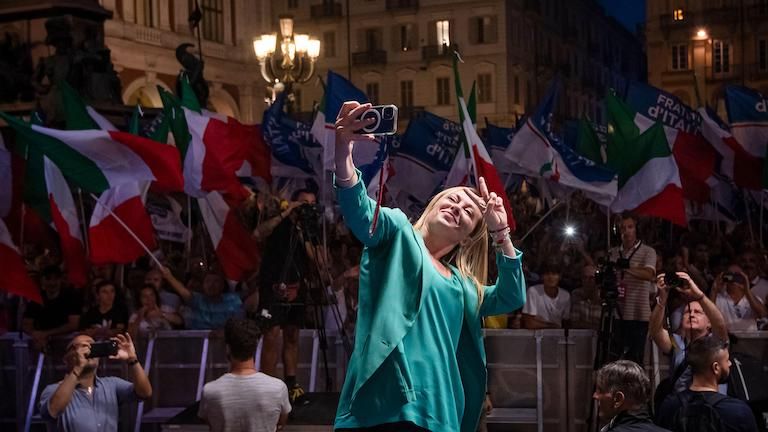
The irony is that the UK has become the “new Italy” just as Italy itself is showing signs of becoming “old Britain”. Its current prime minister, Giorgia Meloni, is about to reach the four-year mark, and will soon become the longest-lasting head of a government since Mussolini. She is also favourite to win Italy’s general election due next year, so could conceivably be at the helm in Rome for years to come.
So, what should we learn from Meloni? Having investigated, I wish I could report a simple recipe to be copied. But there isn’t one.
On every front—political, economic, immigration—Meloni’s record is mixed, or hard to read across into lessons for the UK. She has played the Brussels well and secured big EU post-pandemic funding, but Italy’s growth this year is below both the UK’s and the EU average, she has offered no bold economic reform, and her country’s huge debt burden isn’t reducing. Illegal immigration has fallen sharply, but legal immigration has risen as a deliberate policy to counter population decline. She has tamed a fractious political coalition but in March decisively lost a referendum on judicial reform, shattering a flagship strategy and any notion of her invincibility.
However, wading through analysis and commentary on the mercurial Italian leader, one theme becomes ever more apparent. Meloni has consistently exceeded expectations. Starting from a very weak political and economic position in 2022, with a record as an extreme populist—pro-Putin, Eurosceptic, anti-immigrant, involved in culture wars, the lot—she rapidly became a masterclass in “tough pragmatism”, earning plaudits in Brussels, Washington, Rome and beyond. Partly this was about retreating from previous extremes, notably on Russia, but equally important was the building of strong alliances across the political and international spectrum, bringing big benefits in, for example, securing EU funding and curbing illegal immigration.
Contrast this with the UK. Since Cameron lost his EU referendum in 2016, every prime minister has performed worse—mostly far worse—than already low expectations. If Meloni is any guide, the leader who stabilises the ship won’t be a genius. They will just be far better than generally expected. Fortunately for Burnham, the most likely next leader, this offers real hope. General expectations could hardly be worse.