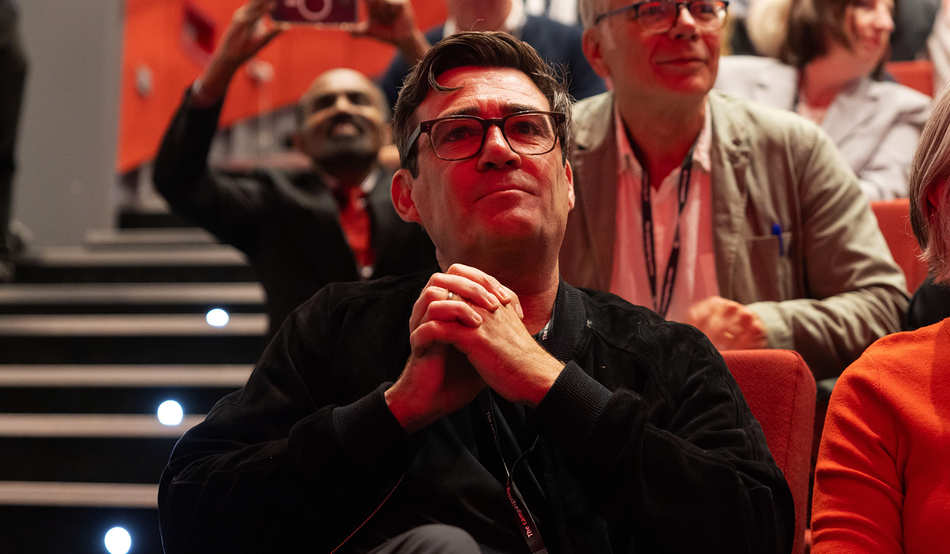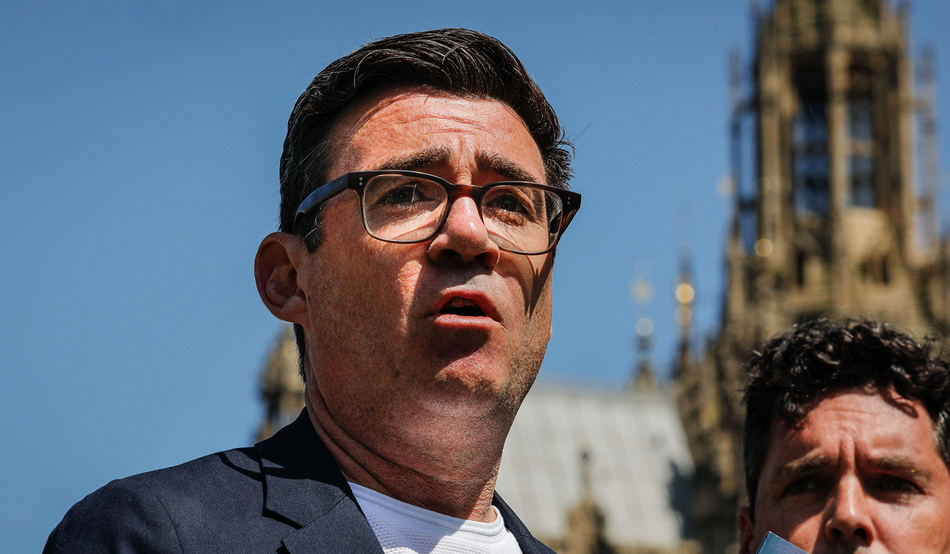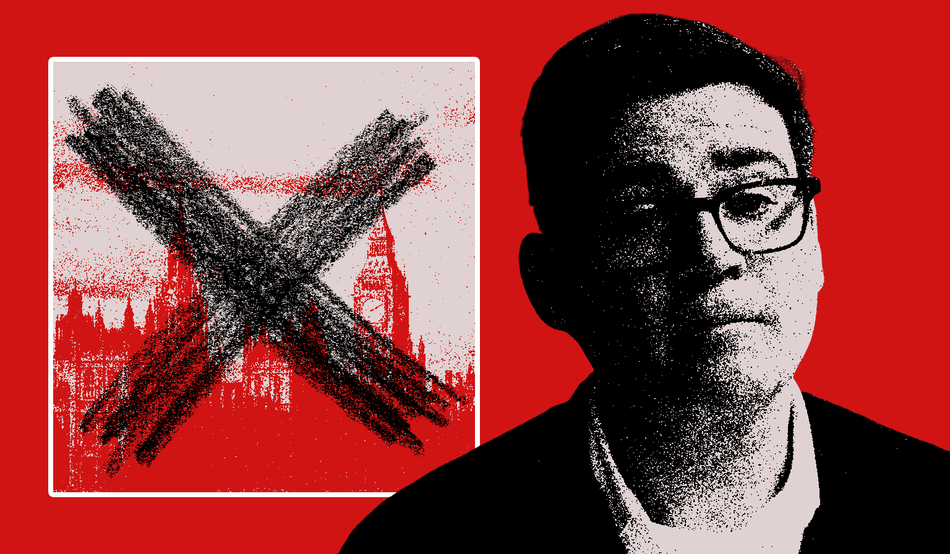
Andy Burnham’s return to parliament has been blocked by the quickfire vote of a London-based sub-committee of the Labour party, mostly packed with backroom boys and girls. Interpreting a recently rewritten rule, on Sunday they denied the three-time winning mayor of Greater Manchester the chance to contest a seat in his own stomping ground.
If you were inducting an innocent in the ways of “machine politics”, you couldn’t do better than point at this latest episode. Our innocent might well be shocked by the stitch-up. Those who know their Labour history, however, may be less than surprised.
The zealous Methodist consciences and awkward trade unionists who originally made up the Labour base were always harder to marshal than those of other political forces. A fierce culture of control evolved in response to this reality. This culture lives on in the language of composite motions, standing orders and subclauses, the mysterious currency with which obsessive party apparatchiks defer awkward votes and duck debates they would rather avoid. Deep in the past, titanic figures such as Stafford Cripps and Aneurin Bevan would sometimes be given the boot, and machine man Herbert Morrison ordered radical hearts back into line with the supposed injunction that socialism was simply whatever “a Labour government does”.
In this sense, Keir Starmer could claim that numerous machinations under his watch—from the 11th-hour ousting of left-wing election candidates such as Faiza Shaheen to the suspension of MPs for taking a stand on family and disability benefits (which his own government later embraced)—is in keeping with Labour tradition. His difficulty, however, is that it is increasingly obvious that the machine is no longer working on behalf of a broad swathe of moderate opinion in the party, let alone the country. Instead, it is operating in defence of Starmer’s position as a singularly unpopular leader.
Until recently, the reigning wisdom in Westminster was that the ruthless grip Starmer had exerted on his party, from the moment of Jeremy Corbyn’s 2020 suspension on, was just what the party needed to restore its standing, which had been trashed under the old leftist’s watch. That view appeared to have been vindicated when Starmer secured a Commons majority of 172 in 2024.
Well before polling day, however, some of us were warning of the dangers of misreading the prospective routing of a crumbling Tory regime for the “mass enthusiasm for a centrist machine politics”. The mechanical efficiency of the 2024 result, when it came, concealed an underwhelming vote share, sapped by desertion to radical forces in the party’s inner-city strongholds. Over the subsequent 18 months, the administration’s reluctance to pick a fight on its right flank over any of its (real) progressive policies has left the resented—and now mostly abandoned—attempt to means-test pensioners’ winter fuel payments as the government’s single most prominent decision in the minds of voters.
Starmer has now taken the original impulse to steer a tight and respectable ship to the point where almost no one wants to climb aboard. Immigration obsessives are bound to prefer Reform UK, and his tax rises to fund public services give the Conservatives a cause to rally natural Tories. The Greens have turned red, and are mopping up an ever-present socialist minority of voters in England; Scotland looks lost for Labour; and in Wales the party looks close to extinction. The prime minister has personal ratings that would make any of his predecessors, bar Liz Truss, blush. Labour’s share in the polls averages just 18 percent.
In the end, political leaders need to persuade. When they are not aligned with voters, the protection that a well-oiled political machine can give them doesn’t last indefinitely. Even the seemingly all-conquering Tony Blair learned this to his cost when he resorted to all sorts of manoeuvres to block Labour hopefuls with strong local credentials in London (Ken Livingstone) and Wales (Rhodri Morgan), before ultimately being forced to welcome both back into the fold.
Against today’s abject political backdrop, Starmer’s backroom victory over a popular politician who fancies replacing him won’t restore even temporary control. He may have carried the officers’ group of the NEC easily against Burnham on Sunday, but aside from his deputy (who rebelled) and his (shrewdly abstaining) home secretary, Shabana Mahmood (who chairs the NEC, and herself chaired the sub-committee that voted on the Burnham case), Starmer himself was the only person voting that anyone has heard of.
On Monday, the prime minister pleaded that, in the context of the great “fight with Reform”, precipitating an unnecessary byelection for the Greater Manchester mayoralty by allowing the incumbent to leave the job was too risky. But when Burnham carried the last contest by a crushing 63 per cent to his nearest rival’s 10 per cent of the vote last time around, this itself seems a desperate admission of Labour’s current weakness.
As things stand, there has to be a danger that the eventually approved Labour candidate in the Gorton and Denton byelection is defeated—and, in the very worst case, experiences the sort of humiliation visited on the hand-picked Frank Dobson in the inaugural London mayoral race on behalf of Blair. If so, Starmer will have nowhere to hide. Indeed, Cabinet ministers—including the wily Wes Streeting, whose own leadership ambitions could have been thwarted by Burnham—have gone out of their way to wash their hands of any responsibility for the mayor being blocked.
It now seems plain that there is only one lonely man left operating the machine. His command of it is total, yet brittle. It could all too easily crack.