Here's a paradox. Ten years after the Brexit referendum, short-lived, failing British governments have become the norm and Europe is the curse of our politics. Yet British support for Ukraine, a hugely gruelling and expensive exercise in European solidarity, has been rock solid throughout. The UK has given crucial support to Volodymyr Zelensky’s spectacular David-beats-Goliath success against the Russian dictator Vladimir Putin.
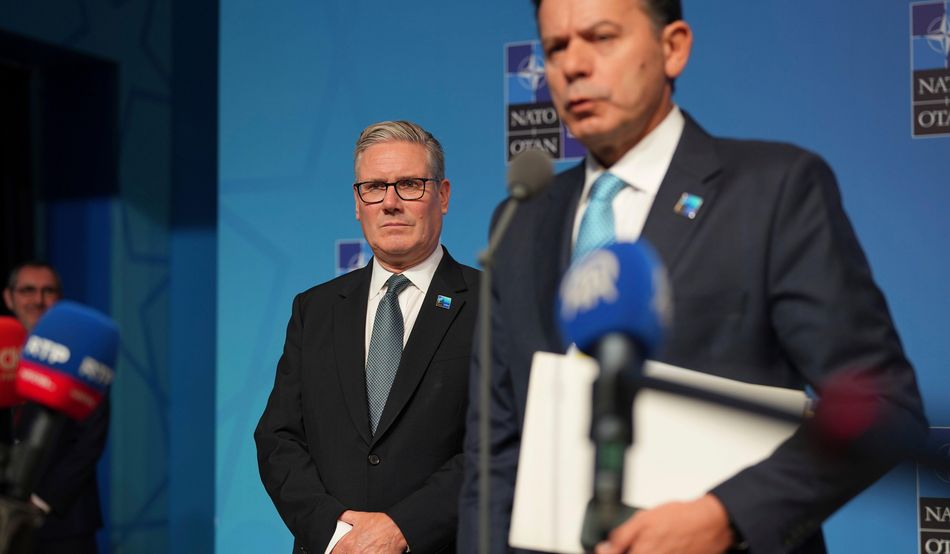
Appropriately, Keir Starmer’s last major act as prime minister is this week’s Nato summit in Ankara, where further support for Ukraine is top of the agenda. Starmer is once again be in the European vanguard, despite the extreme tension between Zelensky and Donald Trump, who all but abandoned Ukraine a year ago and expected the Europeans would do the same. Thanks in no small part to Starmer, the precise opposite happened. In barely a year, Europe has replaced the entirety of the US military aid to Ukraine that Trump withdrew after he took office last January.
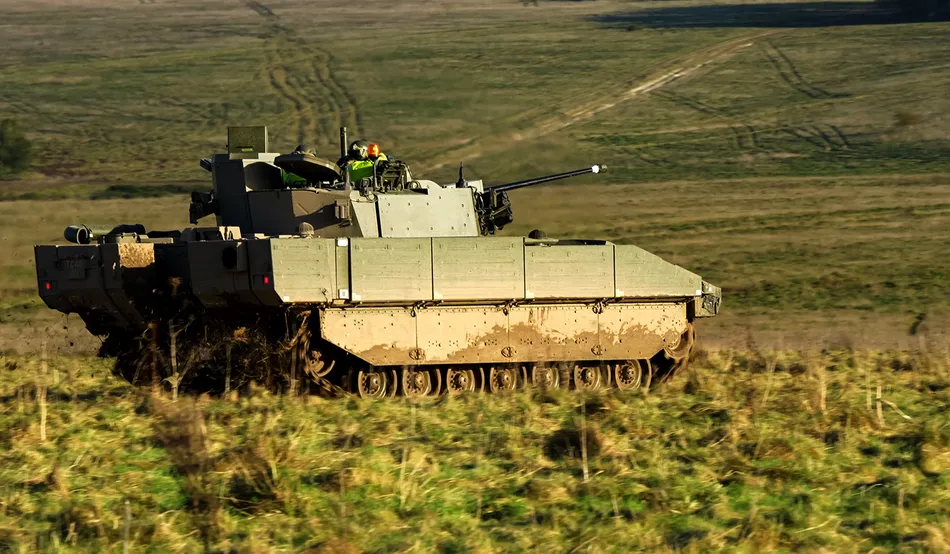
Funding increases in defence spending have become a crisis issue for post-Brexit governments. Yet despite this, the UK’s military support for Ukraine has been massive, running at some £3bn or more every year since the Russian invasion. And here again, there has been virtually no political opposition, not even from Nigel Farage, despite Trump’s constant praise for Putin and condemnation of European liberals.
How do we explain these apparent contradictions? How is it that Europhobia dissolves at the border with Ukraine?
The sheer horrific brazenness of Putin’s unprovoked 2022 invasion of Ukraine, tearing up Europe’s borders and threatening to subjugate millions, was obviously critical. Stalin, Hitler, the Kaiser—take your pick, Putin gave every impression of being from the same stable, provoking a Churchillian response on the right as much as the left. Boris Johnson, a biographer of Churchill, characterised the Russian dictator as a threat straight out of the 1930s. Putin’s prior direct attack on Britain, in the Salisbury poisonings of 2018, had already made him indefensible for almost every politician on the right.
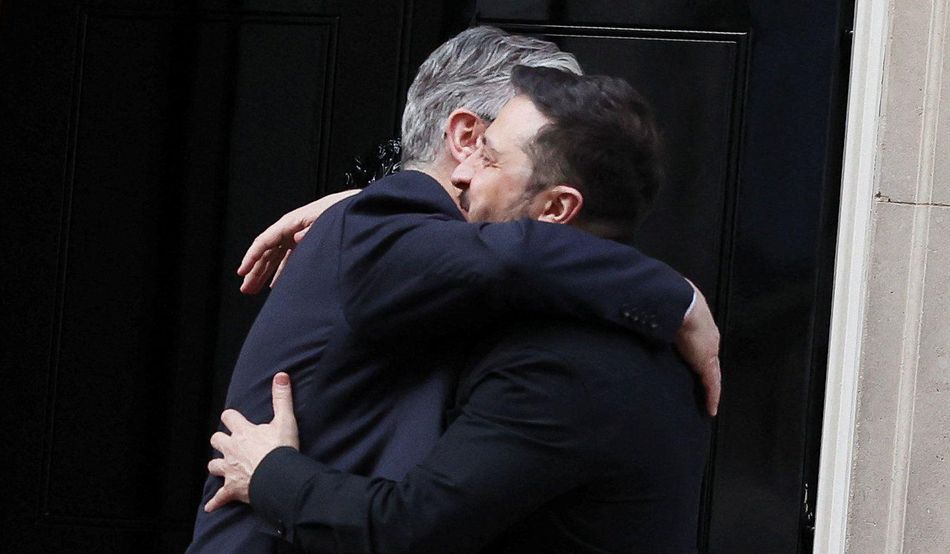
Zelensky’s heroic stand against the Russian invasion was equally vital. It reinforced the UK’s aforementioned Churchillian narrative, making neutrality virtually impossible. The dynamic became one of “who can support Zelensky more?” This was cultivated in no small part by Zelensky himself, with his man-hugs of fellow heads of government and his all-round brilliant PR on Ukrainian resistance and battlefield triumphs.
However, the Ukraine crisis, and Britain’s response, is deeply revealing of the contradictions at the heart of Brexit itself. Defence was excluded from Brexit. None of the leading Brexiters proposed withdrawing from Nato as well as the EU; on the contrary, they paraded the fact that they wanted to stay in Nato as proof that Brexit was “safe”.
They also highlighted the US dimension, to argue that Nato and the EU had little in common, despite their similar roots in postwar supranationalism. It would be amusing, if it were not deadly serious, that Brexiters are among those most vocal about the imperative to avoid a “Trump-exit” from Nato. That would threaten the security of the UK, as well as mainland Europe.
Equally telling was the “prosperity” contradiction at the heart of Brexit. Leaving the EU was always painted by Brexiters as a costless venture, indeed one that would make Britain better-off. This argument was fiercely disputed at the time, and it only narrowly carried the day even in 2016. But it took the passage of years since Brexit for this economic fantasy to be disproved. Putin, by contrast, wasn’t even pretending to make Britain richer by invading Ukraine, and the economic pain of his war was huge and immediate.
In reality, Brexit was only ever a half-withdrawal from Europe’s collective institutions, as well as from the postwar ideal of pan-European democracy being an engine of peace and prosperity. The Ukraine war not only demonstrated that fact; it also presented Britain’s leaders with an opportunity to lead in the Nato-enshrined defence component of this pan-European fabric.
To their credit, Boris Johnson, Rishi Sunak, Keir Starmer, and even Liz Truss, rose to the challenge. I suspect that in doing so they may have paved the way for Britain’s re-entry to the EU itself in due course.