Ukraine is out of the news, displaced by the escalating war against Iran started by Trump and Netanyahu. But Volodymyr Zelensky—remember him?—was in London this week, bearing some rather remarkable news. Not only is he still president of Ukraine, and not only is his beleaguered country still undefeated by its invading giant of a neighbour after more than four years of horrifically bloody fighting across hundreds of villages, towns and cities. But since the start of the year Ukraine has been winning territory from Russia, not the other way around.
In the world of Trump, this shouldn’t be happening. It is now more than a year since the excruciating humiliation of the Ukrainian leader in the Oval Office. Who can forget the scene as the newly re-elected Trump, bullying and belligerent, with JD Vance egging him on, as he shouted at his visibly shaken visitor (and supposed ally) before the world’s cameras? Telling Zelensky that he had “no cards”, that he was trying to start “world war three” by asking the US for more aid, that he was taking the US for granted? Or the subsequent tirades denigrating Europe for its weakness while praising Putin for his supposed desire for a negotiated end to the conflict.
Since then, the US has withdrawn virtually all of its financial and military aid from Ukraine. Month after month Trump and his emissaries have not only pressured Zelensky to settle with Putin, but to do so essentially on the Russian president’s terms, or otherwise face inevitable defeat. Trump even held a summit with Putin—a huge coup for the previously ostracised dictator—intending to agree terms which could then be imposed on Zelensky, cutting out Europe entirely.
So why, a year after the Oval Office catastrophe, is Zelensky upbeat? Partly, of course, because of his personal qualities of resilience and courage, which have been consistently on display since the Russian invasion of February 2022. But more importantly—since Ukraine, however bravely led, could not hold off Russia unaided—because Trump chronically underrated Europe, including our own Keir Starmer, and chronically misjudged Putin.
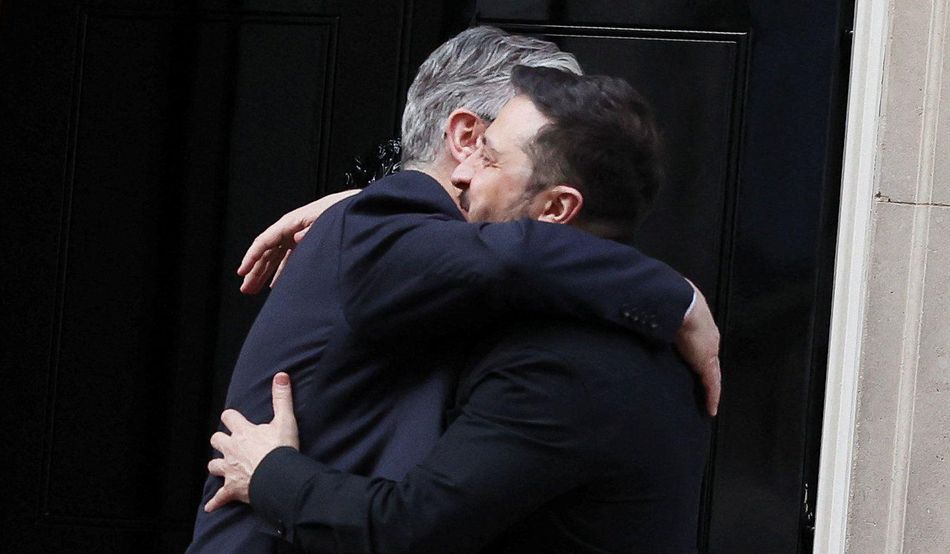
In retrospect there was a vital sequel to the Oval Office confrontation: the moment just a day later when Starmer hugged Zelensky in Downing Street, and promised that Europe would intensify its support, whatever happened in Washington.
Since then Starmer, Macron, Merz, Stubb, Tusk and von der Leyen have led Europe to almost entirely replace and backfill US financial and military aid to Ukraine. This has been a huge unsung triumph of European policy and cooperation over the past year. While refraining from responding publicly to most of Trump’s insults and taunts, Europe’s leaders called the president’s bluff by buying from the US the very weapons which the Pentagon had stopped supplying, including Patriot missiles and systems. In this way they have kept Ukraine in the struggle and even, latterly, to gains on the battlefield.
However, just as significant was Trump’s misjudgement of Russia. Trump thought he could get Putin to do a deal, starting with a ceasefire on current battle lines, which he would then support as a genuine compromise to bring about a lasting peace. Europe and Ukraine would then have little choice but to accept it, whatever their doubts. And Trump thought he could bring this about in part by massive economic blandishments (starting with the end of sanctions on Russia) to the mutual advantage of the cronies around both Putin and Trump himself.
Had this indeed been the case, there probably would have been a deal and Trump would be receiving his elusive Nobel Peace Prize. But it is obvious in retrospect that Putin had no intention of doing a deal short of Ukraine’s subjugation. Europe’s leaders, advised by their intelligence agencies, believed that this was the situation all along and that Trump’s American unilateralism would fail. This is largely why they stood by Zelensky, even at the price of an increasingly open split with their principal so-called ally in Nato.
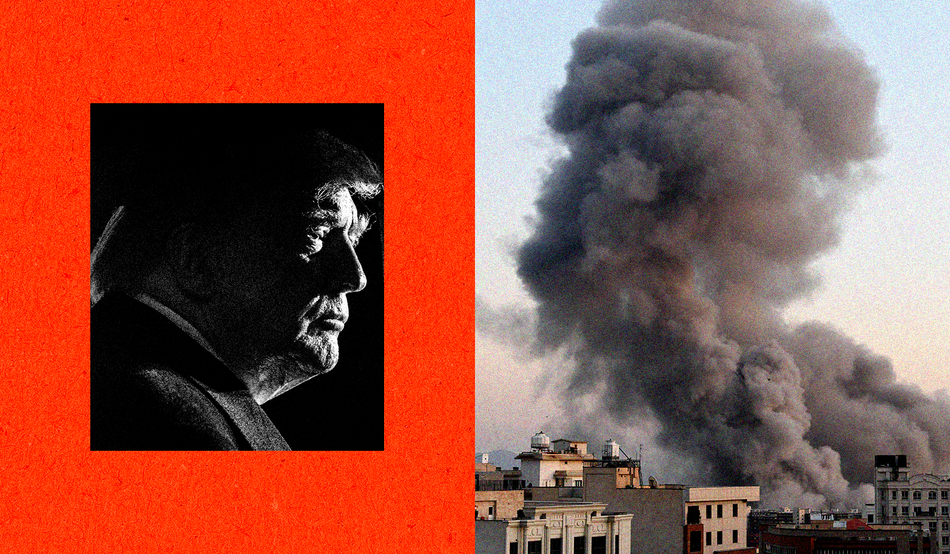
All of which explains why Zelensky, upbeat and undefeated, was this week in London. It is also vital to explaining why the same European leaders, including Starmer, have refused to go along with Trump in his latest international imbroglio in Tehran. It is not just that they were, yet again, confronted by unilateral American action. It is not even because they think it illegal, although that weighs with Starmer personally. Above all they think it is chronically misguided and destined to fail, because it misjudges the situation in Iran and is based on false, self-interested assurances from Netanyahu as to the likelihood of a quick win (that is, regime change) in Iran. These are every bit as misguided as the false, self-interested assurances of Putin when he said he wanted a truce in Ukraine.
On Iran there has been little attempt by Europe’s leaders even to paper over the differences with Trump. After a year of constant, almost daily belittling from the Oval Office and on Truth Social, not to forget all those tariffs and the threat to invade Greenland, Starmer and his European colleagues have simply declared from the outset that they disagree with the Iran war and won’t be participating. So far, their judgement appears to have been vindicated.
Is all this drawing the UK closer to Europe? Definitely so in terms of geopolitical positioning and defence. But not notably so in terms of trade and reversing Boris Johnson’s disastrous Brexit deal. In this regard, despite the rhetoric of rapprochement with Europe, reinforced by Rachel Reeves’s Mais lecture this week, Starmer hasn’t yet accomplished anything much at all. Even the modest economic “reset” agreed in principle with Brussels a year ago has yet to be negotiated into an actual treaty. Starmer has done a good job of reacting to American force majeure, but not a very good one of initiating delicate trade negotiations with Brussels. There the force majeure of Nigel Farage and Britain’s Europhobes still holds sway.
Meanwhile, for all Zelensky’s success at survival, with European aid, no end is in sight for the Ukraine war. And the Iran war could soon become equally problematic if Trump keeps bombing alongside Israel for a regime change that doesn’t happen, while global oil supplies are held hostage in the Strait of Hormuz. Both these wars require a US government with a credible strategy for peace, starting with an ability to build alliances across the west. In both respects, Trump is clueless.