In his famous cabinet paper of Christmas 1960, the Tory prime minister Harold Macmillan urged a fundamental change of strategic direction: to join the European Economic Community. Britain was struggling to adapt to the loss of empire and the postwar reconstruction of mainland Europe. National security required a bold strategy of participation in the fast-developing European economic bloc. Most serious economists and international analysts take the same view on Europe today. This isn’t surprising since they mostly argued strongly against Brexit 10 years ago, and their warnings have been vindicated.
I would reduce the welter of statistics and arguments to three basic points. First, Britain is getting relatively poorer, and fast. The UK’s per capita economic growth over the past decade since Brexit has been less than a third of that of the EU. This is despite the fact that the 27 member states that make up the EU—especially Germany, Europe’s anchor—face serious crises of competitiveness and energy prices. It is hard to see a future for Britain where self-exclusion from Europe’s customs union and single market is not a major drag on British prosperity, however successful our innovation in new sectors such as AI.
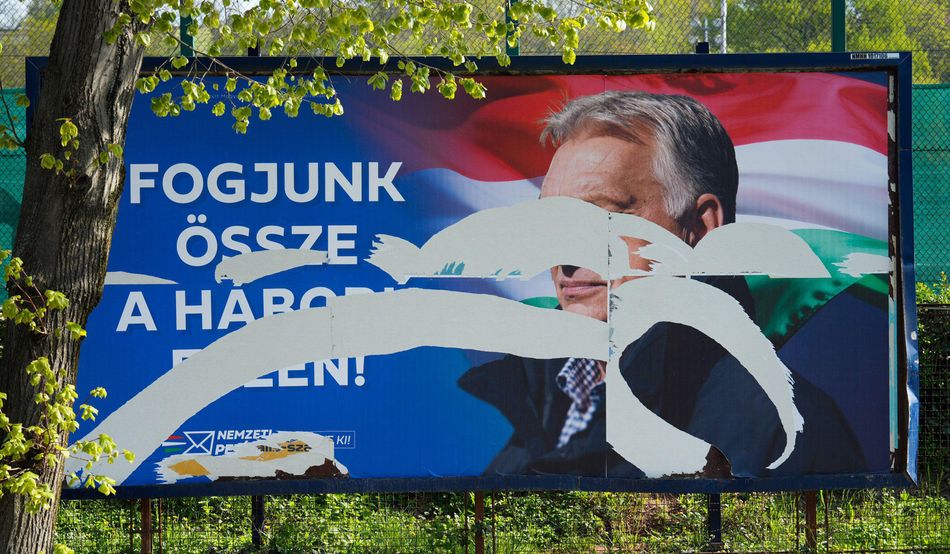
Secondly, and again as predicted by most serious analysts a decade ago, the EU is here to stay. No one else has followed Britain out of the Union, or even held a referendum on doing so. On the contrary, Brexit chaos inoculated other member states against following suit—including most of the continent’s populist parties, like France’s National Rally, which is pointedly not allying with Nigel Farage on breaking up the EU. Even the anti-EU Viktor Orbán kept Hungary in. And the EU’s integration is steadily deepening. The Eurozone is now a resilient 27 years old and embraces 21 of the 27 EU states.
Third, isolation is increasingly dangerous. Since 2016, Vladimir Putin has invaded Ukraine, the US has gone rogue with Donald Trump and Xi Jinping has asserted China as another authoritarian superpower. The Brexiters never dared apply their populist isolationism to Nato, yet Nato itself is now under mortal threat from Trump. A “European Nato”, composed of a closely tied UK and EU, has rapidly taken shape to support Volodymyr Zelensky in the face of Trump’s abandonment of Ukraine. This alliance could soon be forced to take on steadily more of Europe’s defence. Not even Farage is suggesting we opt out.
The policy case for Rejoin, which was strong from the moment of the Brexit referendum result, is therefore now overwhelming. Opinion polls show that a large majority of voters think Brexit was wrong, and a few centrist and left-wing politicians—Wes Streeting being the latest—are making tentative Rejoin speeches. Yet Rejoin is still not mainstream politics. This was demonstrated by Andy Burnham’s hasty about-turn on the issue this week, as he faces Reform UK in a byelection in a heavily Brexit-voting northern town.
So how long will it take for Rejoin to become politically viable? Let’s go back to Macmillan, the quintessential “one nation” politician of his era—a mantle Burnham is seeking to acquire in his bid to move from regional mayor to national prime minister.
Macmillan’s strategic shift towards Europe in 1961 came more than a decade after Britain stood apart from France’s Schuman declaration, which began the process of European integration in 1950. Throughout the 1950s, Labour and Conservative prime ministers championed an intensely nationalistic “global Britain” which would thrive outside the nascent European bloc. Even abject British military and economic humiliation in the 1956 Suez crisis wasn’t enough to break this consensus.
As an opposition politician in 1950, Macmillan had been an initial supporter of the Schuman plan. But it wasn’t until his fifth year in Number 10, after he had won a landslide general election victory in 1959, that he broke cover to make the public argument for joining the European “common market” (as it was then called). Even then, he was opposed by many right-wing Tories and the opposition Labour party, which made positively Faragist arguments about the betrayal of “a thousand years of British history”.
If this suggests that there may be even more economic and political misery before Rejoin becomes mainstream, then what happened after 1961 reinforces the point. Having converted Britain’s government to the cause of applying to join the common market, France’s president de Gaulle dramatically vetoed the British application not once, but twice, over the next seven years. It was a deliberate policy of European divide and rule.
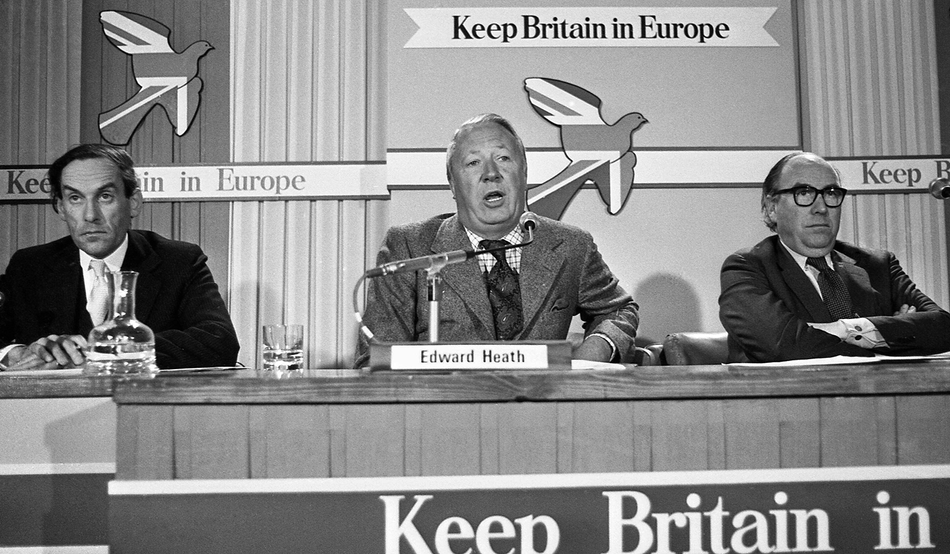
It took more than another decade before Macmillan’s successor but three, Edward Heath, was able to overcome the French veto in 1971. Even then, it took a closely fought referendum in 1975, another four years later, before British membership of the EU (as it is now) became secure. All the while Britain was in sharp relative decline vis-à-vis France and Germany. Contemporaries bemoaned the “British disease” and John Bull became “the sick man of Europe”.
In all, despite overwhelmingly strong economic and strategic arguments in favour, it took a quarter of a century—and a long succession of pro-European leaders who tried but failed—to get Britain “into Europe” the first time around. It was a long traumatic process. It doesn’t look as if it will be much shorter this time, or less traumatic. But at least Rejoin has now been relaunched.