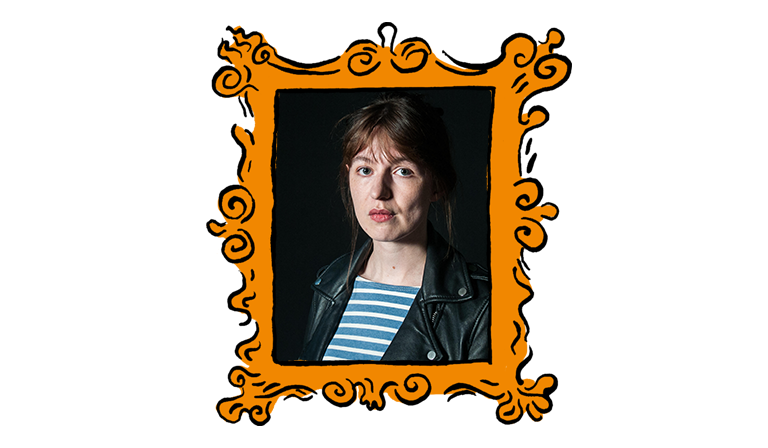
Aside from her highly readable novels about class, love and millennials, the Irish novelist Sally Rooney is well known for taking a position on Israel and Palestine.
Most notably, in October 2021 the news broke that Rooney, in line with her support of a cultural boycott of Israel, would not be publishing her third book, Beautiful World, Where Are You?, with the Israeli publisher that had released Hebrew-language versions of her first two. This was some months after an 11-day Israel-Gaza war, and, in July that year, Rooney had signed an open letter “against apartheid,” after Human Rights Watch and the Israeli NGO B’Tselem released reports concluding that Israel was guilty of it.
Unsurprisingly, Rooney’s decision drew fire from people opposed to the Palestinian Boycott, Divest and Sanctions (BDS) movement, first founded in 2005—or just to cultural boycotts in general. Dave Rich, the British antisemitism expert, posted on X at the time that “Hebrew isn’t an Israeli state product or invention. It’s a Jewish language, and cultural boycotts (like academic ones) are unavoidably boycotts of people, not governments. It’s the opposite of what art and culture should be.” Rooney’s choice was seen as evidence of the progressive left’s fixation with Israel, of Ireland’s identification with the struggle of Palestinians—and even of prejudice.
But Rooney was not averse to translating her books into Hebrew, per se. In a statement released that October, she clarified that, as an advocate of BDS, she could not “accept a new contract with an Israeli company that does not publicly distance itself from apartheid and support the UN-stipulated rights of the Palestinian people”. Rooney said she had been “very proud” that her first two books were translated into Hebrew. “The Hebrew-language rights to my new novel are still available,” she wrote, “and if I can find a way to sell these rights that is compliant with the BDS movement’s institutional boycott guidelines, I will be very pleased and proud to do so.”
Five years later, Rooney has made good on that sentiment. It has just been announced that, in June, the independent Palestinian and Israeli-run outlet +972 Magazine, alongside its Hebrew-language site Local Call (+972 is the area code for Israel and Palestine), will release a Hebrew translation of Rooney’s fourth novel, Intermezzo, with November Books, an independent Israeli publisher.
Aside from making the book available to Israeli readers, +972 says it pursued the project “to rectify false impressions — often propagated in bad faith — that the Israeli public and others have formed about the boycott movement: that it is hostile, violent, and antisemitic”. At least according to its guidelines, BDS is not an attempt to target “individuals because of their Israeli or Jewish origin or identity”; the target is “complicity, not identity”. As +972’s executive director, Haggai Mattar, notes, there is a precedent for BDS-compliant publishing in the Israeli market. Naomi Klein, another BDS supporter, donated the Hebrew-language rights of her 2007 book The Shock Doctrine to an independent Israeli publisher, Andalus, gifting them the royalties.
Whatever the context, the very notion of a cultural boycott divides the crowd. Proponents say it is a legitimate, non-violent way of making a point. Critics say it limits the ability of art to cross divides and is therefore counterintuitive; that it unfairly holds people accountable for government actions rather than targeting the authorities themselves. Asked about the idea that cultural boycotts close down “communication rather than opening it up”, Klein told an interviewer in 2009 that in Israel’s case they were certainly appropriate because “the Israeli government openly uses culture as a military tool”.
Of course, art can be, in itself, an excellent way of making a point. In January, Husam Maarouf, a Palestinian poet who lives in Gaza (and has written for Prospect), took the unusual step of publishing Crying in Front of the River Twice: Poetry from Gaza, in Hebrew and Arabic, in Israel. He hadn’t been looking for a publisher, but his friend, the Jaffa-based poet Ayat Abu Shmeiss, who also runs Mit’an Books, suggested it. “At first, I hesitated,” he told me via WhatsApp. But “I became convinced that it is essential for those who destroy my land, and kill my friends, and who didn’t watch what’s happening, to see my story, my emotions, and my voice through their own language.” The first edition has sold out and the second will be available soon.
Parallels with South Africa, where boycotts and sanctions brought down apartheid, are uncomfortable for many Israelis and the country’s supporters (though, surely, less uncomfortable than life under occupation and apartheid). But it’s not as if the mainstream Israeli publishing industry and media are necessarily all that apolitical, or truly open to debate. Israel: What Went Wrong? by the Israeli genocide scholar Omer Bartov, released earlier this year, has struggled to find an Israeli publisher, Bartov told the newspaper Haaretz. The book was released in April in eight languages, including Chinese—but not yet in Hebrew. In that 2009 interview, Klein reflected on the narrow scope for discourse within Israel: “What we’re finding is a lot of interest from Israelis but a huge amount of resistance from the Israeli media to just having the debate.”
Whatever one might think of cultural boycotts, at least Rooney’s position was—and is—not merely performative. Consider, by comparison, the New Yorker writer Jia Tolentino, who signed a pledge last October not to contribute to the New York Times’s opinion section over its Palestine coverage. Tolentino was later removed as a signatory after “violating the boycott” by… contributing to the NYT’s opinion section.