“The Biennale Arte 2026 is grounded in a deep belief in artists as the vital interpreters of the social and psychic condition,” reads the opening summary of the 61st international exhibition at the Venice biennale. “The premise is that poetry liberates and that people make beauty together.”
Given all the convulsions in the buildup to the grand opening this year—the return of Russia, the wholesale resignation of the prize jury, the protests by Pussy Riot, the day of strike action, the withdrawal of over 80 artists from awards consideration—this is precisely the kind of premise that should make even the most open-minded a little wary. Never do words alone feel so inadequate than during times of acute unrest; to put it bluntly, an appeal to poetry as a response to war just sounds a little blithe. The idea that we ought to find beauty in the margins of life, especially—in its “minor keys” as the exhibition title would have it—feels tantamount to a conciliation for defeat, to settling for less.
Indeed, most of the earliest reviews coming out of the international exhibition—curated by Koyo Kouoh, whose untimely death last year left much of her vision to be realised by her team—have ranged from the sympathetically mixed to the negative. And, in places, what was true of previous biennale exhibitions remains so this time: there is bloat and muddle, with too many works vying for your attention. Many of those works, perhaps worried that they might be interpreted too broadly, defer to wall texts that are more boring than illuminating. And yet: the 61st exhibition still manages to offer genuine glimpses of hope—in the margins of Kouoh’s own show, you might say, are surprises that defy the gloom, even if they never quite dispel it.
At the Giardini, one of the two biennale sites hosting the international exhibition, what’s striking is how these “minor keys” are mostly found by dwelling on what is provisional and labour-intensive: Beverly Buchanan’s shack sculptures, for example, or Wardha Shabbir’s intricately detailed paintings of fantastical Lahore gardens suggest an art that is more life-practice than the expression of an idea. But nowhere is this so acutely apparent as in the works made by Palestinian artists who are responding to one of the worst ongoing humanitarian crises of this century.
Mirroring the methods of his fellow Gazans, repurposing everyday materials as they attempt to rebuild their lives, Mohammed Joha’s Houselessness series of abstract collages are made largely from domestic scraps. They disarm precisely because they require so little explanation. At first, they seem familiar: not unlike a painting by Diebenkorn, perhaps, or even a cross-section diagram of the planet you might find in a school textbook. Looking closer does not make them any less familiar but rather changes the register, as each patch reveals something of its original identity: a yellow polkadot that could have been a scrap of tablecloth, or a floral pattern that was a piece of wallpaper.
Swiss artist Uriel Orlow’s projector and audio piece is similarly deceptive: an avuncular narrator gently beseeches us—“Come on!” or “Let’s go!”—while we flick through pictures mostly of wildflowers coming out of the cracks of buildings: “A landscape of time on a single stone brick.” What we’re seeing is the present-day scene where a massacre of a Palestinian village was carried out by Zionist militants in 1948.
Orlow’s small projection is one of very few multimedia works at the Giardini, an absence that is emphatically reversed at the second site in the Arsenale: here we return much more to the realm of fixed ideas, many of which are big on atmospherics but weak in most other respects. In Alfredo Jaar’s The End of the World (2023–24) we step into a large, red-lit room, vaunted almost like a church, to find in place of the altar a small cube composed of layers of the rare earths essential to modern technology. Unlike Joha’s layered collages, Jaar’s cube is nothing more than what he tells us it is: the lines of its critique are obvious, meaning they are all the more easy to ignore. (There is an irony, too, in people taking pictures of the cube using phones made from the exact same materials Jaar would have us condemn.)
Yet even at the Arsenale are some of those subtler “minor keys”. Éric Baudelaire’s five-channel video, The Flower in my Mouth, is a film in two parts: the first, unnarrated, follows workers quietly preparing flowers for sale in the world’s largest flower market in the Netherlands; the second is an adaptation of a play by Luigi Pirandello, about a man contemplating his death after discovering a tumour—a “flower”—in his mouth. Both parts are guided by an obsessive attention to small details: in the second act, we watch through the man’s eyes as he peers into a shop window at a woman taking immense care gift-wrapping a parcel. It’s less than 30 minutes long, yet I found it hard to really know what this film was trying to “say” to me: is it really just about finding beauty in the ordinary and mundane? I still don’t know, and in a sense it doesn’t matter; it’s a work that takes time to sink in, and I will probably still be thinking about it for far longer than many of the other things on display.
In some ways, there is a hint here of the problem with the biennale way of looking at art: it so rarely offers the space to think through works beyond some immediate purpose. But this might, in fact, be just how the biennale as an organisation would prefer it. By keeping horizons short, there are no problems or controversies that cannot be overcome; there is nothing about today’s protests, today’s drama, that cannot be flushed out by the news cycle; we will come back again in two years’ time and forget about all those who wanted no truck with it. That strategy might ensure the biennale’s perpetuation. It might also get in the way of more enduring art.
Venice beyond the brouhaha
This year’s artistic shindig in Venice has faced controversy after controversy. Still, it’s not a total loss…
May 14, 2026
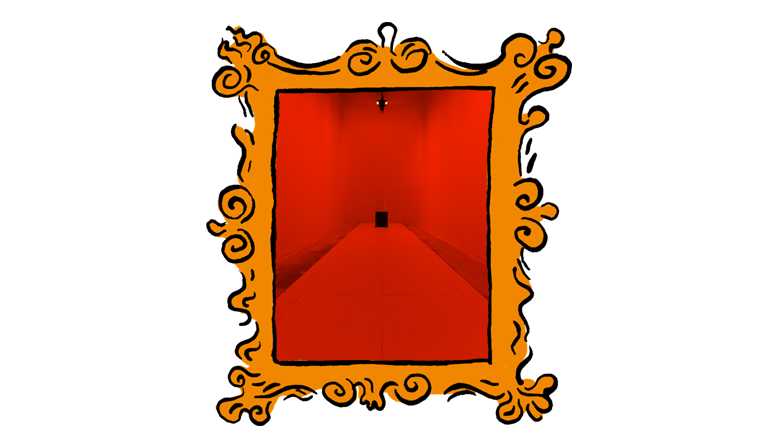
“The End of the World” (2023–24) by Alfredo Jaar at the 61st International Exhibition. Photo: Luca Zambelli Bais. Courtesy La Biennale di Venezia