Bagram air base, built by the Soviets some 30 miles north of Afghanistan’s capital Kabul, was once the epicentre of the longest war in US history. But when American forces left it on the night of 2nd July 2021, they did so without fanfare.
So little fanfare, in fact, that they didn’t even let the base’s new Afghan commander know they were going. General Mir Asadullah Kohistani only understood the Americans had left when dawn broke and he saw the electricity was off.
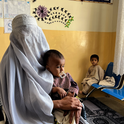
The following month, the Taliban—ousted in the 2001 US invasion that followed the September 11 attacks—were back in power. But even before Kabul fell in August 2021, signs that gave a taste of what was to come started appearing in Afghan cities as the Taliban gained ground. They showed two women, one in a headscarf, marked with a red cross, and one in a burqa, marked with a green tick. “Only one form of womanhood was acceptable now,” Zahra Joya, the Afghan human rights journalist exiled in London, recalls in her new memoir. “They wanted to make us disappear.”
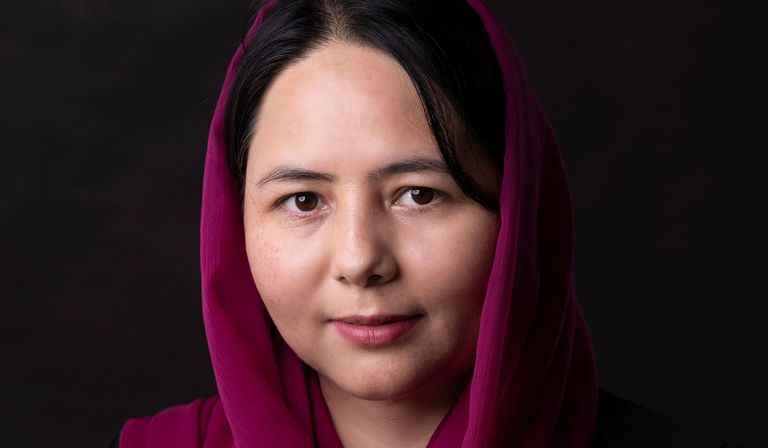
I meet Joya one July morning at her publisher’s building by the Thames. The 33-year-old has been living in London for five years and her book, written with British journalist Amie Ferris-Rotman, has just been released. The Vanishing Girl of Kabul channels Afghanistan’s painful history through Joya’s remarkable story. She was four when the Taliban first took over in 1996, curtailing rights and banning women’s education. But Joya, who grew up in a mountain village in a Shia Hazara family, was a “bacha posh”—Dari for “dressed as a boy”. This means that she lived as a boy until she reached puberty, and went to school when other girls couldn’t.
In 2011, Joya moved to Kabul to study law but became a journalist, later setting up her own news agency. Rukhshana Media, dedicated to reporting on Afghan women, is named after a woman stoned to death in 2015 for leaving a forced marriage to live with a man she loved. This work has earned Joya a place on the Taliban blacklist.
Rukhshana Media is run from Joya’s London flat. Seven on-the-ground reporters in Afghanistan have secret identities known only to her. She gives them new names every year, she writes, and “for security reasons, they do not even know each other”. In 2024, Rukhshana broke the story of a woman gang-raped in a Taliban jail. Her attackers had filmed the ordeal and sent the footage to their victim as a threat. They never imagined she would leak it to the press.
Things in Afghanistan are “getting worse day by day,” Joya tells me. “So many things are banned for women,” including university education and government jobs. Female UN staff are not allowed to go to their offices. In 2024, the Taliban banned women from speaking in public. The book also details the increase in suicides among Afghan women.
For Joya, what is happening to Afghan women is clearly part of a global trend. When Kamala Harris lost to Donald Trump in 2024, as the book notes, a Taliban official mocked the result in a post on X: “Americans are not ready to hand over the reins of their great nation to a woman.”
Joya wants the UK government, first, to “support us to push this gender apartheid to be recognised as a crime against humanity”, like racial apartheid. And, second, to support the International Criminal Court cases against two Taliban leaders. And though UK policy is to not recognise the Taliban as the legitimate government of Afghanistan, Britain does “engage pragmatically” with the administration for the purposes of, for instance, sending aid to the country. Even this should be conditional, says Joya, with aid channelled directly via independent NGOs where possible.
The Taliban “can’t do anything alone”, she says. “If they don’t receive support from other countries, I’m sure they’ll collapse soon.” Though, she notes, China, Russia and Iran are willing to provide support to the Afghan government.
“The good part is that they have this tension with Pakistan,” says Joya, referring to recent outbreaks of fighting on the Afghanistan-Pakistan border. “I hope it will be wider,” she adds, only half-joking.
That evening, at a bookshop for the launch of memoir, the room is filled with friends and family. Joya is regal in a long green shirt and a loose white headscarf. Her mother has prepared bosragh, a moreish pastry made with turmeric.
Addressing the crowd, Ferris-Rotman describes the book as a “labour of love and a labour of feminism”. The pair’s friendship is part of the story. They met in Afghanistan in 2016 on a course for women journalists set up by Ferris-Rotman. Only five years later, she was helping Joya and her family flee.
Joya lights up with pride when recounting how three of her siblings and her niece, with whom she fled to London, have built new lives in Britain. Joya’s parents joined them last year, but two other siblings are living abroad and have not been able to immigrate to the UK.
She can’t return to Afghanistan. From her bedroom in London, Joya works to make sure what happens there is known in the wider world. Her heart is here with her family, with her siblings not in London, and there, in Kabul and in the mountains where she grew up. In the memoir, she puts it like this: “Sometimes exile is just that, being in a safe country while your soul burns.”