The Afghan war crimes inquiry is extraordinary, not least in the evidence which it is placing into the public domain.
Its full name is the Independent Inquiry Relating to Afghanistan—and there can be no doubt as to its independence. This statutory inquiry is publicly disclosing some fascinating and worrying documents—the sort of documents which the public would normally not get to see.
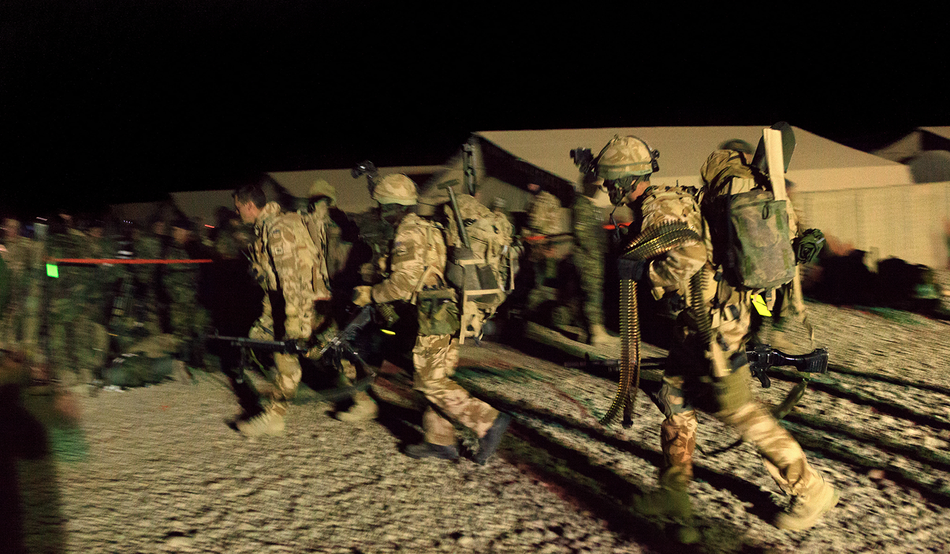
At the heart of the inquiry are documented and contemporaneous concerns about alleged “extrajudicial killings”—murders—committed by United Kingdom special forces in Afghanistan in 2011 and 2012. What makes these concerns distinctive is that they were expressed by senior military personnel at the time.
The cliché is that such allegations are usually made by ambulance-chasing lawyers with meritless claims. But that is not the case here. Serious concerns were expressed at the time within the UK military, up to and including the then director of special forces (DSF).
The inquiry has uncovered quite the documentary record. For example, there is this March 2011 internal note of a conversation where it was supposedly stated by a member of a special forces unit to the note’s author that it was “standard procedure” for “all fighting age males” to be killed regardless of any threat they posed, including after they were restrained, and that photographs would then be taken of the deceased with weapons they had not been using.
Then there is this internal document from a month later where the above information is conveyed by an officer to the DSF, explicitly stating the concern that there is an unofficial policy in special forces units “to kill wherever possible fighting aged males on target, regardless of the immediate threat they pose to our troops. In some instances this has involved the deliberate killing [of] individuals after they have been restrained […] and the subsequent fabrication of evidence to suggest a lawful killing in self-defence”.
Separate from the above, but at around the same time in February 2011, a senior officer employed as the assistant chief of staff operations to the DSF started expressing concerns internally about the disproportionate number of enemies killed on various special forces operations compared with the number of enemy weapons actually recovered.
What was the DSF to do with these internal concerns expressed by officers? Under section 113 of the Armed Forces Act 2006 a commanding officer must ensure the relevant armed service police are made aware of possibility of any serious offences committed. This does not mean that they must think that a serious offence, such as murder, has actually occurred. The requirement is that there is “an allegation or circumstances” that such a crime could have been committed.
But no referral was made by the DSF. Instead, the DSF signed a prepared document saying that he concurs with legal advice that the “use of force” was lawful. The 2011 typed notes were then stored away.
And there the matter would have rested, but for lawyers in 2014 suing the UK government in respect of the Afghans who had allegedly been murdered by special forces. Following the claims made in the lawsuit, a military police investigation was commenced into the alleged extra-judicial killings by UK special forces.
That military police investigation was eventually given the evidence about the internal concerns expressed in 2011 by officers. But the police investigation got nowhere, certain witnesses were not interviewed, and certain evidence not secured, and the investigation came to a final close in 2019 with no further action.
A preliminary expert report commissioned by the inquiry has found that this military police investigation was, in the words of the inquiry, “poorly led, inadequately resourced, and failed to meet the standards expected of a major investigation”.
This expert report, written by Alan Pughsley, former chief constable of Kent police and an experienced serious crimes investigator, considers that structural weaknesses, leadership failures and repeated changes in strategy and personnel undermined the military police investigation. He concludes that it could properly be seen as a “failing investigation”.
So what the inquiry has established, on a preliminary basis, is that the internal concerns expressed in 2011 were not referred to the military police, which would have enabled a prompt investigation when the evidence was fresh, and that the military police investigation which finally did take place was likely to fail to investigate the allegations properly.
None of this, of course, means that that serious internal concerns and allegations about extrajudicial killings are true. And it must be emphasised that the expert report into the failed military police investigation is a preliminary one and it is intended to be revised in the light of further evidence to the inquiry.
But what it does mean is that serious internal concerns and allegations about extrajudicial killings by UK special forces were not properly investigated either at the time or afterwards. At this stage of the inquiry, it is not clear why there was no proper investigation at the time or afterwards.
Part of the inquiry’s terms of reference is to establish whether there was a “cover-up” of the true circumstances of the killing of certain Afghans by UK special forces. To ascertain whether there was a cover-up, the inquiry will hear further evidence from those involved. But the documentary evidence disclosed by the inquiry so far indicates that a cover-up was possible.
Stepping back, the Afghan war crimes inquiry is a boon for the public understanding of what happened. The website is polished and comprehensive.
And in a sequence of rulings, often against the wishes of the UK government, the inquiry has insisted that certain documents be placed in the public domain as speedily as possible. Indeed, in a recent ruling the inquiry even ruled that it will not permanently adopt a “neither confirm nor deny” stance in respect of evidence provided in restricted hearings.
The overriding objectives for any inquiry, especially one dealing with serious allegations, are for it be open, thorough and fair. This is, however, a difficult balance to strike. So far, the Afghan war crimes inquiry seems to have got the balance right, and whatever its eventual conclusions, the public may be able to see how the inquiry got to those conclusions.