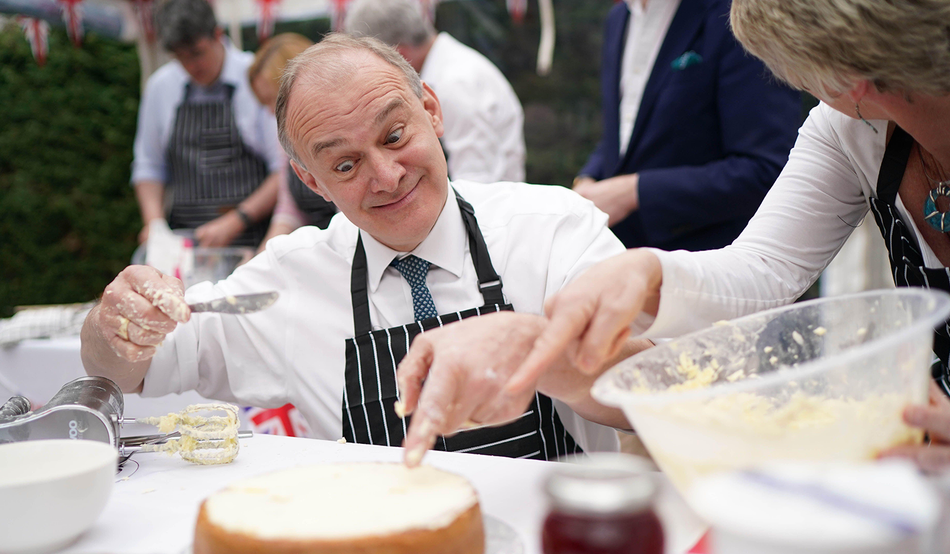
Another day, another campaign launch for May’s elections to English local councils and the parliaments of Scotland and Wales. This Tuesday it was the turn of the Lib Dems whose leader Ed Davey undertook another of his classic stunts—this time decorating a cake—intended to project an image of decency and cosy normality in a political world where both are in short supply.
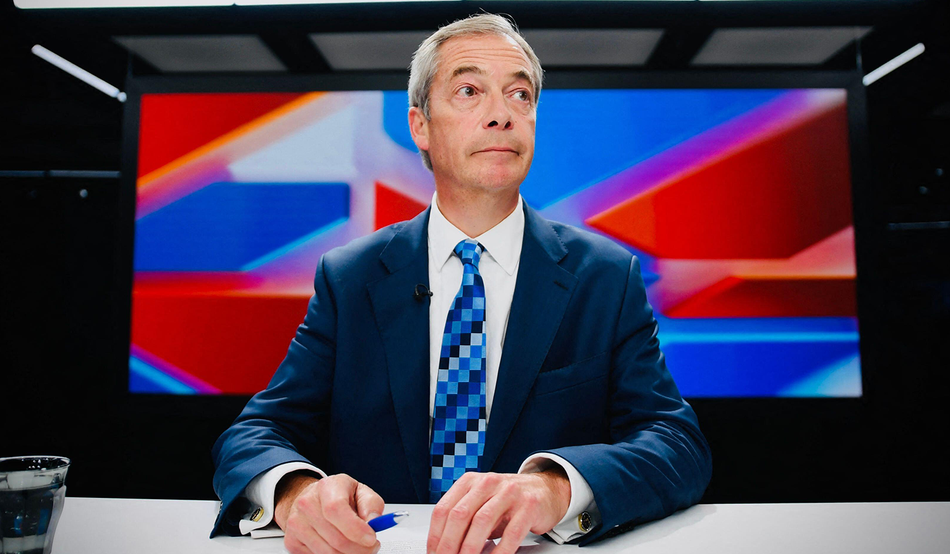
It was also a bid to get noticed by the national media, which is increasingly hard for the Lib Dems. Great Britain now has nine political parties with representation in parliament, which is a record. All of them are fielding candidates this May in at least some part or parts of England, Scotland and Wales. And the Lib Dems don’t have the benefit of a tame TV station promoting them in the way that GB News seems to promote Reform UK and Nigel Farage.
So what will this May’s elections do to Britain’s novel nine-party system, which excludes parties from Northern Ireland, where the main parties do not campaign and thus inhabits its own somewhat detached political ecosystem. If you are on an exclusively GB News diet, you might think this a transitional fracturing of the old Labour-Tory party system, with the whole thing about to be swept away by Reform. But this is not likely, because most of these nine parties—including the Lib Dems—have gained or retained strong bases of local and/or regional support. So there probably won’t be an immediate shake-out which reduces the number of parties in the Commons dramatically.
The SNP looks set to win big in Scotland. Plaid Cymru has a good chance of topping the polls in Wales—but even if Reform does manage to overtake them in the poorer English-speaking south and east, a Plaid-led coalition excluding Reform would likely be the upshot.
The Lib Dems boast historic strength and a formidable ground operation across the southern English Home Counties, southwest England and the more affluent suburbs of London. They will probably emerge stronger in these areas, at the expense of both Labour and the Tories, keeping Reform at bay.
Reform looks set to sweep many of the poorer districts of England, particularly in the north and the east. But they will probably poll behind the Tories across more affluent southern England and in London, so a Tory wipeout by Reform is not on the cards.
The Green party, with their new populist leader Zack Polanski and their recent byelection success in Gorton and Denton, looks set to surge in London and England’s other major cities, where Labour has been on the ascendant for more than a decade. But Labour will probably remain strong enough to retain control of much of metropolitan Britain.
That accounts for seven of the nine parties. It leaves only two which are unlikely to win anything much in May: Jeremy Corbyn’s Your Party and Rupert Lowe’s Restore Britain, a new far-right breakaway from Reform. But of the two only the former appears immediately vulnerable to extinction—in Corbyn’s case to the Greens, who are sweeping across young and ethnic minority populations in urban areas.
Lowe, by contrast, has a cult following in his attempt to split Reform from the far right, and he has the financial and social media resources to keep going for a least a while longer. Lowe, whose messianic self-belief and calm belligerence is reminiscent of Enoch Powell, looks like a gnat to Farage, but he could possibly become a mosquito, particularly if the right-wing media start giving him a more prominent platform.
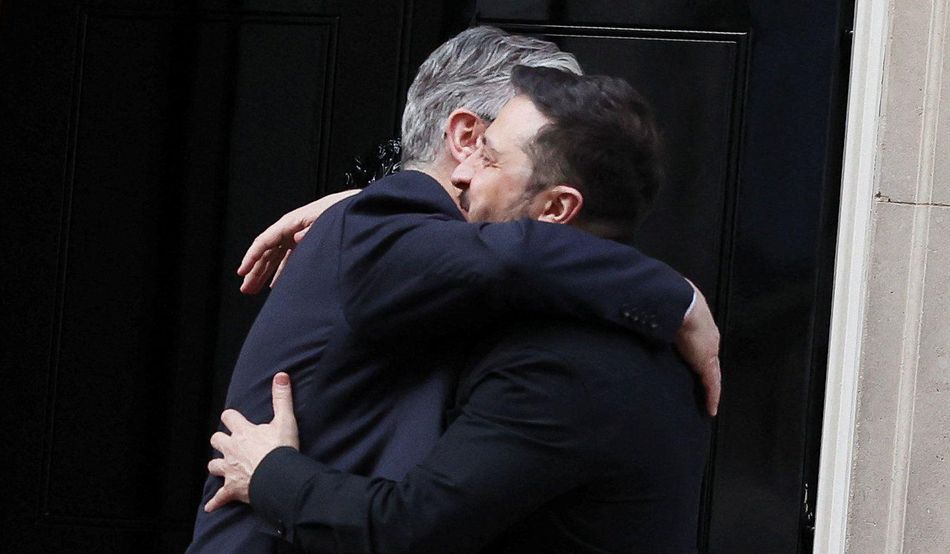
Then there are the various Labour vultures circling Keir Starmer. If Labour is eviscerated in May then Andy Burnham, Wes Streeting and Angela Rayner look to be frontrunners in the race to replace the prime minister. All three are highly effective retail politicians, who would give both Farage and Polanski serious new competition. So don’t write off the old parties just yet—and get used to the idea of a multi-party system with radically different parties competing across Britain.