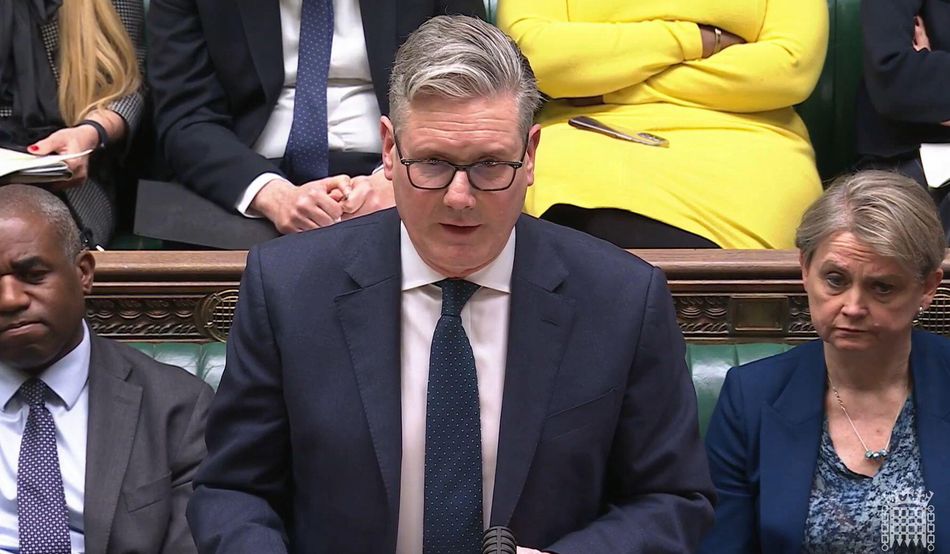
There is a myth on the left of British politics that Harold Wilson stayed out of the Vietnam war, despite Lyndon B Johnson’s blandishments, and that this was the best thing Wilson ever did. Ergo, Starmer—a disciple of the former Labour prime minister—should have stuck to his guns and not allowed Trump the use of British bases to stage his attacks on Iran.
The truth about Vietnam is less straightforward, however. The Wilson government gave intensive logistical and intelligence support to the US throughout its ill-advised war, including the use of British bases and facilities in Singapore, Hong Kong and Diego Garcia, the Chagos island used by the US and UK as a joint military base since the 1970s. Wilson also supported Johnson in public, blaming the “obduracy” of communist North Vietnam for the failure of diplomacy. Still, he drew the line at sending in British forces.
And so, by allowing the use of British bases without engaging British forces directly, Starmer’s positioning within the Trump-Netanyahu war against Iran is in fact very much apiece with Wilson’s on Vietnam. This is probably the safest place to be, however uncomfortable. It is, in fact, the latest test in the art of being half-in with Trump, which is one thing that Starmer has done fairly well since Trump’s re-election in November 2024.
Strip away the ambient discourse about international law and ill-defined war aims, and the underlying reality is that Netanyahu appears to have a fairly simple war objective: to degrade and destabilise the weakened Iranian regime as much as possible and as quickly as possible through massive airstrikes. The Israeli leader persuaded Trump to join in, probably on the argument that last year’s airstrikes against Iran’s nuclear facilities had been apparently successful—not least in its media coverage—with no serious Iranian retaliation. Launching another war was the chance to dramatically weaken the Iranian regime further without a protracted war or ground invasion.
None of this is contrary to British or European interests, given Iran’s relentless terrorist activity. Of our many disputes with Trump, an argument about whether or not attempting to weaken the Iranian government with airstrikes is against international law seems hardly worth having, especially if the only cost to the UK is the use of our bases. The Americans, after all, clearly do not care a bit whether or not this war is illegal.
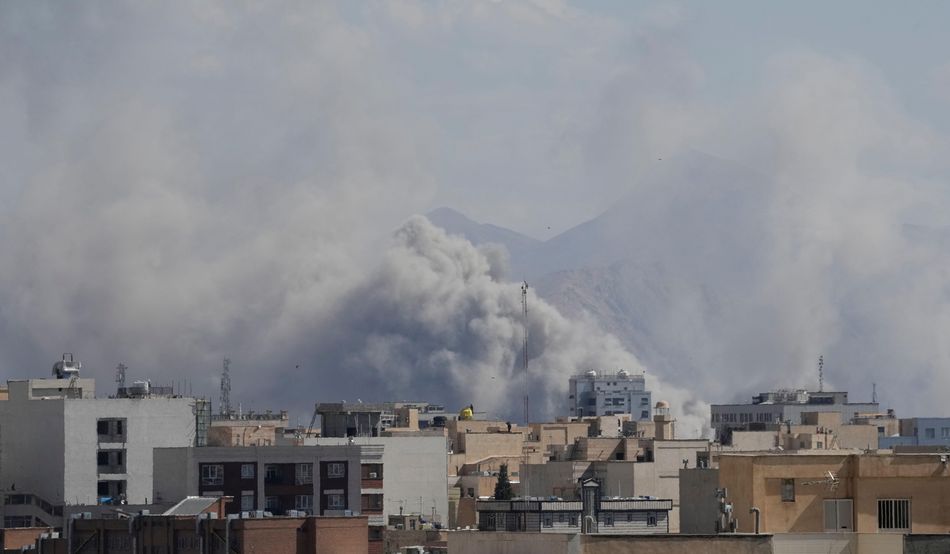
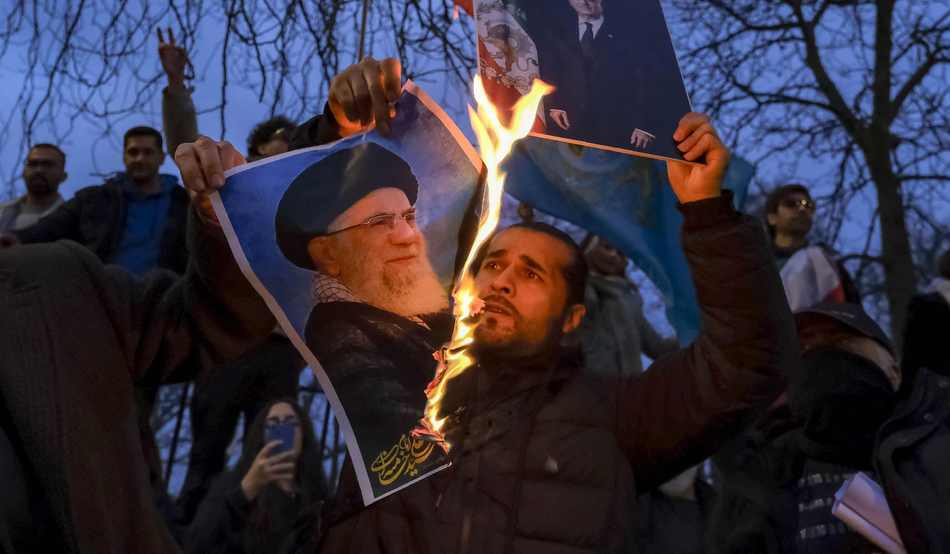
So far so good. In its first days the US-Israeli attack has done a huge amount of degrading and destabilising. It has literally decapitated the Khamenei government, and inflicted extensive damage to Iranian military facilities. Tehran’s retaliation against the US has been minimal, though Israel and other countries across the region have been under sporadic Iranian fire since Saturday.
The obvious next step would be for Trump to declare victory and end the war, accepting that an immediate end to the war almost certainly leaves some version of the current regime in place. But what if—in the quest for a complete regime change in Tehran, which Netanyahu tells him is there for the taking—he doesn’t? Might the UK come under pressure to engage in the conflict, as Nigel Farage and Kemi Badenoch appear to want?
In that event, the US-Israeli bombing campaign would probably last for a few weeks rather than a few days, in order to see what happens in Tehran. Then it would stop; either because the regime does indeed fall or because it doesn’t. The reason is simple: neither Netanyahu nor Trump, with or without other allies, have the will—or even the means—to launch a ground invasion of Iran in either case. Israel’s ground forces are fully occupied in the West Bank and Gaza, as well as against Hezbollah in Lebanon, while Trump shows no sign of contemplating an invasion and occupation of Iran. Such a development would make the Iraq war of 2003 appear a minor escapade.
There is therefore no great risk of Starmer being sucked into a protracted Middle Eastern conflict. This doesn’t look like another Vietnam, whether the UK is in, out or semi-engaged. Trump has expressed his contempt for Starmer’s reluctance to join the war. So the real question is: will Starmer be able to handle the US president in such a way as to prevent a daily stream of anti-British invective, while maintaining his line on the war?