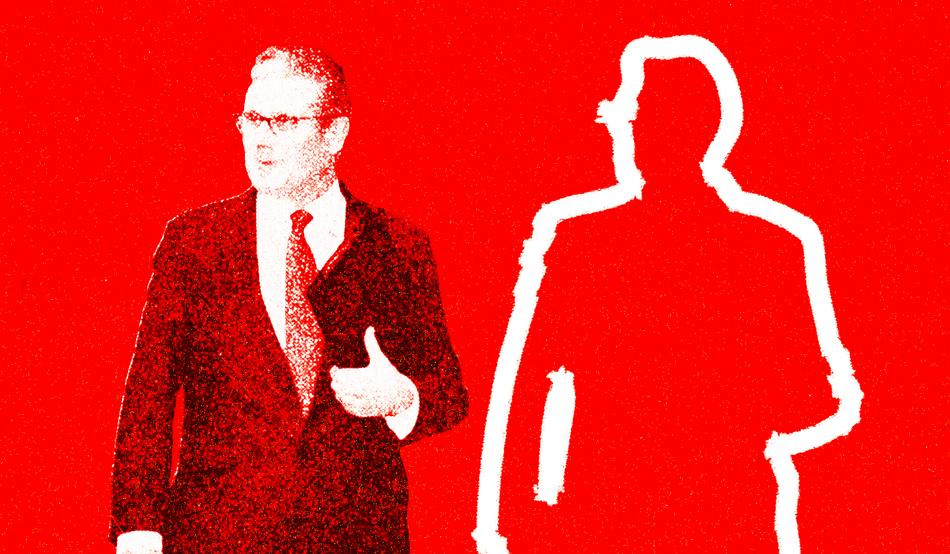
If Keir Starmer had someone like Gordon Brown or Boris Johnson as chancellor or foreign secretary, I suspect a Labour leadership election would now be underway. But he doesn’t, and the absence of an heir apparent at the top of the government has been decisive in enabling the prime minister to stay put for the time being.
To understand recent events in Downing Street, consider one striking fact. Since the rise of modern parliamentary government in the UK, every prime minister has been replaced, when the time came, by a past or present chancellor, foreign secretary, home secretary or leader of the opposition. Even Liz Truss appeared qualified, at the moment of Johnson’s defenestration, because she was foreign secretary. It was her rival, Rishi Sunak, who precipitated the leadership contest by resigning as Johnson’s chancellor.
This is par for the course. Usually the successor to a resigning PM is the sitting chancellor or foreign secretary, or even—as with Major in 1990, Callaghan in 1976 and Macmillan in 1957—someone who has held both posts.
This hierarchical pattern has only been broken in the comparatively few cases where the premiership changes hands at a general election. Even then, for much of the past two centuries, the leader of the opposition has been a former premier, like Wilson in 1974, Churchill in 1951 and both MacDonald and Baldwin in the 1920s.
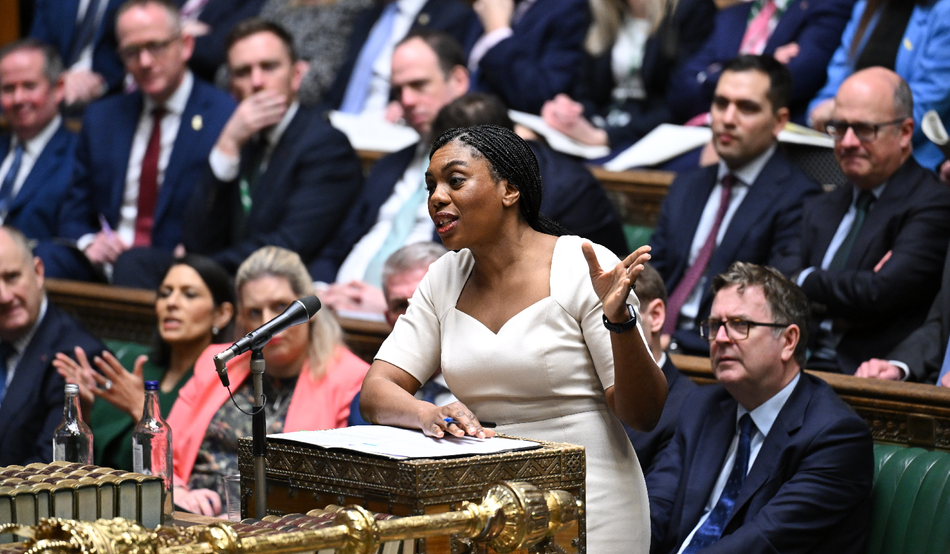
At present there is no heir apparent within the established hierarchy of government. Neither the chancellor, Rachel Reeves, nor the foreign secretary, Yvette Cooper, is seriously in the running among Labour MPs to succeed Starmer, while Shabana Mahmood has barely got her feet under the table at the Home Office. And with no general election due for three years, and the government endowed with a landslide majority in the Commons, the leader of the opposition isn’t imminently in the running either. Anyway, Kemi Badenoch is in the exceptionally weak position of leading a party which has been overtaken in the polls by an insurgent opposition party, Reform UK—not that its leader Nigel Farage inspires more confidence in centrist circles.
Few ministers and Labour MPs will have considered the current leadership crisis in this systematic fashion. But their collective gut instinct not to precipitate a leadership election has to be understood in this context.
Even the two semi-declared candidates for the succession, Angela Rayner and Wes Streeting, clearly aren’t keen on a contest yet. Rayner, the former deputy PM, is still outside government entirely, sorting out her tax affairs. The health secretary, meanwhile, wants to put more distance between himself and Peter Mandelson—widely seen as somewhat of a mentor to Streeting—and whose third implosion in high office is the reason for this week’s crisis for Starmer.
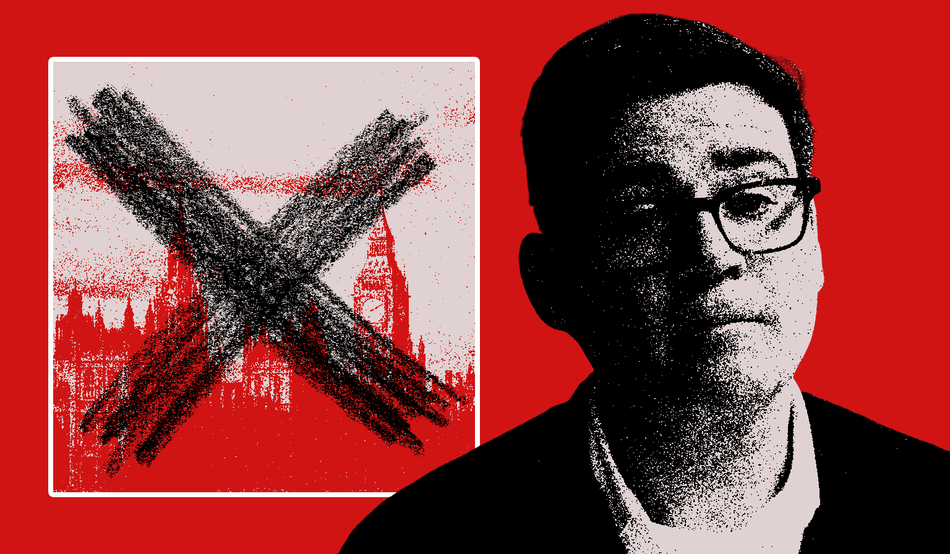
So Starmer soldiers on. If he continues beyond May’s elections to the Scottish and Welsh parliaments and many English local authorities, it wouldn’t surprise me if it was at the price of Rayner becoming foreign secretary and Streeting becoming chancellor. This might be the only way for Starmer to survive in the short term, and it would put either or both in prime position to challenge him thereafter according to the traditional model. There is also the threat from pretender-to-the-throne Andy Burnham, who will likely continue to look for a way into parliament.
However, profound ruptures can happen even in highly traditional Britain. Starmer’s unpopularity is at record levels for a prime minister in the age of modern polling. Labour MPs may well force a change in May even without a clear heir apparent. Or maybe Starmer’s nerve will fail and he’ll resign anyway. Either of these eventualities could open the way not only to Streeting and Rayner but also to Burnham, who would mark a still more profound rupture as a disruptor from outside the government.
Then there is the looming spectre of Farage, who is keen to break all the unwritten rules of the past, starting with the rule that prime ministers only ever lose general elections to leaders of the opposition. And the longer Starmer continues as he has been, the more Farage may come to be regarded as the real successor.