There was a time, not so long ago, that when a prime minister told the House of Commons that there was a grave matter of national security they would have been listened to with deference. Opposition members would nod along, government backbenchers may have even cheered and waved their order papers. The “whole House,” as the phrase goes, “would come together”.
That is not what happened on Wednesday at prime minister’s questions (PMQs). Something else happened instead. The prime minister Keir Starmer sought to persuade the House that something was a matter of national security, and MPs—even normally loyal backbenchers—simply did not believe him. It was an extraordinary moment.
And it was a moment which, in turn, led quickly to an event of immense constitutional significance. The House of Commons proceeded to gainsay the government on this (supposed) matter of national security and insist that decisions should be made instead by a committee of parliamentarians, and not by the King’s ministry. A beaten-up administration meekly conceded.
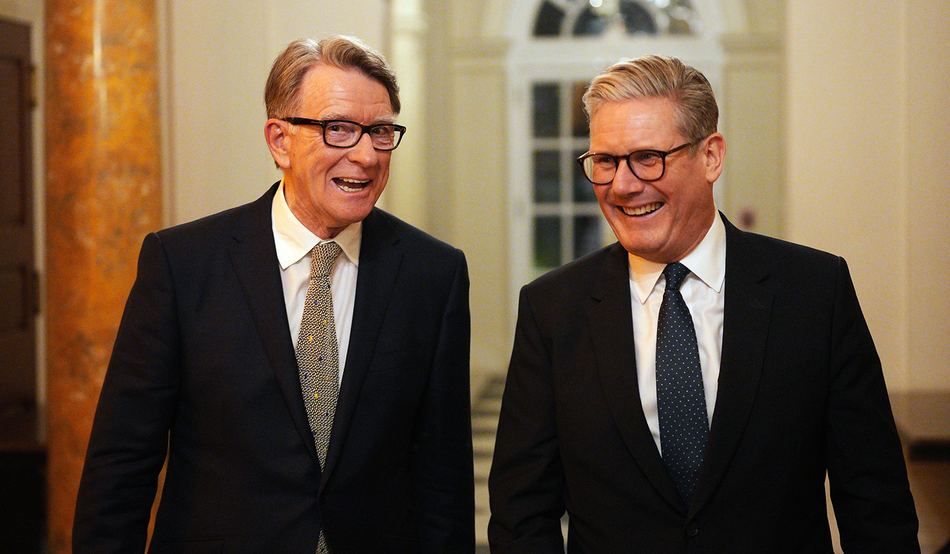
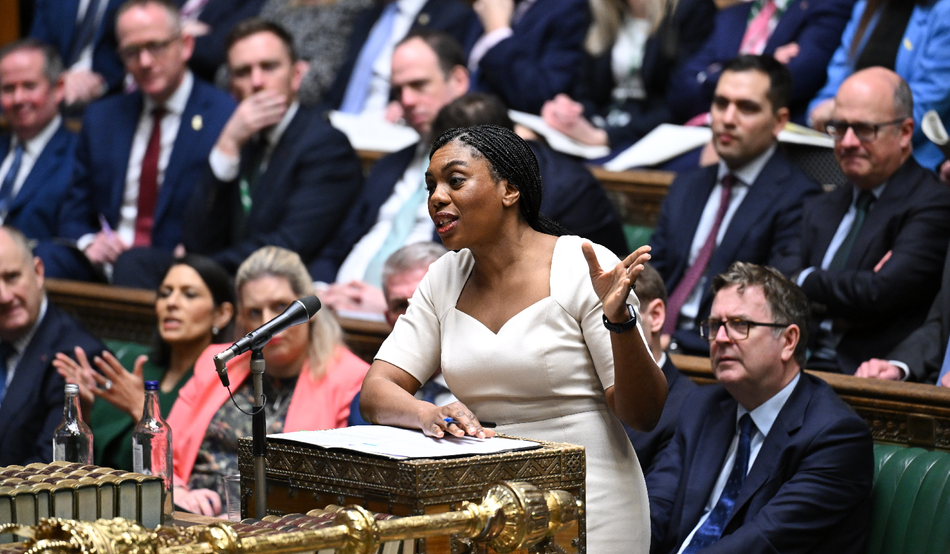
The context for this remarkable sequence of events is, of course, the political controversy about the circumstances of the prime minister’s appointment of Lord Mandelson as ambassador to the United States. And the immediate trigger for this sequence was an impressive line of questioning at PMQs by opposition leader Kemi Badenoch.
Her questions made it impossible for Starmer to evade admission of the fact that he knew, at the time of the appointment, that Mandelson’s friendship with Jeffrey Epstein had continued after the latter’s 2008 conviction for procuring a child for prostitution. And when the prime minister admitted this the mood of the Commons chamber appeared to change. At a stroke he lost any benefit of the doubt on this and perhaps other matters.
This shift meant that Starmer’s assertion that it would still be for the government to decide which documents on the Mandelson appointment would be disclosed was met with mistrust. His protestations that there were matters of national security and international relations that would warrant non-disclosure just fell flat. It seemed no MP believed him.
And so in the subsequent debate on a deft opposition “humble address” motion to force disclosure of documents about the appointment, the government could not sustain its position that it was for the government to decide on what was disclosed. MPs demanded that any decision on national security would instead have to be made by parliament’s Intelligence and Security Committee, comprising senior MPs and peers.
Such was the mood of the House of Commons that the speaker made the unusual move of permitting a late handwritten amendment to the motion. The government surrendered. The House of Commons, in just a few hours after the prime minister’s admission at PMQs, had defeated the government on who decides important matters. They would not nod along, still less cheer, when a prime minister sought to use national security as a basis for his decision.
On these facts alone it is difficult to see how the current prime minister can survive much longer. It was not a formal vote of no confidence. But what took place on Wednesday can only be explained by the prime minister having lost the confidence of even his own backbenchers on the one issue that a prime minister should have the confidence of MPs: national security.
The Metropolitan Police are now investigating allegations that while in office Mandelson leaked sensitive information to Epstein—Mandelson has denied any wrongdoing—though the police clumsily sought to tell the government that certain documents should not be disclosed to MPs because it would prejudice that investigation. The speaker of the House of Commons was right to put the police back in their box on that misconceived suggestion. The Met has no jurisdiction over parliamentary proceedings.
This is now a full-blown political crisis, which the Bagehot column at the Economist correctly says is the worst UK political scandal of this century. But few political scandals also have great constitutional significance. This one does.
Here the swift move by the Commons to take from the prime minister a matter of (supposed) national security is at least comparable to when parliament blocked Boris Johnson’s attempt to inflict a no-deal Brexit by passing its own statute. Perhaps Starmer will survive, and perhaps this controversy will be forgotten. A weak prime minister can last a long time in politics. But for MPs to do what they did yesterday, and at speed, was one of the most important events of our recent constitutional history.