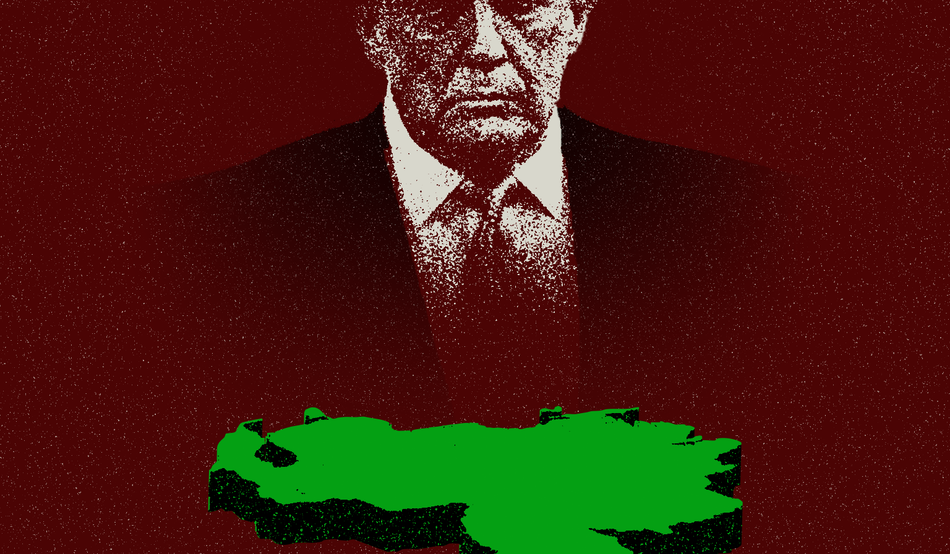
Donald Trump behaves increasingly like Shakespeare’s King Lear. “I will have such revenges on you both / That all the world shall—I will do such things— / What they are, yet I know not: but they shall be / The terrors of the earth” sounds much like one of the president’s post on Truth Social. The trouble is that Washington’s Lear hasn’t divested himself of the cares of state. On the contrary, he has three more years as the most powerful leader in the world.
It is an escalating crisis, on a global scale. This week—just to mention the headlines—Trump’s posts, threats and interventions are spreading panic and alarm in Minneapolis, Greenland and practically every capital in Europe. Next week it could easily be New York, Canada, Kyiv and Taiwan. Trump/Lear has become a psychological Sword of Damocles hovering over the world.
Given the big picture, it may seem indecently parochial to focus on the nightmare that Trump’s latest actions are causing Keir Starmer. But Britain needs an emergency plan in response, so here goes.
Starmer’s instinctive reaction, set out in his ultra low-key speech on Monday, is to avoid any unnecessary escalation. So we stand by the sovereignty of Denmark and Greenland but won’t respond to the threat of tariffs and aren’t raising public questions about the future of Nato. Starmer stressed the indispensable nature of US support for British defence and security, and brushed aside the threat of an actual US invasion of Greenland. He also ducked Trump’s explosive remarks about the “great stupidity” of the Chagos Islands deal that ceded sovereignty to Mauritius in return for a lease on the joint UK-US base of Diego Garcia.
This makes sense as an immediate public response. It is not just about avoiding a fruitless war of words from a position of extreme vulnerability. It is a sensible strategy to take, in conjunction with the intense European diplomatic activity coming from hitherto moderate figures. In fact it may well be the only way to avoid catastrophe in Greenland, a damaging trade war or even the complete withdrawal of US support for Ukraine—to say nothing of the longer term perils. There is also the possibility, of course, that the US Supreme Court will soon strike down Trump’s tariffs without Britain or the EU needing to respond at all.
On Greenland, this means maximum effort to forge a Nato Arctic security strategy. Developing commercial opportunities for the US, so that Trump loses interest in annexation, could be vital too. On Chagos, it means treating the agreement as a done deal, but without any recriminations against the US. On Ukraine it means continuing to engage in US approaches to Putin with a straight face, while increasing practical support for Zelensky. On Gaza it probably means joining Trump’s so-called Board of Peace, however unsavoury its members and unsatisfactory its relationship with both Netanyahu and Trump’s family interests.
Maybe the immediate Greenland crisis will thereby pass without the need for Starmer to do much more. Behind the scenes, even in this scenario, intense preparatory work on progressing to a “Nato without the US” is vital, including a viable strategy for maintaining the credibility of the Trident nuclear deterrent as such a change takes place.
But what if Trump actually invades Greenland? What if the US annexes it by force? At that point Nato becomes practically defunct. There is nothing to be gained from pretending otherwise. Any assurances of future US support for the sovereignty of small European states would be worthless in any event.
In such a crisis moment the essential steps—all dependent on preparatory work which needs to take place now—would be for Canada and all the European members of Nato, or as many as possible, to urgently bring this new alliance, sans America, into being. It would also require a major, and immediate, increase in defence spending and in the size of the armed forces of all European states. This new defence alliance wouldn’t be able to retake Greenland, but it might prevent a European collapse in Ukraine, dissuading Putin from any dangerous adventurism on the eastern border of Nato.
It would help if we now took a bold approach to re-engaging with the EU, starting with its customs union and single market. Starmer should say that too in the coming weeks. He should declare it immediately if Trump invades Greenland. Without the US there is only one path to security, which is further European integration. There is no third way this time.