There is nothing new in US presidents removing—or helping to remove—Latin American and Caribbean leaders they don’t like. Guatemala, Brazil, Chile, Argentina, Panama, Grenada and Honduras have all had their leaders abducted or murdered in coups organised or supported by the US. And that’s just since the Second World War.
Direct US military intervention isn’t a novelty either. Reagan invaded both Grenada (“Operation Urgent Fury”, 1983) and Panama (“Operation Just Cause”, 1989) to topple their governments. The seizing of Manuel Noriega of Panama even deployed the same pretext—drug trafficking—as Saturday’s “Operation Absolute Resolve” to capture Nicolás Maduro of Venezuela. Noriega went on to spend 20 years in US jails on drugs charges; a similar fate no doubt awaits Maduro, unless he gets pardoned by Trump in return for God knows what.
Grenada was a former British colony of which Queen Elizabeth was head of state, and the US conquest provoked a rare episode of private Thatcher anger against her political soulmate Ronnie Reagan. No one pretended that the invasion of 1,900 US marines, who overthrew the Grenadian military government, was anything other than a straightforward breach of international law, carried out because the Reaganites thought the leaders of a recent coup in Grenada were too left wing and might ally with Moscow. However, Thatcher bit her tongue and her public love-in with Reagan was quickly restored.
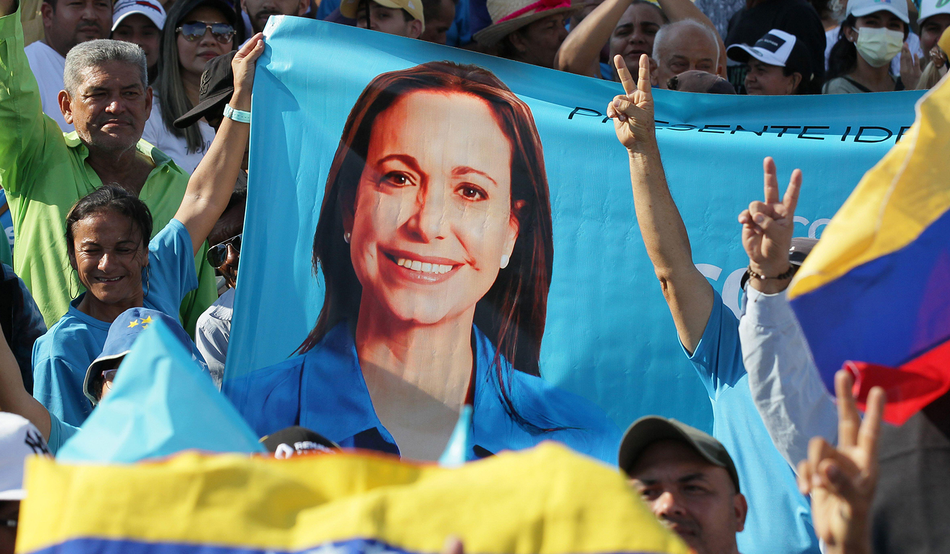
Trump’s Venezuelan intervention can therefore be seen as par for the American course, and so too the diplomatic contortions by allies of the US—including Keir Starmer—to excuse it. Objectively, there is far less reason to criticise the removal of Maduro—a tyrant with no credible democratic mandate—than, for example, the 1973 Nixon-supported coup against Salvador Allende, the democratically elected socialist president of Chile, which led to Augusto Pinochet’s long and brutal dictatorship.
Nor is there much novelty in what Trump self-aggrandisingly calls the “Donroe” doctrine. As its name explicitly declares, it is simply an updated version of the 1823 Monroe doctrine, which declared a US sphere of influence across the Americas.
The issue, rather, is what Trump might do next, and whether the Venezuelan escapade might embolden Putin or Xi to invade their neighbours—in the latter case Taiwan?—in pursuit of their own versions of the Donroe doctrine
I don’t think Venezuela makes much, if any, difference to Putin and Xi. The former was a serial invader since long before Trump, having long acted internationally on impulses of pure power and self-advancement. He doesn’t need the Venezuelan precedent to justify obstructionism of a US-led Ukraine peace deal. He was obstructing one perfectly well beforehand and will continue to do so until he is forced to concede on the battlefield or identifies a diplomatic weakness worth exploiting. When it comes to Russia, Trump’s withdrawal of US aid to Ukraine matters far more than any other action Washington has taken.
Xi is similarly calculating in the arts of brute force and diplomacy. A big factor in respect of a Taiwan invasion would be the likely US reaction. But Venezuela doesn’t make Trump more or less likely to intervene in Taiwan, unless the US were to get sucked into a debilitating ground war in Latin America. This appears unlikely, given Trump’s limited objective of seizing Maduro (though on the day of the strike he did say the US intended to “run” the country).
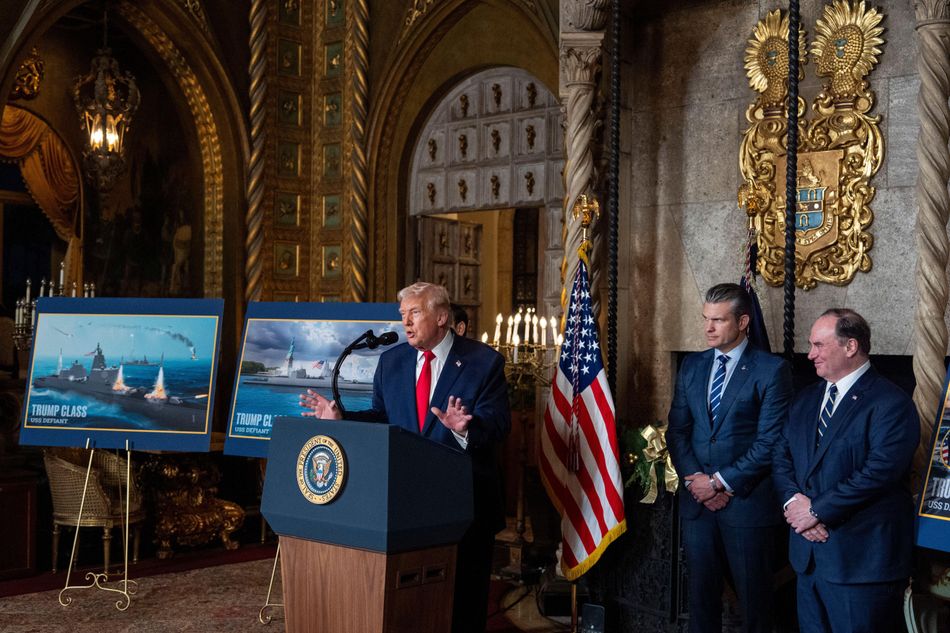
Far more concerning is what Maduro’s successful abduction means for Trump personally. He has now launched two bold but limited military adventures which have gone according to plan, the bombing of Iran in June last year being the other. That will no doubt embolden him. Greenland, beware.
What should Britain and Europe do, not least to forestall a Trumpian desire to seize Greenland? The continent needs its own version of the Donroe doctrine, one that declares respect for the sovereignty of European countries—including Greenland—to be fundamental to Europe’s international agreements. Tuesday’s statement on Greenland by Starmer and other European leaders makes this point about Nato. Words alone won’t protect Europe, of course. But they are vital nonetheless in defining a policy to be defended in a world where might makes right.