One of the many quirks of devolution is that Holyrood was never granted parliamentary privilege. This means that, unlike their counterparts in Westminster, what members of the Scottish parliament can say about legally contentious topics is fundamentally curtailed; in the words of Scottish Labour back in 2022, MSPs remain “denied this powerful tool to expose wrongdoing”. Despite many calls to instate it, Scottish parliamentary privilege remains a mere aspiration.
Putting aside the irony of Scottish lawmakers being unable to talk as freely as their southern peers, this inability to speak about contentious topics extends far beyond the debating chamber in Holyrood. Just as many of the rules around British governance are merely understood by those in the know rather than written down for all to see, there have always been certain things that politicians in Scotland are expected, implicitly, to avoid talking about. And never has any politician made this more apparent than Anas Sarwar, the leader of Scottish Labour.
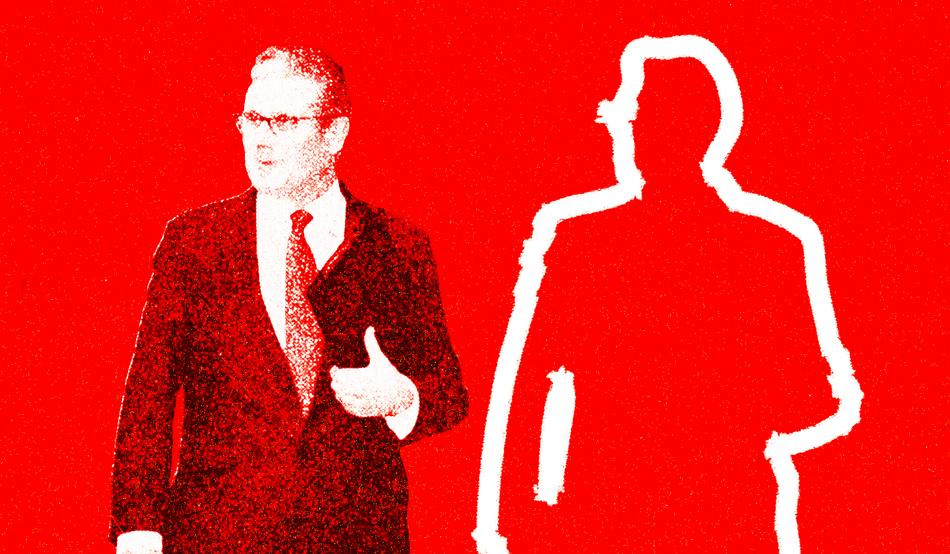
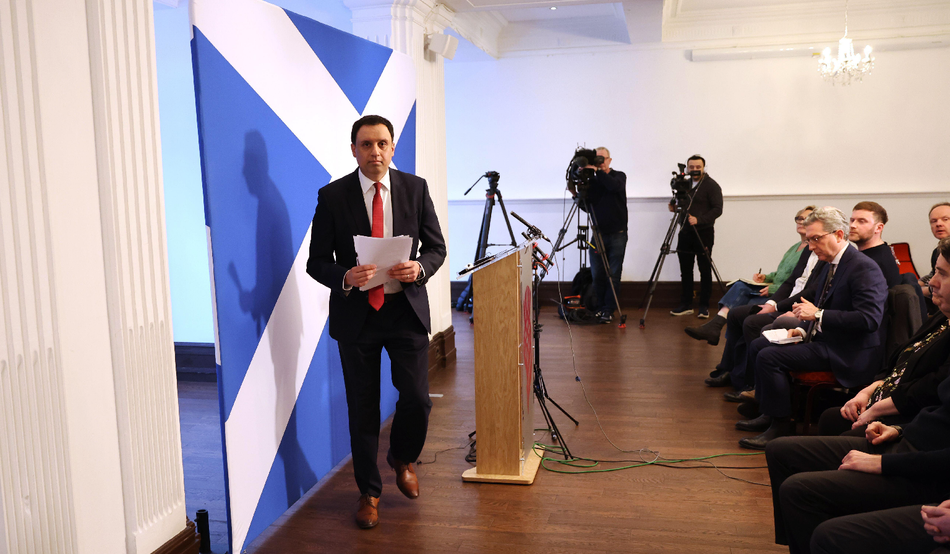
Taking a tactic from Reform’s playbook, no less—staging a press conference on a Monday in hopes of setting the political agenda for the rest of the week—Sarwar brought journalists together in a room in the Trades Hall of Glasgow where, backed by a giant Saltire, he gave his solemn verdict: Starmer had to go. This was a difficult decision, Sarwar said. Starmer is a friend, he said; but he had to put the country above party loyalties.
Rather than ushering in a wave of similarly declarative “difficult decisions”, however, Sarwar’s intervention backfired. Members of Starmer’s cabinet doubled down on their support, shortly followed by similar articles of faith from the Welsh first minister, Eluned Morgan, and Greater Manchester mayor (and future leadership favourite) Andy Burnham. Starmer, likely not believing his luck, actually looked stronger after Sarwar’s pronouncement than he did before it. Sarwar, meanwhile, was left with the realisation that what he says is not only ineffective but also endlessly ignorable.
Sarwar’s move was not merely a one-off faux pas; rather it is emblematic of the dilemma of Scottish Labour as a whole. Long encumbered by its reputation as a branch office, the party has never been able to successfully convince the Scottish public that it is in control of its own message. And with a grand tally of 11 leaders in all, averaging out to nearly one every two years since devolution in 1999, taking the helm of Scottish Labour has always seemed essentially arbitrary. No matter what, it is Scottish Labour who must follow the winds of change—rather than instigating it.
And so, on one hand, Sarwar’s newfound “pariah status” might be regarded as a boon: finally, a Scottish Labour leader is making a stand! Scottish Labour is their ain folk! Rumours that Sarwar spoke without first revealing his plans to anyone in the cabinet only reinforces this view. But on the other, it underscores the diminished position of Scottish Labour both within and outwith Scotland: far from being a mover and shaker, it is nothing but an anachronism kept alive by a devolved settlement in which Labour overall appears to have no real investment anymore.
In any case, no stunt is likely to turn Scottish Labour’s hopes around in May’s Holyrood elections, with the party expected to come once again in third place, only this time behind a resurgent Reform rather than the Conservatives. That result, for a party that was once referred to (and without a hint of irony) as Scotland’s natural party of government, should prompt an existential crisis. Chances are, it won’t.
Assuming Sarwar genuinely wants Scots to take Scottish Labour seriously—if he wants them to believe the party owns what it says and, by extension, means it—then he must accept the reality that nobody in Westminster cares what Scottish Labour thinks. But as the somnambulant Scottish National Party has long demonstrated, often in spite of itself, Westminster does not have to care in order for Scottish Labour to succeed.
Arguably the biggest change brought by devolution was the creation of new political communities, far from the halls of the Palace of Westminster. British politics, in other words, is no longer captured by a centralised discourse; it follows that it does not need to be run by centralised parties either. A truly independent Scottish Labour hasn’t been attempted since the mixed performance of Jim Sillars’s 1970s outfit. Faced by the prospect of its own irrelevance, might it now be time for the branch office to go out on a limb?