The purpose of a knighthood in British public life is supposed to be to put one above the fray. From cash-for-coronets to MPs’ expenses, when scandal hits Westminster the time-honoured way is to entrust what happens next to a Sir Alistair, Sir Christopher or a Sir Thomas. The relevant knight of the realm is presented as being of such self-evident integrity and independence, that there can—surely—be no question about them working to any agenda aside from the public interest. But it’s always worth pausing to reflect on who conferred that knighthood in the first place—and never more so than with the chair of the 1922 Committee, Sir Graham Brady.
The 1922 Committee was, historically, the institutional expression of the independent clout of Conservative backbenchers. It came into existence a few months after the famous Carlton Club meeting in October 1922, at which Tory backbenchers pulled the plug on Lloyd George’s post-First World War coalition government, and the party leadership of Austen Chamberlain. Originally, it was for the new cohort of MPs elected at the subsequent November general election, but in time it would come to encompass the entire backbench. When, during the 1960s the question of the leadership formally passed from the Crown (yes, really) to parliamentarians, the 1922 became more important, assuming responsibility for running the ballot of MPs, the most famous of which produced the inconclusive result that did for Margaret Thatcher in 1990.
A couple of changes since—David Cameron’s insistence serving ministers could attend in 2010, and William Hague’s overhaul of the electoral system that theoretically handed power to party members—could have weakened the 1922, but in practice they haven’t done so. In two of the four leadership elections since the Hague changes (2003 and 2016) Tory MPs have rallied unanimously to a single candidate thereby ensuring that it is they who retain the final say.
And Sir Graham is indeed today—in theory—the personal embodiment of all those MPs’ authority. He is, as we have all learned, the postbox to which 48 or more of them have sent in their letters, and also a shop steward representing the parliamentary workforce, even if that is not the language in which many Tory MPs would describe themselves. But from the moment he gave his BBC radio interview this morning, it was evident that Sir Graham was more of a player than a referee. And he is a player on Theresa May’s side.
He was duty bound to inform the prime minister that the letters were in, before he went public. But as he spoke to the Today programme this morning, he didn’t disguise that he had worked closely with her in deciding what would happen when. The announcement, the pair had agreed, would be made before the markets opened this morning. I wonder whether they were expecting a bearish reaction in the City which would encourage the MPs to—in the Belloc line—keep a-hold of nurse for fear of finding something worse.
More significantly, they agreed on an accelerated vote which would take place on the same day as the announcement, cutting out for the need for any campaign in which May could have made mis-steps, and during which the dynamics which have taken hold since she pulled her “meaningful vote” could have gathered force.
And they even, Sir Graham confirmed, co-ordinated things to ensure she would have the chance this evening to address the electors who will seal her fate immediately before they do so. No wonder there are reports that Tory malcontents and hard Brexiteers are saying that whether or not we get a new PM, there is going to have to be a new 1922 chair.
But I am not surprised that Sir Graham should be keen to see May survive. Although, unlike her, he is a conviction Leaver who voted out in 2016, she has worked very hard to disown her Remainer past since, and he has other affinities with her. In 2007, he walked away from a frontbench post under David Cameron because of his turn against grammar schools, something Theresa May later stuck her neck out to revive, until she squandered her majority last year. And then we come to the question of where that “Sir” before Graham came from in the first place. The answer is May’s new year’s honours list a year ago.
The apparent alliance between Sir Graham and the woman who made him that could be important in the scenario where she survives, but only narrowly. The Conservative leadership rules leave the running of the no confidence vote to the 1922, conceivably including whether or not to publish the full results. If May squeaks home with 51 per cent of the vote tonight, I’m sure she would rather it was merely reported that she had “won” than see the scary figures published.
There has only been one of these votes before, when Iain Duncan Smith lost by 75 to 90, and although the publication of those figures arguably sets a precedent, it might be possible to argue that this doesn’t apply in the very different context of a serving prime minister who, to a greater or lesser degree, retains their party’s support.
To be fair to Sir Graham, I’ve seen nothing to suggest he would chance his arm with that. All the reporting is taking place on the basis that he will indeed publish the numbers. It would be extremely imprudent not to do so, not least because there will be multiple tellers of the ballot, which would virtually guarantee the numbers would leak out. But the very thought is another reminder of the perils of living in a country which prefers to leave many of its political rules unwritten, and a land where the great marker of independence is—ironically—a title awarded via undiluted political patronage.
Why the hard Brexiteers are getting angry with Graham Brady
Is the 1922 Committee chair working hand in glove with the prime minister?
December 12, 2018
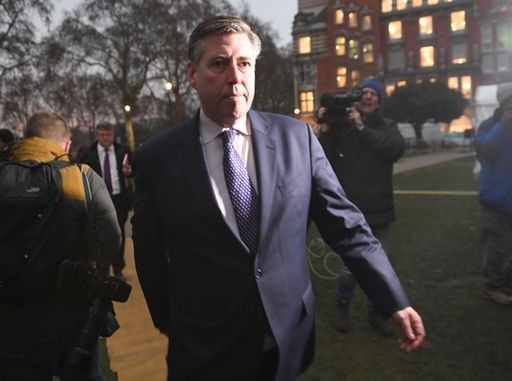
Chairman of the backbench 1922 Committee Sir Graham Brady. Photo: Stefan Rousseau/PA Wire/PA Images