Last week, a column in the Times by Fraser Nelson stirred old memories. With the extent of Keir Starmer’s knowledge of the security vetting of Peter Mandelson high on the news agenda, Nelson described the “Rhodesia solution” for keeping prime ministers in the dark. It helps civil servants to bury a problem while still playing by the book. Fraser said this “solution” was rooted in the scandal of Rhodesian oil sanctions, which the Sunday Times had exposed decades earlier. I remember the story well. I wrote it.
Like the saga of Mandelson’s vetting, the scandal raised questions about candour at the heart of government. Whatever Starmer’s fate, much more should be done to ensure that the prime minister, parliament and the wider public are not misled.
I worked on the Sunday Times story with two tenacious researchers, Martin Bailey and Bernard Rivers. They had been delving into the mystery of how Rhodesia (now Zimbabwe) kept getting oil, despite being subject to fierce United Nations sanctions. The truth came out in 1978—long after Rhodesia’s government, formerly a British colony, declared independence unilaterally. That decision, on 11th November 1965, solidified the power of some 200,000 whites to rule over almost four million non-whites. This incensed almost every mainstream politician in Britain. Harold Wilson, prime minister at the time, vowed to bring the rebel regime to heel.
Oil was the key. Rhodesia was landlocked. Its oil had to come by road or rail. Without oil, its economy would soon collapse. In 1966, the UN Security Council imposed mandatory oil sanctions. In January that year, Wilson said that the sanctions would “bring the rebellion to an end within weeks rather than months”.
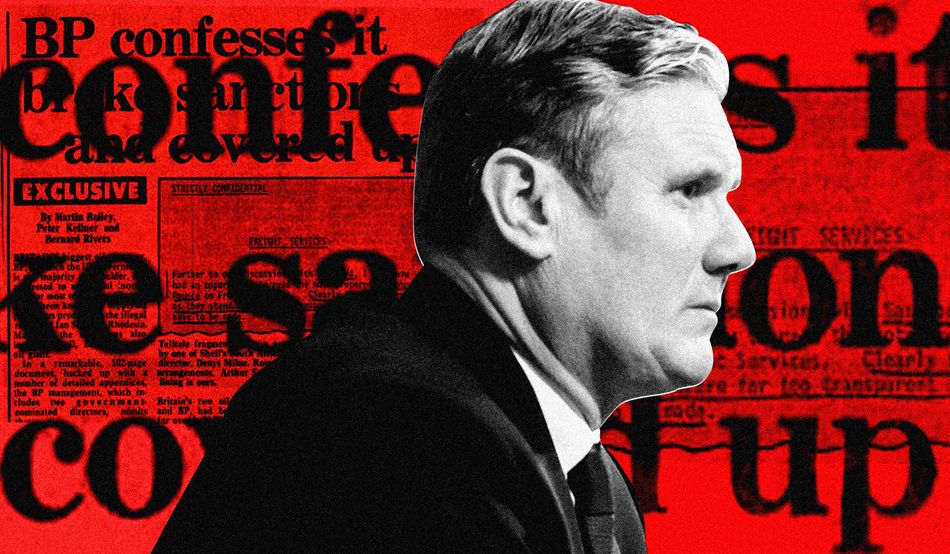
He was out by 13 years. The rebel regime lasted until 1979. Sanctions didn’t work. Our Sunday Times story, published in August 1978, revealed how Rhodesia kept receiving as much oil as ever. BP (a British firm) and Shell (a part-British firm) did indeed stop exporting oil to Rhodesia. However, their South African subsidiaries agreed a secret swap with the South African subsidiary of Total, the French oil giant. Total would take over Shell and BP’s Rhodesian customers, while Shell and BP would sell exactly the same amount of oil to Total’s South African customers.
When they found out, Shell and BP executives in London were delighted. They could still claim to be abiding by UN sanctions without losing sales or profits. Seldom has the gulf between the spirit and the letter of the law been so wide. (The French government was Total’s biggest shareholder. It could have blocked the deal. Bluntly, successive presidents, starting with Charles de Gaulle, couldn’t care less.)
Our 1978 story also showed that British officials knew early on exactly what was happening. We wrote that on 21st February 1968, “the Foreign Office was told in outline of the swap arrangement, while the Ministry of Power received more detailed information. According to BP, ministry officials clearly understood the new arrangement. They ‘accepted that the effect of the change would therefore be a purely cosmetic one, in that the same amount of oil would reach Rhodesia by the same route but would appear to have originated from a French instead of an English company’.”
As we reported back in 1978, the outcome of the meeting in which the arrangement was discussed was that both oil companies could continue their swaps with Total. To try to stop it would have been to enter a legal quagmire (as the BP and Shell subsidiaries were registered in South Africa and subject to South African law). It would also have meant staging a confrontation with the South African government that the UK government wanted to avoid. Wilson’s greatest foreign policy failure—his inability to defeat the rebel Rhodesian regime—was secretly facilitated by his own officials and signed off by his own ministers.
Was Wilson told that the Foreign Office and Ministry of Power had effectively given up on the attempt to crush the Rhodesian rebellion? Yes and no. In a Commons debate in November 1978, the former prime minister, now a backbench MP, said: “A copy [of the notes of the 21st February meeting] was sent to No. 10. It was not circulated to the Cabinet either by the Foreign Office or by No. 10… It was not marked to me. There is no record of my seeing it. Nor is there any record of it having been seen by Sir Michael Palliser [Wilson’s private secretary in 1968]. That may sound bizarre, but hundreds of documents, telegrams, despatches, notes of meetings, reports and assessments from the Foreign Office come in every week from the Foreign Office. This particular document… was not marked urgent or highlighted in any way. It was not marked in any way.”
That was the birth of the “Rhodesia solution”. Wilson was technically told, but didn’t actually know. As far as the Foreign Office was concerned, and even though the public was kept completely in the dark, the government had a new policy that satisfied both Whitehall and the oil companies. In February 1969, the heads of Shell and BP met George Thomson, the Commonwealth minister, at the Foreign Office to review the way things were going. All three were happy with the swap arrangement.
After that, British officials, and BP and Shell’s London executives, lost interest in the issue, and neither knew nor challenged what was going on thousands of miles away. Rhodesia continued to receive the oil it needed, through Edward Heath’s Conservative government from 1970 to 1974 and back again with Labour from 1974. Indeed, as we reported, in 1973 a new swap agreement enabled Shell and BP to boost Rhodesia’s economy by increasing the amount of oil they would make available. It was negotiated locally in South Africa.
We have David Owen to thank for the story finally coming out. In April 1977, in one of his first actions as Britain’s new foreign secretary (he took on the role after the death of Anthony Crosland), Owen ordered an inquiry into the whole sorry saga. He appointed Thomas Bingham, a 43-year-old rising star in the legal world, to lead it. BP decided to come clean, submitting a 102-page account that laid bare its actions, its deals with Shell and Total in South Africa and its relations with civil servants. The Sunday Times exposé I wrote was based on a leaked copy of BP’s evidence.
The route then to prime ministerial ignorance and public misinformation was different from that in today’s Mandelson vetting row. But its destination was the same: a failure of governance behind closed doors. For prime ministers to be properly accountable they must be properly informed.
The time has come to learn the lesson that Bingham spelt out in his report, 48 years ago: “HMG should have been able to base its policy and to determine its conduct internationally on a clear understanding of the salient facts. In the event, both HMG and the top management of the [oil] groups, save for limited periods, … were ignorant of facts which should have been the subject certainly of consideration and possibly of action. This ignorance led HMG and the top managements of the groups to make statements and give assurances which they would not have done with full knowledge of the facts.”
A version of this article originally appeared on Peter Kellner’s newsletter