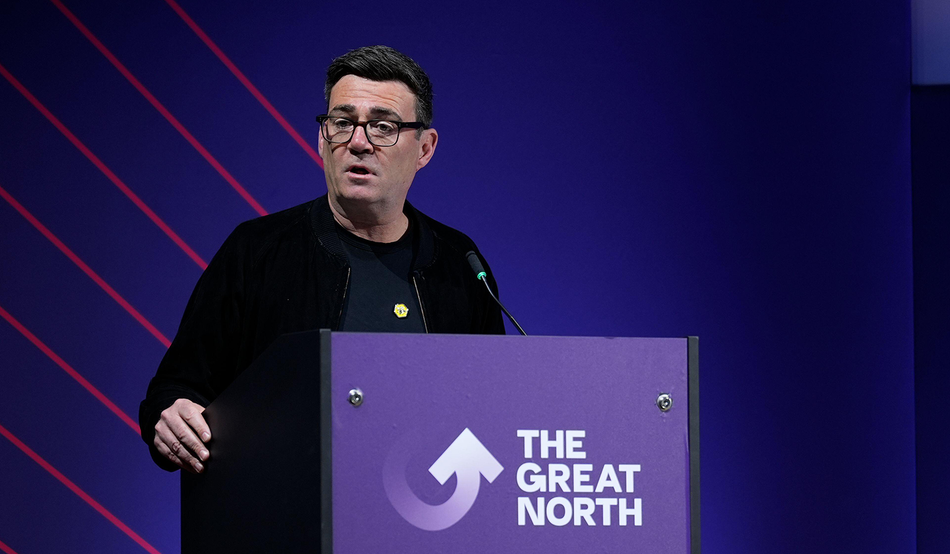
Andy Burnham’s audacious launch video for the Makerfield byelection presents him as a Mancunian folk hero, and carries the voices of voters who think that the aspiring candidate for this one seat would be a transformative PM. Social media is abuzz with excited reaction from hopeful admirers—but also the scornful derision of many professional politics watchers. Any attempt to translate the Greater Manchester mayor’s new municipalism to the national stage would, they say, be doomed by the bond markets in no time. Two awkward Burnham swerves—cooling on rejoining the EU, and warming towards Rachel Reeves’s fiscal rules—have fuelled world-weary suggestions that changing the personality at the top of government will make no durable difference to the way we are governed: all the same problems that have destroyed the existing prime minister will be waiting to ruin the next one too.
I find this too gloomy, although it also feels premature to start engaging with either the possibilities or the pitfalls of applying Burnham’s “Manchesterism” nationwide. For it won’t be going anywhere unless an extremely difficult byelection is won. Within the past fortnight, Reform swept the board in council elections in the seat, besting Labour by roughly 2:1. Burnham needs to defy voters’ instinctive distaste for “unnecessary” elections, as well as the old wisdom that the great bulk of votes are driven by party rather than personality, and achieve a huge swing towards a Labour party in chaos. Should he do that and then succeed in getting to Number 10, Burnham won’t be able to even attempt resetting the UK’s economic course unless he can first get the government off the floor politically. Only then will the parliamentary party exit its “every member for their own survival” panic mode, and rediscover some collective sense and, with luck, a degree of shared purpose.
This, much more than any miraculous new policy programme, is the one big thing Burnham might do for Labour rapidly—although only, of course, if he isn’t defeated in Makerfield because of just how shrivelled the party’s support base has become. My confidence about the difference he could make in rebuilding it comes from running a thought experiment on how much stronger Keir Starmer himself might be, if only he had only combined the very same policies that he is pursuing today with a totally different attitude towards running Labour.
Time and again, over the two years before the last general election and then the year that followed it, Starmer followed the script Morgan McSweeney had written for him, and defined himself almost exclusively against the left. He went way beyond the genuine need to keep one of his own feet planted firmly on the centre-ground, and used MP suspensions, dubious candidate vetting and string-pulling to restrict what his party was allowed to discuss as he struggled to narrow Labour’s fabled broad church into an obedient sect.
Time and again, many parts of society who might otherwise have helped sustain a left-of-centre government through a choppy mid-term were expected to brush off the calculated disdain directed against them. In the run-up to the last election, for example, the party high command judged that because Labour already held and had locked down nearly all of the seats with the most Muslim voters, there would be no real political cost to alienating those voters over Gaza. When the leadership briefly (mis)calculated that it could endear itself to Middle England by blocking Diane Abbott from standing again in 2024, it was whispered that if she would only walk away gracefully then recognition for her standing as a “trailblazer” of minority representation would come via an unelected place in the Lords. Such a deal would have been like offering Rosa Parks a gold replica of the bus she was travelling on as an inducement to give up her seat.
Such stunts had already badly sapped support—though not the seats the party won—by election day 2024. In power, when Labour has done progressive things, it has often struggled to claim credit because its evasive campaign slogans implied that it wouldn’t do these things. It has, for example, yanked hard on “the tax lever” to stabilise public services, and the NHS is now showing some signs of recovery. But after his earlier protestations he would do no such thing, Starmer is not well placed to take any credit. He has abolished the impoverishing two-child limit. Sadly, many of those who most wanted this done stopped paying attention to Starmer after he made a great point of pledging to retain the policy.
It should be remembered that there is opportunity as well as threat in today’s fractured political landscape
Even the doubtless sincere promise the prime minister made to lead a struggle for the “soul of the country” against Reform was compromised when last year he left his X account under the supervision of someone who thought it was a good idea to post images of a lot of exclusively black people being fingerprinted by border guards.
Whether or not Andy Burnham has a cohesive programme for government, simply not making mistakes of this kind should offer the chance to bounce at least a little way back from the 17 per cent vote-share and joint fourth place that the Labour party hit in the local elections. And it should be remembered that there is opportunity as well as threat in today’s fractured political landscape. Time was when parties felt they needed to be polling at 40 per cent to be sure of winning, but this month Reform stormed the map nationwide with little more than a quarter of the ballot. If Labour could bounce back into the mid-20s, it might start to feel confident it could avoid total ruin. And absurd as it sounds, if it could only match the 28 per cent share of Michael Foot’s notorious 1983 defeat, it might even be in a position to eke out a win.
These are straitened and polarised times in which no governing party is likely to be approved of by more than one part of the country. But if Burnham, or indeed anyone else, can simply give heart to many of those that would ordinarily be expected to lean left, then the government would again have a base on which to build. An organisation called Labour Together charted Starmer’s original rise to the top. But his legacy is a fractured voter coalition—and the first job for his successor is simply to put Labour back together.