If there is one winner from the last few months of Mandelson-induced mayhem, it is surely the Malta Film Commission. You may remember that Matthew Doyle, late of Number 10 Downing Street, is a strategic adviser to this august body. And now he can give it his undivided attention. Win-win.
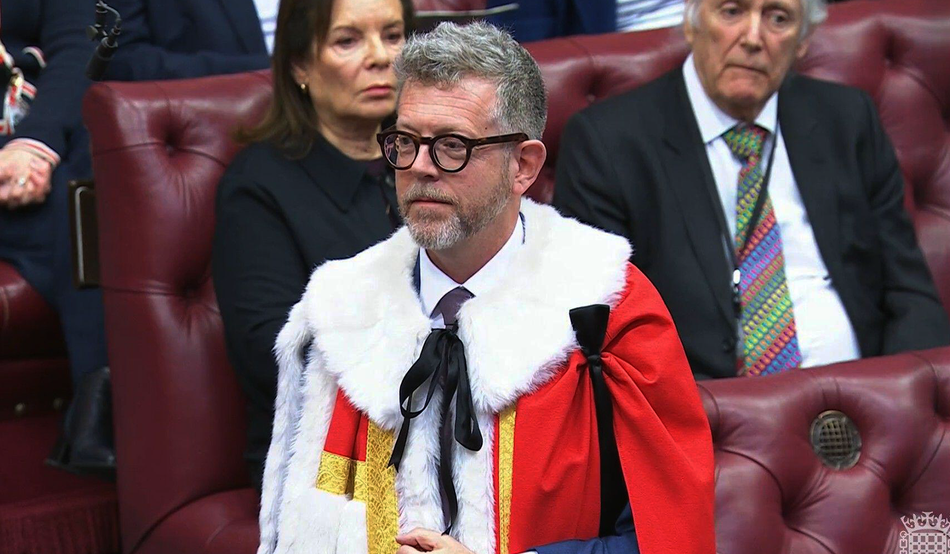
Or, to be more accurate, Lose-Win. Those of you who have been paying close attention will recall that Keir Starmer’s former comms man was introduced into the Lords on 19th January and then duly had the whip withdrawn on 10th February after unseemly details emerged of his ongoing support for a chum with paedophilic tendencies. Doyle apologised, saying he had believed his friend’s initial assertions of innocence.
By my calculation, Doyle—or Lord Doyle, as we are still obliged to call him—was thus a working peer for all of 14 days when the House of Lords was sitting. He has not been seen in the House since then, though “friends” are said to be making the argument that he should be allowed to return.
Assuming he doesn’t make a Lazarus-style comeback, Doyle will have a claim to be one of the shortest-ever occupants of the red leather benches. Alex Douglas Home disclaimed his peerage after just four days. Otherwise, we have to go back to the painter Francis Leighton, who died with no heirs in 1896, just one day after being named the first Baron Leighton.
We have learned this week that life could have turned out very differently for m’lord Doyle. In their desperation to ease him out of Number 10, where he was not universally admired, unknown aides had “several discussions” with the top cheese at the Foreign Office, Sir Olly Robbins, about finding Doyle a plum job in some agreeable embassy abroad.
Maybe, the aides speculated, Doyle could become “head of mission” somewhere? Robbins was under strict instructions not to mention these approaches to the then foreign secretary, David Lammy.
Around the same time, it has emerged that health secretary Wes Streeting was texting his friend Lord Mandelson: “You should get Doyle to do your comms in DC!” Mandelson asked: “Why was he pushed out?” To which Streeting responded tersely: “God knows.”
All this is almost cartoonish in what it reveals about the workings of the British state—every bit as shabby in its fail-upwards manoeuvrings as you might imagine from watching a mediocre Netflix political drama. But, as I say, it means Doyle will now have more time to concentrate on the only known entity which pays good money for his advice: the Malta Film Commission.
Meanwhile we have a zombie government, uncertain of what on Earth to do with its 156-seat majority. I have been thinking of my old friend Conor Gearty, the charming and brilliant Irish human rights lawyer (and friend of Keir Starmer), who died tragically young last September.
Just two weeks before his death he recorded a podcast which ended with a heartfelt plea for the government to do a few “simple” things to fortify democracy against what he anticipated to be a forthcoming age of political oppression in Britain.
The words came tumbling out in an urgent rush, as though he was conscious of how little time he had left. And this is what he said:
“I have thought a good bit about what government could do. You could obviously change the voting system. Don't have any stupid internal independent commission. Don't consult, just have the single transferable vote, PR. Act! You’ll get Liberal support, Labour support. Push it through!
“Ban foreign influence on elections. Be straightforward: make it impossible to have something like GB News. You would not allow [Sir Paul] Marshall—lovely man, though he is—to run a whole lot of outlets in pursuit of an obvious and transparent political agenda. They’re all things that can be stopped. It’s called parliamentary sovereignty. It’s called legislation. It’s called having will. There used to be a requirement that all [broadcast] media was balanced. Return to it.”
In Gearty’s analysis, the forces massing behind Reform and their fellow travellers will not stop at eroding many of the hard-won social entitlements which have benefited many: “They’ve now turned to the civil and political: in my opinion, they’re seeking to perpetually empower themselves. But we can fight back.
“They’d scream. The Telegraph would scream. There'd be front-page headlines in the Express, the Mail. The Times would shed some of its alleged balanced reportage. So what?”
There was a particular vehemence to those two final words, which were almost spat out: “So what?”
Now, Conor was a law professor, not a politician, and it can reasonably be argued that such things are easier said than done. But wouldn’t it be nobler to go down fighting than simply treading water?
Who knows what form of politics we’re destined to suffer after the next general election, but there are preventative measures that a progressive government could put in place now while it enjoys a thumping majority—including ensuring a properly future-proofed BBC. Or meaningful ties with Europe. Or sorting out the House of Lords instead of using it as a dumping ground for mediocre officials who can’t be shunted off to a far-off high commission.
Gearty spoke as if urgently addressing his old friend Starmer. Maybe we’ve reached the point of no return in that respect. Starmer’s biographer, Patrick Maguire, wrote persuasively this week that the prime minister is living on borrowed time. After the May elections, the knives will be out, and we’ll see a new face in Number 10.
Please, can it be someone bold? Someone with a vision—along with competency and integrity. The last 15 years of British politics suggests it’s a big ask to hope for all three qualities in one person, but we can dare to hope.
Meanwhile, all the best for the Malta Film Commission. Its website proclaims a one-sentence vision: “To create a world-class film industry in Malta that benefits the many and not just the few.”
Talent like that was surely wasted on the House of Lords.