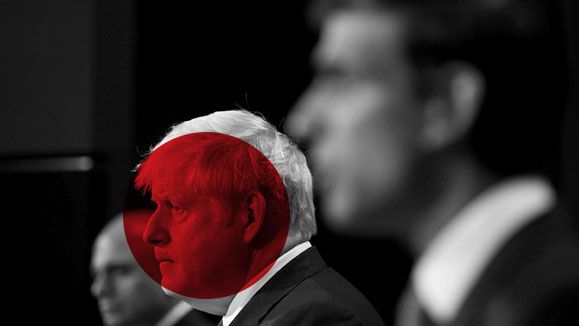
The biggest mistake of British politics over the past 20 years has been to underestimate Boris Johnson. As with Brexit, Johnson’s 1.25 per cent national insurance rise to pay for health and social care will divide left and right on an agenda he himself defined, and reap the dividends.
For I’m fairly sure that by the next election in 2023/4, neither Labour nor Tory politicians will be campaigning against a modest tax increase of 2021 to save the NHS and to relieve the pressure of social care for the elderly.
It’s not just, as Nigel Lawson put it ruefully as a non-believer, that “the NHS is the closest thing the English people have to a religion.” Where can Johnson’s Labour and Tory critics go on this?
Labour can hardly oppose more spending on the NHS. And if Keir Starmer proposes to reverse this tax increase as unfair, he will have to say what other taxes he will put up, which will get him little thanks from the beneficiaries but gift a high tax charge to the Tories. Boris will be out there accusing Keir of a host of further tax increases in order to reverse his own tax increase. And that’s even before the rest of Labour’s shopping list is costed.
To see how badly wrong this could go for Labour, look at the Twitter feed of Andy Burnham, supposedly a Labour moderate but an undeclared contender to succeed Keir who is scouting for votes on the left. “Instead of today’s plan,” he tweeted, “how about social care funded by wealth taxes and a 10 per cent levy on all estates.” Welcome to the Tory fifth term with an increased majority.
Oh, and it won’t do Labour much good complaining about a tax rise which breaks the last Tory manifesto, when Labour itself will no doubt be pledging far more for the NHS by the next election.
As for Tory critics of the “broken manifesto promise,” they can hardly nail their leader for worshipping the national NHS religion in the wake of a pandemic, particularly when part of the proceeds will go to protect the assets of Tory middle England facing big care costs for the propertied elderly.
The fall guy in all this will probably be Rishi Sunak, whose Thatcherite credentials are diminishing on the Tory right in the post-Johnson succession stakes. But then, it doesn’t now look as if there will be an early succession anyway.
Boris doesn’t deserve such good luck. But then, as I explained in my Prospect profile of “the Prime Etonian” last month, he makes his own luck in a highly unusual way. His brazen, entitled refusal to play by the usual rules when it suits his purposes—like the idea that a manifesto commitment not to raise national insurance is not worth the paper it is written on—largely explains why he is Tory leader and prime minister.
He just does things that others won’t do, bigger and bolder. He is also a shrewd, populist reader of opinion polls. A whole division in No 10 is devoted to polling, an ironic legacy of Dominic Cummings who now wails about the prime minister’s lack of Tory principles.
Boris is also observing another shrewd maxim of British politics—namely, in domestic policy, “when in doubt, copy Blair.” The 1p on national insurance for the NHS was the Blair/Brown ruse of 2002 to present a boost for the NHS as a new form of social insurance, while keeping their pledge not to increase the rate of income tax.
This tax increase is in fact fairer than the Blair/Brown increase because it will apply to some of the elderly themselves, whereas Labour’s NI increases didn’t. And Rishi has suspended for a year another Tory commitment, the “triple lock” on the rate of increase in the state pension, which will further rebalance tax and spending between the generations.
The Prime Etonian and the “national religion” are a formidable combination, and Boris will probably pull off this trick. Not that he has any religious belief in the NHS himself. He couldn’t give a fig for socialised health care. His only belief is in his own right to rule, and that’s worth far more to him than a new tax or two.