In the first year of the Labour government, we began to hear about Denmark’s approach to migration. In February 2025, political scientist Mark Leonard wrote in the New Statesman about the example the Danish social democrats provided. In April that same year I attended an event put on by Civic Future, titled “The Immigration Overton Window”, where the Labour MP Jonathan Hinder spoke alongside Danish commentator and former MP Joachim Olson. At a summit of progressive leaders in September, a representative from the Danish Social Democrats outlined his party’s immigration approach to the Labour thinktank world and a hefty number of MPs. By 2026, the idea that Labour should follow Denmark’s migration policy was making headlines, courtesy of Shabana Mahmood’s ascension to the Home Office. In March she visited the country, touring deportation facilities.
The version of the Denmark strategy as it manifests in the Labour party is, essentially, that social democratic parties can win on immigration by taking hardline stances—ones which, by design, make more liberal sections of the electorate uncomfortable. By, for example, floating the idea that you will take jewellery from asylum seekers, or by proposing that refugee status be reviewed every 30 months (Labour has done both), you take away the political oxygen the issue gives to the far right, as well as fulfilling your own pledges about immigration by making your country an unappealing destination.
The Danes—specifically the Social Democrats under prime minister Mette Frederiksen—acted as guarantors of this thesis. International models are always imperfect: to state the obvious, different countries are different places, have different political systems and contexts. The Danish electoral system—a proportional representation model—is quite different to our own, and many sceptics of the comparison pointed out that the UK is multicultural in a way Denmark is not.
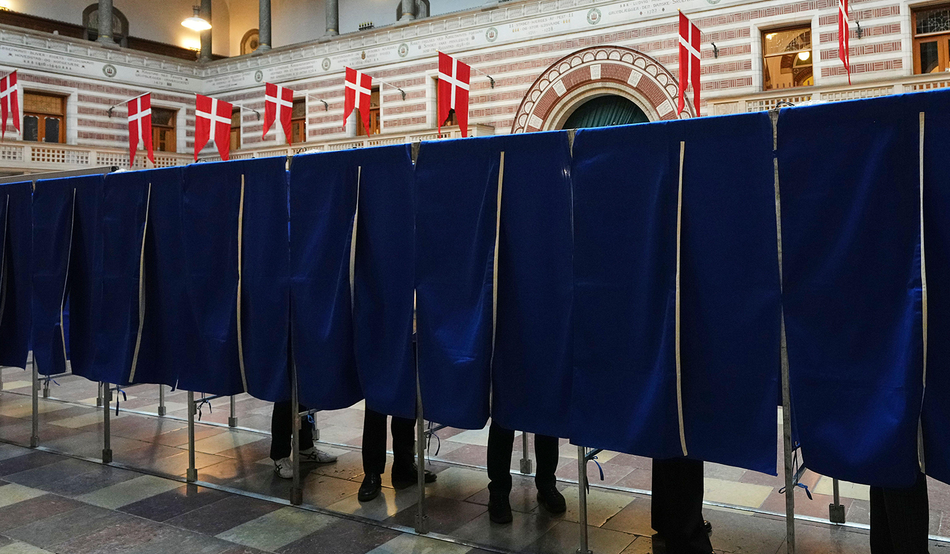
International comparisons can sustain criticisms like these; when deployed in service of political arguments, such comparisons almost all involve a degree of wishcasting. What they cannot sustain is the criticism that the thing does not even work on its own terms. This is the blow that March’s Danish elections have dealt to Denmark-as-model. As I write, coalition talks lie ahead; Frederiksen could be prime minister again. This being said, the Social Democrats had their worst result since 1903. While there are those who might still want to make arguments about the far right’s failure to break through, it is hard to point to a party that has just had such a result and say, “That’s what works, that’s the example we’ll follow”.
What the result means for Denmark and Frederiksen’s party is for Danish commentators to pick apart; I don’t consider myself particularly qualified to read those entrails. But I think it is fairly clear that the result is very bad and possibly fatal for Denmarkism here in the UK, in part because of just how beleaguered it already was.
A keen subject of debate is whether people in the UK have the stomach for what this model demands. The more immediate question is whether Labour does—and the answer increasingly seems to be no. These positions have only ever had a fairly small constituency within Labour. Factionally speaking, its opponents are more diverse than its proponents. While polling suggests that a stronger, more popular leadership could make members swallow a harsher immigration line, those members are not expressly in favour, and the prime minister has lost the support of the party’s leader in Scotland (not exactly a sign of strength and popularity). The approach has some champions in the parliamentary Labour party but certainly not enough to avoid significant fights. Liberal Blairite MPs don’t care for it, and neither does the left, soft and otherwise.
This broad coalition against Denmarkism is a weak spot for the government, and an easy bruise for its critics to punch. It is no coincidence that Angela Rayner chose to hone in on migration policy in March (speaking to Mainstream, a centre-left organisation linked to Labour, she described changes to indefinite leave to remain rules as “un-British”). Rayner is no Nadia Whittome or Tony Vaughan; she has no particular record as a champion of migrants’ rights. This is not to suggest her intervention is insincere, just that she dislikes the policy and is very much aware of just how much other people dislike it too.
Then there is the question of the electoral economy this strategy suggests, specifically the willingness to lose “bourgeois voters”. This is an approach that the result of the Gorton and Denton byelection does not vindicate. Most predictions about the forthcoming May elections also suggest Labour will lose ground to progressive parties. While signs are that Mahmood and likeminded allies are as committed as ever, internal opposition and electoral reality at home, plus a distinct lack of success for their model success story, means their path forward looks increasingly difficult.