Yesterday the august publishing house Faber released the following statement:
“Current legislation in the UK has led to circumstances where Faber cannot pass on UK earnings to Sally Rooney for her work. To sell a writer’s work and not be able to pass on earnings is an unconscionable situation for a publisher.
“As such, and in full agreement with Sally, we have taken the decision that we can no longer supply her works in the UK in any format. We remain the proud publisher of her remarkable body of work, which we will continue to sell in other territories.”
Rooney in turn released her own statement:
“In July 2025, the direct-action protest group Palestine Action was proscribed as a terrorist organisation in the UK. The following month, I wrote an opinion piece expressing my intention to go on supporting Palestine Action, which is not a proscribed or otherwise prohibited group here in the Republic of Ireland.
“As a result, the fulfilment of contracts to publish my work in the UK could now constitute a serious criminal offence. After a process of consultation and deliberation, and with my full agreement, my publisher Faber has therefore determined that it can no longer supply my work within the UK.”
These are remarkable statements. Rooney is a bestselling author and Faber is one of the world’s most famous and distinguished publishers. Surely this is an overreaction and a misunderstanding of the law? Or a publicity stunt of some kind?
Well, what is most remarkable about the statements is that Faber and Rooney have a point. Indeed, it is against the commercial interests of both to remove books from the marketplace, and for Faber to agree to do this implies the publisher must see a credible risk of legal liability. Faber is in the business of selling books rather than not selling them.
The “current legislation” to which the publisher seems to be referring is the Terrorism Act 2000 and in particular section 15. This section provides that a person (which includes a company) commits a criminal offence if they receive or provide money which they know or have reasonable cause to suspect will be used for the purposes of terrorism. This would cover the taking and paying out of royalties.
Rooney, in turn, has said openly and expressly that she intends to use her royalties to fund Palestine Action, an organisation proscribed under the Terrorism Act. Even if she had not told her publishers this directly, they would be aware that this is what one of their star authors had said.
Last August she wrote in the Irish Times, “I feel obliged to state once more that—like the hundreds of protesters arrested last weekend—I too support Palestine Action. If this makes me a ‘supporter of terror’ under UK law, so be it. My books, at least for now, are still published in Britain, and are widely available in bookshops and even supermarkets. […] I want to be clear that I intend to use these proceeds of my work, as well as my public platform generally, to go on supporting Palestine Action and direct action against genocide in whatever way I can.”
The elements of the Section 15 offence appear to be made out. Rooney and her publisher have not adopted a fanciful interpretation of the law. Indeed, when stripped down to its basics, their construction of Section 15 is unexceptional. There is a risk of criminal liability.
Of course, one would think it unlikely that the British state would prosecute a famous Irish author and an even more famous publishing house. But little about the terrorism law of the UK makes sense at the moment, since the ludicrous decision of then home secretary Yvette Cooper and the Home Office to proscribe what is essentially a direct-action protest group as a terrorist organisation.
Last week the Home Office published the statistics for terrorism-related offences. In its own words, “there were 3,867 arrests for terrorism-related activity in the year ending June 2026, 3,633 more than in the year ending June 2025 (234), a rise of 1,553%; and 1,525% higher than the historical 10-year median of 238 arrests”.
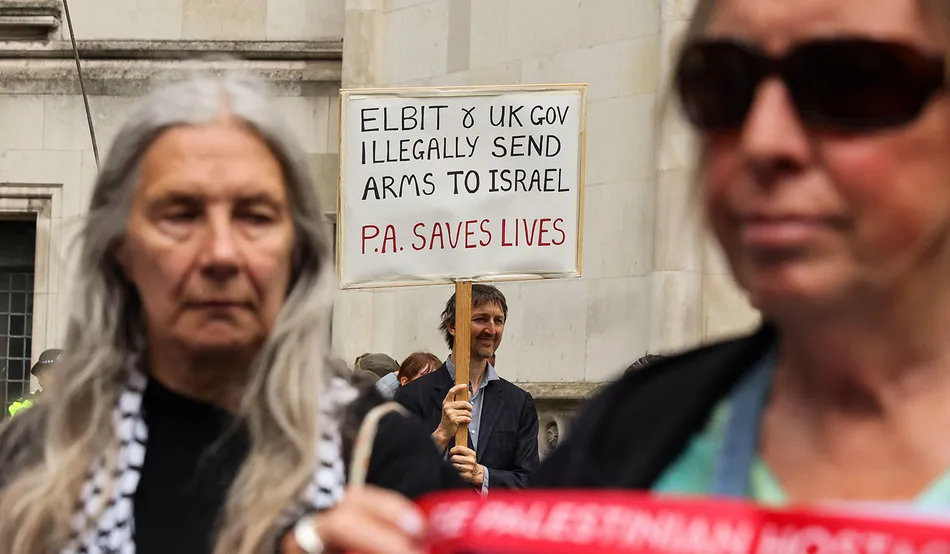
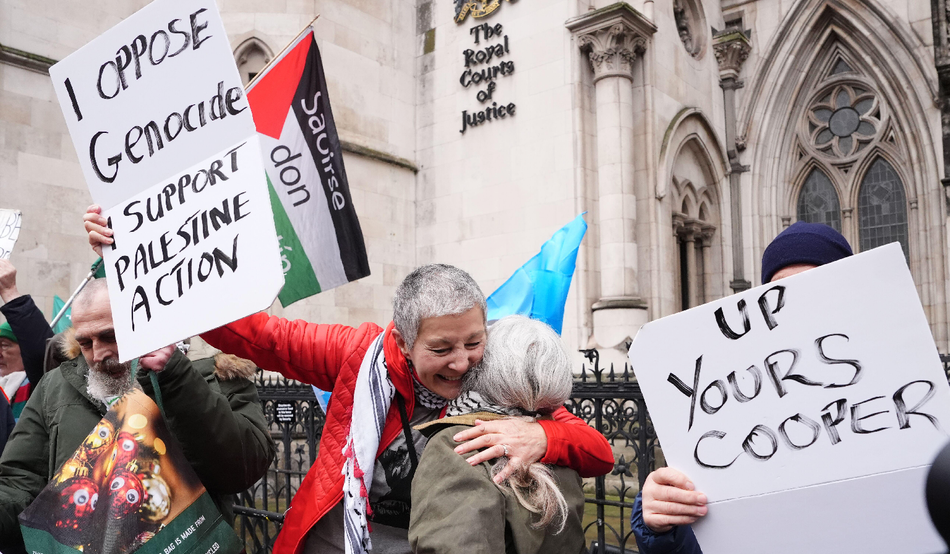
The “terrorism-related activity” is, of course, mainly people holding placards stating they support Palestine Action.
These are extraordinary and discrediting figures. Terrorism should be taken seriously. It is a special body of law which provides a legal basis for dealing with exceptional threats, over and above the ordinary law of the land. Yet the government makes terrorism law look unserious. The position of Faber and Rooney is not ridiculous, but the position of the British government is.
The Supreme Court of the United Kingdom will next month hear Palestine Action’s latest appeal against its proscription. At first instance the High Court held that the ban was disproportionate and thereby unlawful. On the appeal of the government a higher court held that the ban was proportionate and thereby lawful.
The Supreme Court as currently constituted is deferent to the government on matters of national security and is reluctant generally to intervene on any matter of political judgement. But maybe this proscription is too much for even the Supreme Court justices. Maybe, but unlikely.
And so we will be left with the preposterous situation of popular novels being removed from bookstores and rises of 1,553% in arrests for “terrorism-related activity”. A situation so nonsensical that no novelist could make it up.