The Court of Appeal decision on the proscription of Palestine Action is a story of two breadths: the breadth of terrorism law and the breadth of the discretionary power of the home secretary. It is also a story about the extent to which our courts will defer to the government.
The story can be said to begin in 2019 when the government decided to amend the Terrorism Act 2000. The second part of that statute deals with proscribed organisations. Once an organisation is proscribed the government gains additional legal powers and those involved in the organisation face certain prohibitions. For example, a proscription order means organising, fundraising and soliciting support for that organisation all become criminal offences.
In effect proscription meant that a package of rights (for the state) and burdens (for those involved) were triggered. And it was all-or-none: neither the state nor the legislature could pick and choose which proscription powers were to be triggered. Once a proscription order is made, all the legal consequences come into play.
The 2019 amendment went significantly further than the original 2000 legislation. It became a criminal offence if a person “expresses an opinion or belief that is supportive of a proscribed organisation”, if that expression of support is “reckless as to whether a person to whom the expression is directed will be encouraged to support [that] proscribed organisation”.
That expansion of the law was breathtaking. It became a crime just to express an opinion. It was an extraordinary interference with the law of free expression. One became a criminal—under terrorism legislation, no less—merely because you had a view and expressed it. Yet parliament nodded through the amendment. Terrorism law—already broad—became even broader.
The safeguard was that a home secretary could not just proscribe any group. There had to be certain conditions. There was a definition of “terrorism” which had to be met. A proscription order had to be approved by parliament. And a home secretary could not under the general law exercise the power for a wrongful or collateral purpose or if it disproportionately interfered with human rights, such as the right to free expression. Parliament must consent and the courts would supervise: there would be checks and balances.
Yet when the government wanted to proscribe Palestine Action, the Home Office bundled that organisation with two others, making it so members of parliament could not give any specific consent to this proscription. One check and balance was sidestepped. The proscription order took effect.
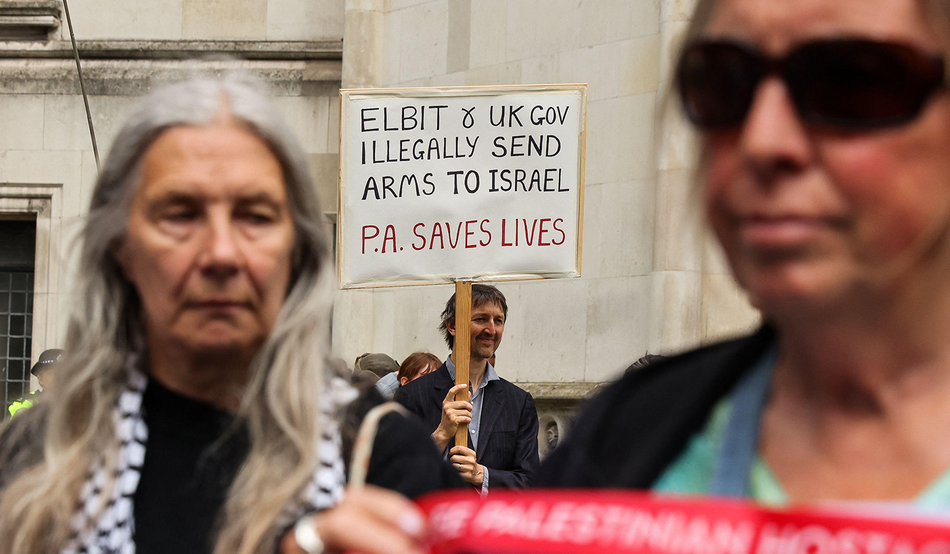
Then under the order came mass arrests to a ludicrous degree of people who were only holding placards expressing support for Palestine Action. Thousands of arrests were made and there are now at least 700 cases in the already resource-poor, clogged-up criminal justice system.
The situation seemed daft: this was not a good use of terrorism law, even if there was a case for other proscription powers to be in place. Terrorism law should be taken seriously, including by ministers, but this was an absurdity.
And so the law was challenged. In February, to the surprise of many, the challenge by Palestine Action won at the High Court. The court was aware that Palestine Action had committed acts of criminal damage, but the judges were not convinced that the group came within the definition of terrorism. The home secretary had acted disproportionately. The High Court said:
“Considering in the round the evidence available to the Home Secretary when the decision to proscribe was made, the nature and scale of Palestine Action's activities, so far as they comprise acts of terrorism, has not yet reached the level, scale and persistence that would justify the application of the criminal law measures that are the consequence of proscription, and the very significant interference with Convention rights consequent on those measures.”
This was powerful stuff, and from a powerful bench of judges, comprising the President of the King’s Bench Division and two well-regarded public law judges.
The Home Office was not happy, and appealed. In the meantime an unsatisfactory legal situation arose where the High Court had ruled the proscription unlawful but deferred making an order giving effect to its decision, pending the outcome of the appeal. And so the arrests continued, notwithstanding the High Court’s judgment.
And last week it turned out the Court of Appeal was not happy either. In a rare move the bench was expanded to five, including the Lady Chief Justice and the Master of the Rolls. The strong bench below would be met with an even stronger bench above. And those five appeal judges unanimously sided with the government.
Their judgment is a depressing read from a liberal constitutionalist perspective. The judges defer to the home secretary on issues of national security in terms which it is difficult to imagine them ever not doing so on any proscription decision. The court as a check and a balance becomes illusory.
The impact of the proscription on the right of free expression is then waved away by saying that the protesters have the right to express support about other things. The judges even do some historically illiterate dabbling about the suffragette movement, in what would be howlers in an undergraduate history essay.
It is not an impressive judgment, but it leaves an impression. The decision is reminiscent of the notorious wartime judgment of the House of Lords in Liversidge v Anderson, which upheld illiberal detention powers, leaving Lord Atkin to famously dissent that his fellow law lords were “more executive minded than the executive”. The combination of this judgment with the government avoiding a direct parliamentary vote on the proscription showed that the law here has no meaningful checks and balances.
Any appeal to the current similarly executive-minded Supreme Court would be hopeless. A reference to the European Court of Human Rights is possible but the Strasbourg court will not relish such a controversial case when the United Kingdom’s membership of the European Convention on Human Rights will be questioned in the run-up to the next general election.
And so already broad terrorism law will no doubt become broader, and the home secretary’s broad discretionary power will also no doubt become broader. There was a possibility here that these broadening phenomena could have been checked. As one judge at the time of Liversidge v Anderson wrote to Lord Atkin:
“I venture to think the decision of the House of Lords has reduced the status of the Judiciary with consequences the nation will one day bitterly regret. Bacon, I think, said the judges were the lions under the Throne, but the House of Lords has reduced us to mice squeaking under a chair in the Home Office.”