There is an old English saying, dating from the 16th century: to make hay while the sun shines. A variation of this is that the best time to fix a roof is also while the sun shines. There are times when it is easier to do certain things.
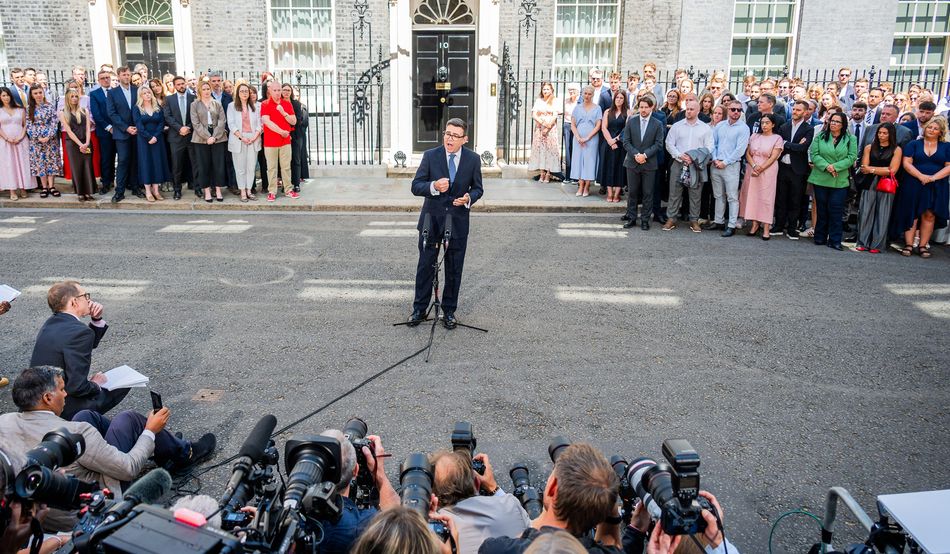
Currently, there is a parliament which could last all the way until the summer of 2029. The next election must be held no later than 15th August 2029, though of course the new prime minister Andrew Burnham may call one sooner. But the fact remains that we may be less than halfway through this five-year parliament. The last general election was only two years ago this month.
And in this parliament, there is a majority for what is at least nominally a left-of-centre Labour party. There are currently 403 Labour members of parliament, and there are also 71 Liberal Democrats, 12 Scottish and Welsh nationalists, five Green MPs and two SDLP.
Never in recent history has there been such a potential majority for fundamental constitutional reform. The rump of 117 Conservatives, seven Reform and five DUP MPs, and various others, would not be able to stop any concerted effort at fundamental change. And nor would the House of Lords, as there would still be time to use the Parliament Acts against any upper house veto.
Many from a liberal perspective would rightly dispute that any political sun is shining, especially with a government that, notwithstanding being nominally left-wing, is in practice illiberal, if not repressive, in immigration and other matters. The new prime minister has kept Shabana Mahmood at the Home Office and sacked Lord Timpson as prisons minister. There is a case that in policy the present administration is indistinguishable from a Conservative-Reform administration.
Such criticism is well made, but it remains true that, at least in theory, the circumstances of the current parliament mean deep structural changes to our constitutional arrangements could be made, if those in power wanted to do so. We have a once-in-a-political-generation opportunity to force through change, even if that opportunity is likely to be wasted.
And such change is needed, for there is a non-trivial possibility that the composition of the House of Commons could be very different after the next general election. A glance at the United States and at some countries in continental Europe show how good radically illiberal parties are at gaining and keeping political power. The leader of the Reform party, a supreme political opportunist, may be having a hard time at the moment, but the political support he and others are exploiting will still be there.
And if there is a radically illiberal majority in the next parliament, our constitutional arrangements—as set out in previous Weekly Constitutional columns on the possibility of an Enabling Act and the vulnerability of the UK’s constitution—could buckle quite quickly. There is very little in our constitution which would be able to stop a determined and considered assault on the checks and balances to raw executive power. There is a risk that one day we shall look back at the current period and ask: why was not more done to anticipate what was to come?
But what could be done? On this, there was an interesting paper published this week by the Constitution Unit at University College London. The title is ambitious and wide-ranging: Safeguarding the Constitution: Key Steps to Strengthen UK Democratic Resilience.
The content is more limited. This is not really a paper about strengthening the judiciary in respect of human rights and civil liberties or making it easier for citizens to take on governmental abuses in the courts. Instead, it focuses on the various changes that could be made within the parliamentary system. It is more about safeguarding our legislature, than the constitution more generally.
Some of these proposals are what could be called “hard”—making it so that parliament must give consent to being prorogued or dissolved, and giving members of parliament more control over the parliamentary process. Or giving ethics regulators a statutory footing which the government cannot simply remove. These are hard insofar as they mean that someone within our polity can just say “no” to the government, and the government would have to accept it. Such changes would be useful.
Other changes proposed are less hard and are indeed sometimes what we can call “soft”. There should be a mere “review” of the delegated legislation system, not any particular changes (such as simply getting rid of the much-abused negative procedure for getting statutory instruments and codes of practice into law without any meaningful vote). There should be another mere “review” of the electoral system. There should also be nice-to-haves, such as more transparency and expert input and improved information flows.
The problems with such soft proposals are twofold. First, there is probably not enough time before the next general election for such reviews to be converted into concrete proposals which can be implemented. Second, transparency and expertise can be easily swept away by an incoming radically illiberal government. The United States, for example, has a far stronger freedom of information regime than the United Kingdom, for all the good it has done.
That said, this contribution is to be welcomed and the paper should be widely read. It is not a complete plan of how our constitutional roof can be fixed against what may be a coming storm. More hay will be needed. But these proposals would be a good start. Our constitutional arrangements are vulnerable and it is complacent to think otherwise. And we still have time to do it, but not that much time.