A feature of modern politics is the detachment of rhetoric and action from principle and consistency. This, of course, is not a new thing. Hypocrisy is no doubt as old as human nature. Five hundred years ago Machiavelli wrote about the difference between what those with power do and what they say and, 70 years ago, Orwell warned of slogans like “ignorance is strength”.
But with mass media and internet communications, the discrepancy is perhaps more obvious, and there is reason to believe it is becoming more common. Indeed some, like President Donald Trump, are brazen in their disregard for there being any connection between speech and reality. Instead of changing the world, politicians take the easier route of simply contriving new worlds for others to nod-along with.
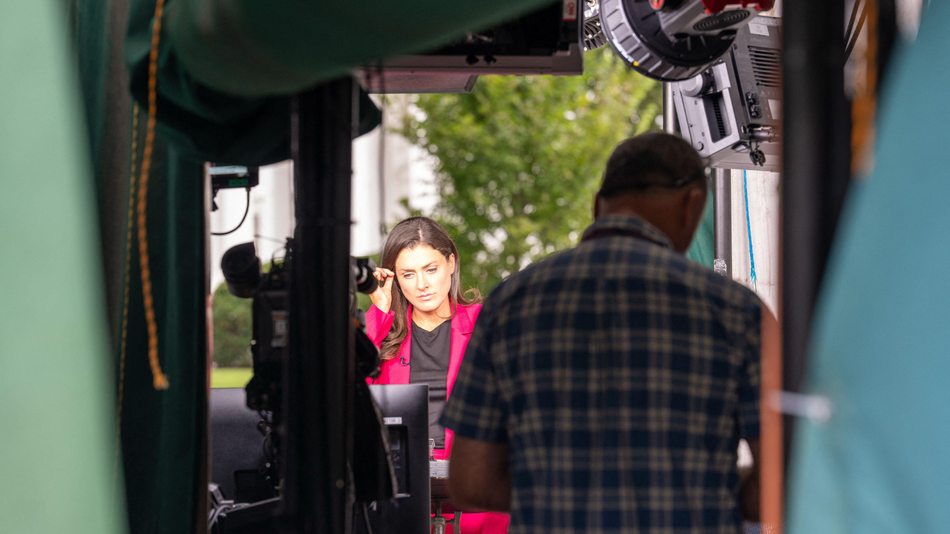
Take, for example, Trump denying various news outlets access to the White House. The banning of the press is self-evidently an interference with the rights of the press. How could such a violation possibly be justified as a matter of principle?
For Trump, the justifications (plural) were easy, as he stated on Truth Social: “The White House is not instituting an assault on the Free Press, something which I cherish. It is instituting an assault on the FAKE NEWS, something that has grown like Cancer in our beloved United States of America. It is corrupt, purposeful, pervasive, fully coordinated, and totally out of control. It is a threat to our National Security, and must be stopped, NOW!”
Although one may shrug at yet another post from Trump, it is perhaps worth taking a moment to consider what is actually being said here. He asserts that he believes in a free press as a matter of principle, but then excuses his ban as being against “fake news” rather than against a free press. The principle is thereby sidestepped.
Trump then reinforces the charge of fakery with various adverse characterisations: “corrupt, purposeful, pervasive, fully coordinated, and totally out of control”. These descriptions do not make much sense—how can a thing be both “fully coordinated” and “totally out of control”—but that does not matter. It is the impact of the accumulation of words which matter. He cares not for the meanings of words but for the sound they make.
But the charge of dastardly fakery is not enough, for Trump also pulls out his own trump card: “national security”. This is not national security in any sensible way, but “national security” in speech marks. It is a phrase he can deploy to get what he wants. As with his ballroom and various other antics, Trump knows that declaring a thing is about “national security” means he can check opponents.
And so we have utterances like “free press” and “national security” floating freely in the rhetoric of Trump and many of his supporters, unmoored to any berth of consistency or principle. Of course, those saying these things like having the force and impact of sounding like they are invoking grand concepts. But the phrases are the counters of the proverbial fools.
This is not just a problem in the United States. In the United Kingdom, we have politicians and pundits who solemnly but cynically use the language of “legitimate concerns” to cloak various illiberal stances.
Peaceful pensioners with placards are criminalised as “terrorists” while organised bullies in political uniforms disrupt infrastructure without obvious impediment. Those calling for hotels housing migrants to be burned are “free speech” martyrs, while reporters are casually stopped from covering political events. And so on, and on.
We have what appears to be the discourse of fundamental rights and obligations but without the substance. As long as it gets the politician or pundit through to the next thing they want to do, perhaps with a clap and a cheer from anyone following them, it does not matter if there is a dislocation between what is stated and what is happening.
The ultimate problem with this separation between words and things is that eventually there can be a crunch. A wolf will appear to the surprise of those who have cried of wolves. There will be a genuine issue of national security but nobody will take it seriously. There will be a need for terrorism law to be taken seriously. There will be a legitimate concern which is not just a mask for bigotry.
As and when such a credibility crunch comes, we will have to somehow start again on fashioning a political discourse which corresponds with political action and inaction. And, because of mass media and the internet, that exercise of reinvention will be at a scale which maybe has not had to be done before. But in the meantime, before such a conceptual and linguistic reboot, we will have a widening disconnect between rhetoric and reality at a time when we need it least.