Andy Burnham and Ed Miliband, his new foreign secretary, have both flagged that British policy on Israel-Palestine must shift. Burnham wants to put additional pressure on Israel regarding the Palestinian occupation. One way would be to promote the Arab Peace Initiative, first mooted way back in 2002 by Saudi Arabia. The plan calls for peaceful recognition of Israel from the broad swath of the Arab nations, if Israel accepts a Palestinian state. However Burnham and Miliband decide to proceed, engaging with the current Netanyahu government—especially in election season—makes no sense.
Of course, for the new British government to make a real difference, it must engage not only with the Israelis, (who go to the polls on 27th October) but with a viable Palestinian leadership. It’s more than likely that the October Israeli elections will bring new leadership, though no viable prime ministerial candidate is campaigning on negotiations with the Palestinians right now. On the contrary. Still, a less rabidly right-wing government could open negotiating space.
Meanwhile, the Palestinian Authority (PA) is less popular than ever, battered by its own corruption and the stranglehold Israel has on every aspect of West Bank life—not to mention the war in Gaza (where even the latest Trump-induced peace plan does not demand that Hamas disarm until Israel agrees to stop its incursions in Gaza. Israel appears to have no plans to do so, and therefore, Hamas, too, won’t disarm. It’s a stalemate hidden by a Trump-blessed agreement that only the US president appears to think is a resolution).
Following the Israeli election, there will be Palestinian legislative and presidential elections in November, the first since 2006. The PA, set up by the 1993 Oslo Accords, was always meant to be a temporary waystation en route to a Palestinian government and an independent state. Benjamin Netanyahu’s right-wing government has stripped it of any remaining power, leaving PA president Mahmoud Abbas deeply unpopular. At 90 years old, Abbas is barely a caretaker leader. His apparent hand-picked successor, Hussein al-Sheikh, doesn’t register above 3 per cent in popularity among Palestinians.
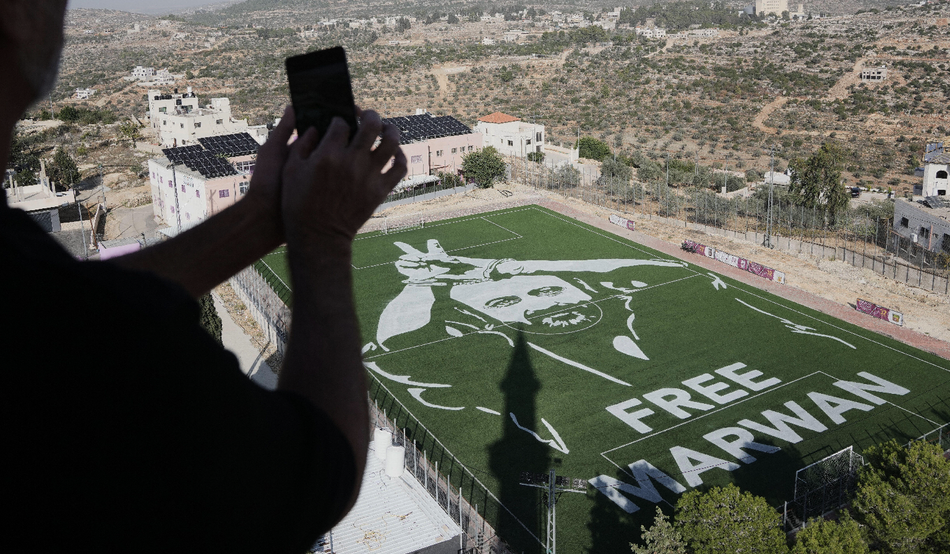
The most popular Palestinian politician, Marwan Barghouti, is mulling a presidential run from prison. His allies are seeking to build legislative strength for the upcoming contest.
As I previously wrote in Prospect, Barghouti, incarcerated by Israel since 2004 for his leadership role in the Second Intifada, in which some 1,000 Israelis were killed, remains overwhelmingly popular among Palestinians, Fatah (the main—nationalist and secular—Palestinian faction led by Abbas and previously by Yassar Arafat) and Hamas devotees alike. Polling from the last more than three years shows Barghouti is the favourite among all factions.
The 66-year-old is being held on five life sentences plus 40 years for his role as the leader of the Second Intifada. He was a member of the Palestinian legislature at the time of his arrest by the Israel Defense Forces. From all his published statements and from numerous public pronouncements by his family, Barghouti still supports two states, and peace between Israel and a future Palestine.
One thing that the Burnham government can do immediately is request a health update on Barghouti and all Palestinian security prisoners. Israel’s Supreme Court has ruled, in a case brought by the Association for Civil Rights Israel (an NGO for whom I consult), that far-right Israeli minister Itamar Ben-Gvir must allow International Red Cross visits inside Israeli prisons. But this still has not happened—since 7th October, 2023, going against both Israeli and international law. Another immediate action would be for the British ambassador or any visiting British official to request a prison visit with Barghouti. It will surely be denied by the Netanyahu government, but would be vital for precedent setting and to let the Israeli government know the world is watching.
I recently met Barghouti’s 35-year-old son Arab for coffee in Ramallah’s Al-Bireh neighbourhood. The only contact that the family has had with Marwan in more than three years has been through their lawyer. Even then, the lawyer (a prominent Israeli human rights attorney) has had to demand to see his client, after prison officials’ refusals.
“Since 7th October, despite having nothing to do with those events, my father has been subjected to prolonged solitary confinement, torture, starvation, repeated assaults, and severe physical abuse, including broken ribs and, most recently, being shot at point-blank range with a rubber bullet,” Arab told me.
“I fear for his life. The only real way to protect Marwan Barghouti is to release him—to his family, to his people, and to the role he can play as a unifying Palestinian leader.” He said that his father is indeed considering a run for president. But a final decision will be made once the date for a presidential election has been announced.
Other world leaders have embraced Barghouti. Even Donald Trump has uttered his name, likely having heard of him from French president Emmanuel Macron or the Saudis, as both countries have taken up his cause. (Additionally, a global campaign is growing, supported by Own The Space Projects, a UK-based campaign incubator, and funded by individuals who share a commitment to human rights and democracy. The campaign takes no money from governments, according to consultants directing the work).
Burnham and Miliband supporting the Arab Peace Initiative would almost be the easy part. There can be no agreement with the Palestinian people and the Israelis without viable, credible leadership that crosses ideological lines among the Palestinians. Freeing Barghouti from prison, or even negotiating with Palestinian leadership, will be difficult for any Israeli government after the 7th October Hamas attack inside Israel. His leadership role in the Second Intifada has been played and replayed by Israeli leaders for decades. To say that Israelis will need more than global encouragement is as profound an understatement as can be imagined.
But if the new British government wants to intervene, it has weight. Neither the UK nor the EU have used much of the leverage available to them. They are both tremendously important trading partners for Israel. The UK has a separate defence and tech agreement: the Trade and Partnership Agreement (TPA) with Israel, along with a memorandum of understanding to expand cooperation in areas such as cyber security, technology and trade and defence.
Taking the Arab Peace Initiative out of the shadows and into the sunlight is vital, without a doubt. And it is necessary in order to move the foreign policy conversation from the US-led Abraham Accords, which ignore the Palestinian issue, to something that addresses what is at the core of the region’s strife. The Israeli public deeply desires a blanket agreement with all Arab states to give it a sense of security, and Saudi Arabia is the gatekeeper to the remaining countries. However, agreements under the Accords have made no demands on Israel regarding the Palestinians.
Indeed, Trump recently waived this option again, when he seemingly granted permission to the Saudis to purchase nuclear capability from the US. As an afterthought, however, he added that this would only happen if Saudi Arabia agreed to sign the Abraham Accords recognising Israel. The Saudis remain consistent that they will not agree to normalisation with Israel without a Palestinian state.
So Marwan Barghouti sits in solitary confinement in an Israeli prison. He is not alone—there are numerous Palestinian security prisoners incarcerated in Israel; yet Barghouti is the one inmate who may hold the key to a different future, for Palestinians and for Israelis.