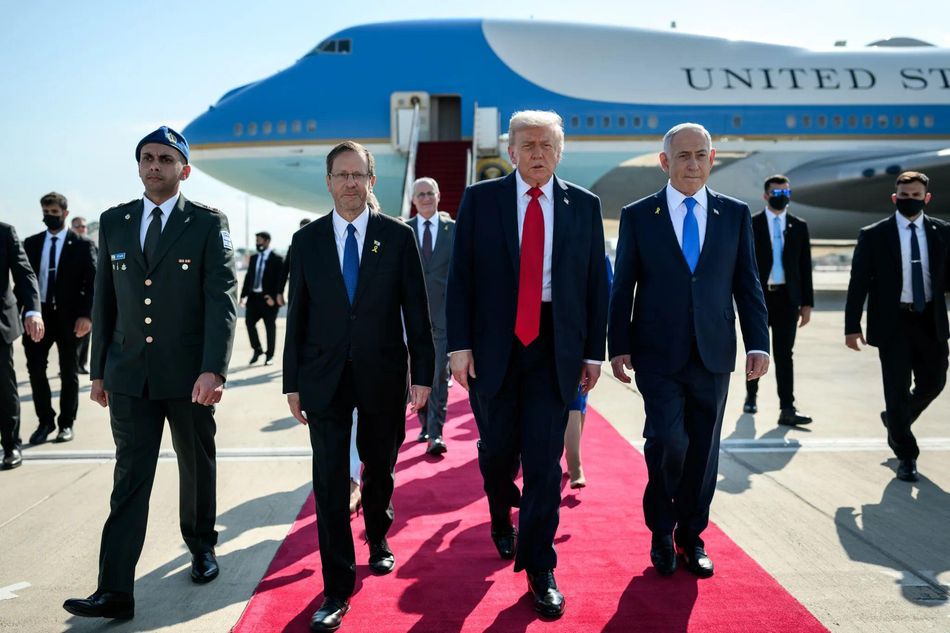
Donald Trump’s Board of Peace is neither a real board nor an instrument of peace. Rather, it appears to promote the president and his son-in-law Jared Kushner’s vision of turning Gaza into a place of profit and glamour by the sea.
The Palestinians are very much an afterthought. This is illustrated by the fact that Palestinian businessmen tasked with implementing Trump’s 20-point Gaza plan (several of whom have ties to Gaza) have struggled to enter the enclave due to Israel’s unwillingness to allow them access. In the United States itself, Trump has instructed the State Department to outlaw entry for visa holders who have what is considered equivalent to a Palestinian passport. Even the Palestinian Authority is not happy with the Board of Peace arrangement because the PA is institutionally isolated from the project.
And Benjamin Netanyahu, who accepted a seat on the Board of Peace last month, has stated time and again that “there will be no Palestinian state”. In fact, the Israeli cabinet agreed on Sunday to break agreements made under the Oslo Accords so that the Israelis can now move full force into Palestinian-controlled areas to take land, especially in around Hebron.
Hamas is still armed. Disarming the group is one of the 20-points in Trump’s plan, but there is still no mechanism to do this. Indonesia has reportedly been announced as the first country to commit to sending a few thousand troops to Gaza, though there is no structure within which to fit them. Even the Palestinian police who are being offered full pay to transfer from the West Bank to the Strip are reluctant to join in keeping the peace due to their reluctance to engage Hamas. (Palestinian police employed by the PA in the West Bank, like all PA employees, are not receiving full pay because the Netanyahu government has refused to transfer funds belonging to the PA since October 2023, leaving the PA nearly broke).
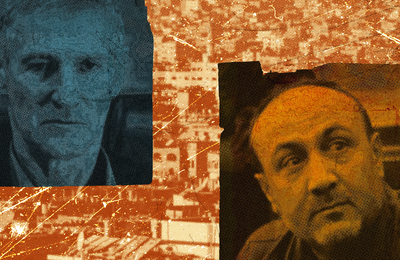
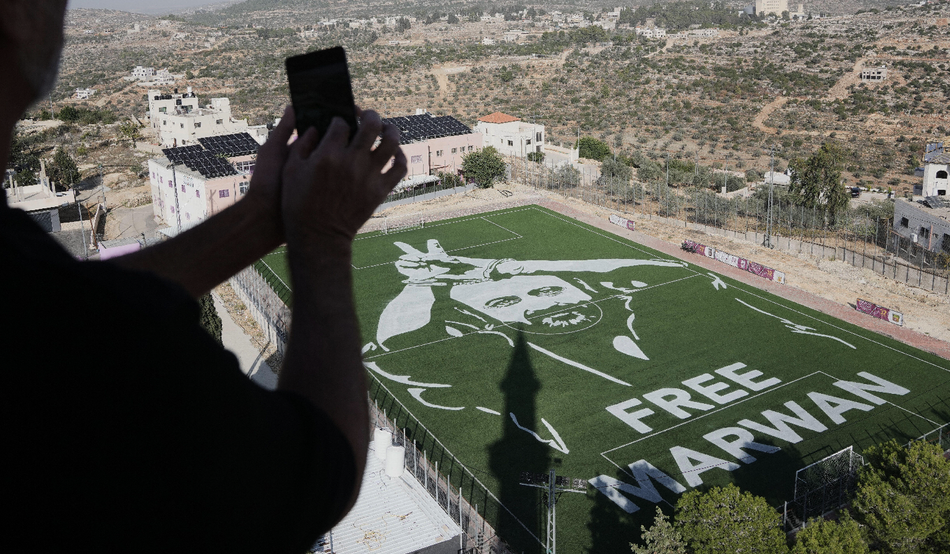
There are other, better, ways to change the Palestine/Israel reality—such as if the 20-point plan acknowledged Palestinian self-determination and prioritised a serious Palestinian political process. Add to that the notion of a bold Trump move: telling his ally Netanyahu to release Israel’s most famous Palestinian prisoner, Marwan Barghouti.
Arrested by the Israelis in 2002 and convicted in 2004, the 66-year-old is being held on five life sentences plus 40 years for his role as the leader of the Second Intifada. A member of the Palestinian legislature at the time of his arrest by the Israel Defense Forces, Barghouti is uniformly popular among all Palestinian factions (including Hamas supporters). As such he could play a unique role in unifying a war-ravaged and politically divided populace.
For years polling has reflected Barghouti’s popularity. According to Khalil Shikaki, the Palestinian pollster, if presidential elections were held where Barghouti ran against incumbent president Mahmoud Abbas and Khaled Meshaal of Hamas, Barghouti would win 49 per cent of the vote, while Meshaal polls at 36 per cent and Abbas trails at 13 per cent. If the contest was between Barghouti and Meshaal, the former polls at 58 per cent and the latter at 39 per cent.
Barghouti and his family maintain that his incarceration is political. His name has been at the top of numerous lists for prisoner exchange, only to be turned down by successive Israeli governments, including the current one as it negotiated ceasefires and Gaza hostage and Palestinian prisoner releases after following the 7th October Hamas attack. Indeed, Israel has released hundreds of verified terrorists over the years in exchange for Israelis held by Hamas and, after all, negotiated with Yasser Arafat.
Based on all his statements, including from prison, and those of his family, Barghouti remains committed to a peaceful transition to two states. As far back as 2006, when he helped pen a prisoners’ letter from an Israeli jail, he has been able to bring together all the various Palestinian factions. There are many reasons for this, including the fact that he is seen as honest and unbribable.
For the Israelis, Barghouti represents something much more dangerous. As his wife Fadwa Barghouti told me recently when we met in Ramallah, “He's a uniting figure, capable of unifying the Palestinian people… and that's something that we lack in Palestinian politics. The Israelis don’t want that.”
The Netanyahu government is “happy with the status quo,” she explains, “which is scattered Palestinians, Hamas ruling Gaza, the PA very weak ruling the West Bank, Jerusalemites on their own, the Palestinians in Israel on their own, the diaspora and so on. He’s someone who can bring a vision to all these people and bring hope, which is something that they worry about.”
I met with Fadwa, and their youngest son, 35-year-old Arab, in their modest apartment, where I’ve visited them for the past three winters. As always, we sat in their living room beside a large photo of Barghouti as she offered me coffee. She’s a warm person, without an external show of bitterness. A feminist leader and lawyer, Fadwa gave up law to devote her time to the effort to free her husband. Yet, she remains a force in her own right, having founded the General Union of Palestinian Women in the Fatah party. She told me that since the age of 18 she has been “obsessed” with women’s independence. It never occurred to her that she would turn out to be a single parent raising four children. Today, she spends much of her time traveling the world speaking to political leaders about her husband’s freedom.
This was the first time Fadwa was willing to talk to me on the record. She fears for her husband’s life with the far-right, Kahanist minister, Itamar Ben-Gvir, in charge of Israel’s prison system. Previously, she thought that staying silent would ensure her husband’s safety, but that has not proven to be true. In August, Ben-Gvir posted a video from Meggido prison, where he made a show of threatening the prize prisoner. It was clear that Barghouti has lost a tremendous amount of weight. This past autumn, the family received a menacing anonymous call about Barghouti’s condition, though their lawyer was able to verify that the allegation made by the caller was false.
Fadwa hasn’t seen her husband in three years. Since the 7th October Hamas attack and the start of the Gaza war, he has been transferred to various prisons, and like all security prisoners in Israel, has been kept in solitary confinement. The family recently started an international campaign for his release that includes The Elders, Bono and others. A book of Barghouti’s writings from prison is forthcoming from Vintage/Penguin.
I’ve been writing about Barghouti for years (including in this magazine in 2008). His political vision seems never to have wavered, according to statements he has made from prison and public remarks by his family and allies.
The dissonance between what Barghouti stands for and what extremists on both sides—Israeli and Palestinian (and their supporters)—represent is striking. Fadwa argues that the most likely reason for his continued incarceration is that “he believes in the two-state solution, in coexistence. It’s because he has a track record of meeting with Israelis, of being a moderate, and listening to them, and makes it public.” Being publicly in favour of two states has not cost him his popularity, she notes. But “the problem that you have is an Israeli government that is not interested in any peace process, even if it’s going to bring stability, because stability is not their incentive or motivation. Their motivation is full domination on the land.”
Barghouti’s son Arab points out that the Palestinian people have become a political football, across the political spectrum: “if you look right now, you’re going to find people either on the far left or the far right, like ‘free Palestine from the river to the sea’, or ‘the Palestinians are terrorists’. We’re not having the real discussions that can take us to a better future, that can make us move forward.”
Of course, he admits, the family is biased towards his father, but Arab insists there is “a great opportunity” here for the US, the global community, “for the Palestinian people. And for the Israeli people. For Israel’s future security, because my father said no peace, no security with occupation.”
There is hardly a groundswell inside Israel for freeing Barghouti, not even among the struggling peace camp. Still, there are leaders, notably figures from the security establishment, who do advocate for his release. One such is Ami Ayalon, former leader of Israel’s Shin Bet security service and former commander of the Navy.
“If you ask me today, why is he in prison? Because in the eyes of the Palestinians he is the only alternative. He became a symbol,” Ayalon told me recently. His ongoing imprisonment is political, he believes, stressing that there is no military victory against Hamas. “Total victory is to create a better political reality. Total victory is never achieved today by killing all your enemies.”
It’s highly unlikely that in an election year in Israel, which this is, Barghouti would be released, even under pressure from Trump. But Netanyahu and Trump's insistence on continuing to disenfranchise legitimate Palestinian political rights can only please Hamas—and those even more radical.
As this charade of the Board of Peace continues, the Trump administration’s efforts to profit from the region will continue, Netanyahu and his ultra-messianic regime will continue to build settlements in the West Bank and allow thugs to run free harming Palestinians and their property. The Palestinian economy will continue to sink. Gazans will continue in their hopeless spiral. West Bank Palestinians, too, will continue to lose any economic stability they have, and the PA will continue to be set up for failure.
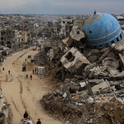
It’s truly impossible to see how Trump’s current plan, or the way in which the Netanyahu government is ripping apart the remaining threads of the Oslo agreement, will bring peace or stability. We can only hope that, in the meantime, the tens of thousands of Gazans who need housing, healthcare, education and a viable economy may gain something from this scheme.
Fadwa receives word about her husband from released prisoners who have been incarcerated with him. They tell her the “details of his day-to-day” and she believes “he’s exactly the authentic man that I’ve known for decades.” Exactly as the family is doing, it seems critical indeed to keep the spotlight on Marwan Barghouti.
This article has been updated to clarify that Marwan Barghouti’s book is forthcoming from Vintage/Penguin, and that his son is 35 years old