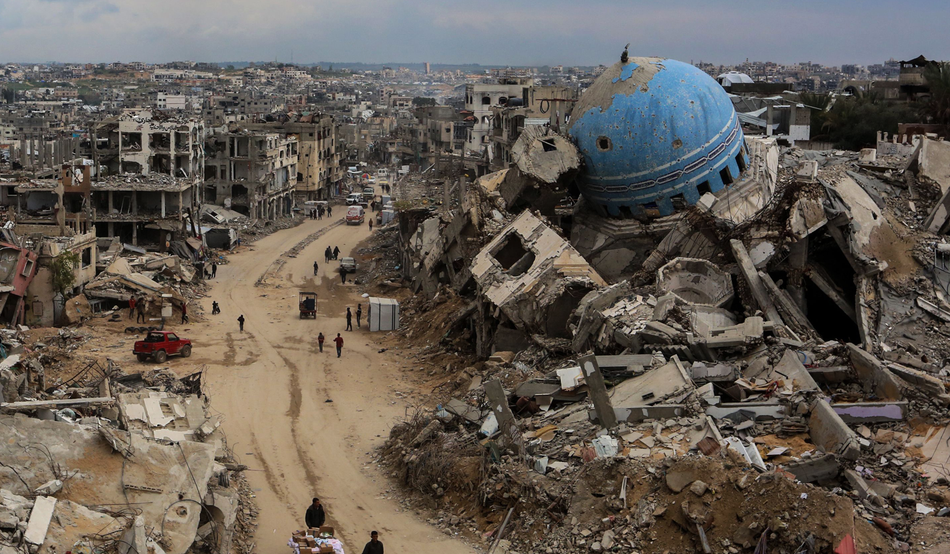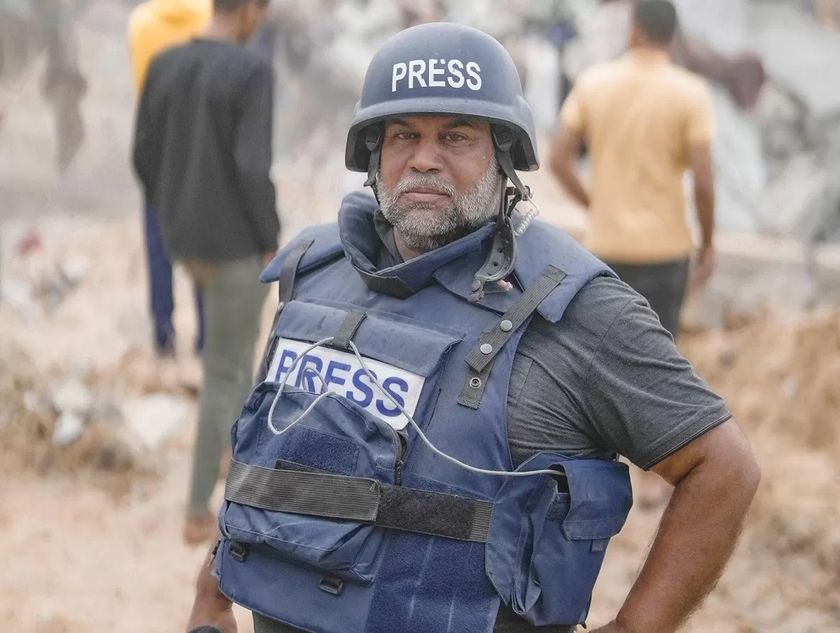
Amid bombardment, famine and displacement in Gaza, the right to freedom of movement has become a luxury. It is as if life itself is being auctioned off.
Israel has largely kept all crossings into and out of the Gaza Strip closed since the outbreak of the war. Last week, the Netanyahu government announced that it would finally reopen the Rafah border crossing with Egypt, which has been closed since May 2024, subject to conditions. Palestinians will be able to leave but can’t return and aid will not be allowed to enter.
Medical sources estimate that around 22,000 patients, including the war-wounded and cancer sufferers, still await transfers for urgent treatment, yet crossing points remain sealed. With a collapsed education system, a crumbling healthcare system, scarce medicine and widespread displacement, finding a way out has become a matter of survival.
Under this crushing pressure, a complex web of coordinators and middlemen has emerged: a fully-fledged black market for exiting Gaza, with high demand, limited supply, and risks that defy calculation. Some routes are genuine. Many others are traps for the desperate.
Once, during the first part of the war, I went to an office in Rafah, hoping to travel and save myself and my family. There was a young woman sitting at a luxurious desk; she asked me for $18,000 as a “coordination fee” to leave through the Rafah crossing, which was operating at the time, in exchange for our escape from the brutality of the war. I refused, of course, because it felt like extortion—and I didn’t have that amount of money to begin with. At the time, this type of arrangement was called “Egyptian intelligence coordination”. Many people fell victim to it.
Now, companies offering “exit coordination” have emerged. Among the most notorious is Al-Majd Europe, an organisation led by a dual Israeli-Estonian national. According to Haaretz, Israel’s controversial Voluntary Emigration Bureau referred the firm to the military to help facilitate flights of Palestinians to third countries.
The most notorious case involved more than 150 Palestinian people landing in Johannesburg without being informed of their destination, and lacking the official exit stamps normally issued by Israel to people leaving Gaza. According to Emad Mousa, a 44-year-old man who travelled on the same flight, families paid Al-Majd up to $2,700 per person.
Anas Abdul Rahman, 38, thought the war would last a week or two. He never imagined it would sweep his city away entirely. His home and clothing shop in Rimal were destroyed. Days later, he found himself in a tent, oscillating between fear and helplessness. Like many others, he no longer felt that Gaza was a place to live.
Through a relative, he heard about an Egyptian company, Hala—owned by a prominent businessman and ally of President El-Sisi—offering exits in exchange for large sums of money. “I didn’t want to pay for a basic right, but life wasn’t worth living anymore,” he said. He says he paid $20,000 ($5,000 for each family member) and their names were listed on the checkpoint roster.
Fear shadowed every step. “I’d heard stories about people giving everything they had, only for the employee handling the money to disappear.” Yet there was no other choice: the children were falling ill without medicine, the bombing never ceased and food was scarce. “Money can be replaced, but the lives of my children cannot,” he says.
Abdul Rahman eventually made it out to Egypt, but the ordeal left a lasting psychological mark. “Every time I recall paying everything to escape, I feel my dignity buried beneath the displacement tents. It was extortion, but it was unavoidable in times of catastrophe,” he says, “We pay everything... just to escape death.”
I also spoke to Reham Al-Safadi, 49, who was searching for any opportunity to leave Gaza—not just to escape the war, but also to save her daughter from cancer. She held a medical referral, giving them the right to exit, yet the borders remained closed, an impenetrable wall.
As her options dwindled, Al-Safadi came across an online broker who promised to help her family leave for $10,000. She refused to pay the full amount upfront, instead agreeing to pay $1,000 first and the remainder upon arrival in Italy for treatment. “It was suspicious,” she acknowledges, “but I was desperate. I told myself: maybe this door is a lifeline.”
Weeks passed. Each message from the broker was reassuring: “Processing underway, just three weeks.” But when the three weeks were up, the broker disappeared completely. Numbers went dead and accounts vanished.
“It was another blow on top of disease and war,” said Al-Safadi. She lost the money—and a part of her soul as a mother, she says. “My daughter is now receiving alternative treatment that won’t heal her. I know time is not on our side… This is why I took the risk with the broker, despite my fear.”
Another victim of fraud is Ayman Abu Awda, 52, who heard about a coordinator by chance in a crowded clinic. A man told him about a woman who was collecting names for exit visas at a cost of $3,000 per person. Ayman was hesitant, but he had lost two apartments and shops that were his livelihood, so he lived in a tent. “I felt like someone crossing the last bridge before collapse.”
He contacted the woman and submitted his details. She insisted on full payment at once, claiming it would go directly to the “authorised company”. He handed over the cash in a public place and received a carefully printed receipt. Later, he discovered that the receipt was fake and that the company didn’t exist.
When he tried to confront her under the pretext of coordinating his family’s exit, she made excuses: “Too busy with requests.” Then she vanished. The man who had referred him to the clinic also disappeared. He, too, had been part of the scam.
There were no functioning police stations in Gaza, with infrastructure destroyed by bombing, and more than 1,400 officers killed. Police presence instead consisted of small groups of unarmed officers who gathered at known locations in the markets, trying to resolve citizen disputes. Abu Awda went to them to file a report.
“But what next?”, he says, “Gaza now lacks any system capable of protecting people. Those who commit fraud will take the money and go unpunished.”
“We were searching for any way out of death. But we found ourselves drowning deeper in deceit… We are no longer looking for a new homeland. We are just looking for a place where we can live as humans.”
Although payments were substantial, some exits were genuine. Videos and photos of departing families circulated, sparking a wave of hope. However, the South Africa incident created widespread doubt. It also spurred a collective question: were the people on that plane paying for escape, or deceit?
In Gaza, leaving has become an existential necessity. War has forced people onto brutal paths, created markets for survival and given conmen unprecedented power. Today, more than two million people are living in a vast prison with no safe exits, no protective state, no functioning healthcare system and no clear future.
Leaving—even via dangerous routes—is an attempt to cling to life, not to end it. As Al-Safadi told me: “I just need one door. One door that can save my daughter.
In Gaza, survival isn’t won through suffering, but bought with cash. This is the most pressing tale: how freedom of movement becomes a commodity and life becomes a long wait at a gate that may never open. Those who fall prey to scams are only seeking the hope of an ordinary life. Most attempts end in failure.