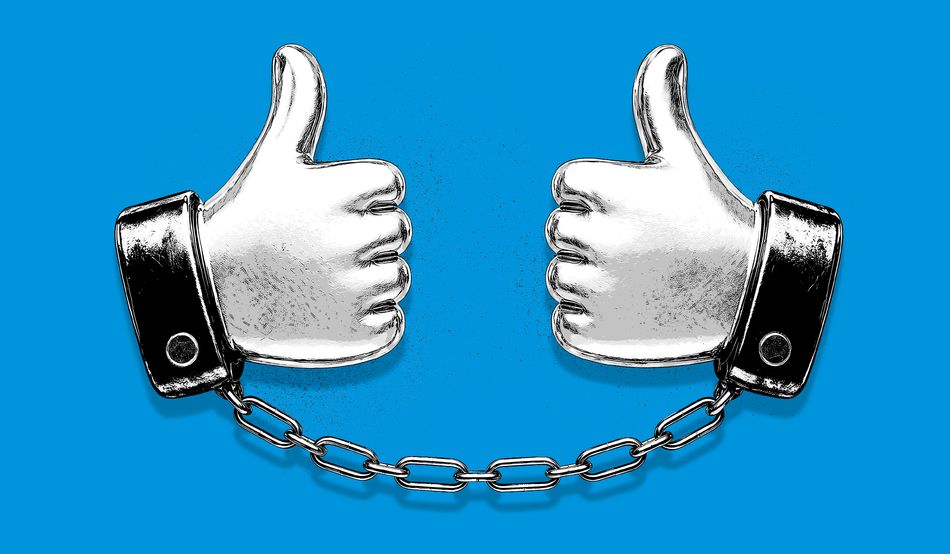
The settlement this week between the Meta corporation and several American state governments is of interest to those concerned with technology and its impact on young people. But it is also of interest to those interested in constitutions and law generally, for those with public power have effected immense change but not in a traditional way.
If one thinks of the usual tools of administration and public policy, one thinks of law-making and decision-making. Those in charge of the legislature—and those who vote for them—have the power to make legally binding rules and discretions, rights and obligations. Those in charge of the executive—those who govern, and those who vote for them—have the power to make decisions about how to implement those rules and how to prioritise matters of general interest.
Here, legislators and governors are one step away from their electorates, and their actions will often have the qualities of democratic legitimacy and accountability. Electors vote for those who will make and enforce rules and rights and duties.
But the settlement with Meta is not about rule-making and policy-making by elected officials, at least not directly. Instead, various states in America have forced a mighty corporation to heel by means of threatening litigation. Meta has had to compromise the legal case against it for fear of something worse. The company could not take the risk of contesting the litigation further and so made a deal.
The significance of the deal is not the monies that will be paid, which is for a relatively insignificant amount for such a huge enterprise. It is that Meta is now obliged in a legally binding compact to make changes to its various platforms and products which it otherwise would not have to make and indeed has long resisted.
These changes bite. Obligations in a settlement are not trivial things. A breach of such an agreement is effectively a contempt of court. An undertaking in compromise of litigation is often capable of swift enforcement. Unlike defying a mere statutory duty, being non-compliant with a court-sanctioned agreement can really matter very quickly.
And so Meta now is obliged to make wide-ranging changes and these changes have been forced through by state authorities. On the face of it these are sensible changes and most sensible people will be glad that Meta has been forced to alter course. The concessions of Meta are surely good things.
But before we all clap and cheer and nod along, the implementation of public policy by means of settlement agreements is problematic and even arguably undemocratic. Settlements are not even public judgments but private agreements, even if they get the seal of a court. This is administration by deal-making, and not by rule-making or policy-making.
In the Meta litigation the state governments seem to have had the benefit of a helpful evidence base of internal warnings within Meta of the risks of addiction (apparently similar in its nature to the adverse evidence in historic tobacco company litigation). It looks as if Meta did not want the opportunity of explaining this evidence to a jury and a judge. And so the company cut a deal.
The state governments were thereby fortunate. But litigation is an inexact activity and the dynamics of any legal case are hard to control. Hard-fought litigation can go in any direction, and the decisions of third-party judges can be hard to predict and impossible to control. Court cases are not an easy way to implement policy and there is a real risk of failure.
And the terms of settlements can be even more difficult to predict than court judgments. What goes into a compromise and what is left out can be down to last-minute contingencies and the balance of the parties’ negotiating positions at the moment the deal is struck. Sometimes that strike is lucky, but often it is not.
Far better is implementing public policy by law-making and administration. But the problem with this ideal approach is that corporations can be very adept at lobbying politicians and officials and in influencing elections. The reason why certain changes are left to litigation is that corporations can be effective at resisting changes upstream in the public policy process. That can leave litigation as the only way to get things done.
Achieving policy goals against corporations by means of settling litigation is therefore a sign both of success and failure. It is a success because a corporation has been cornered and trapped, and so pays up in money and undertakings so as to escape. And it is a failure because such obligations should have been imposed as part of a democratic and accountable process, not the uncertain course of court proceedings.
And settlements are not always good things. There are practical if cynical reasons why President Trump himself recently used a compromise agreement in his attempt to force through his fund for paying political supporters. One can try to use such agreements to make laws by other means.
Welcome ends do not mean welcome means. That Meta now is making changes by means of a settlement agreement does not mean those changes should not have been made by normal rule-making. What is significant here is not so much that Meta may have broken the law (which it denies), but that the democratic system is itself broken.