There are rights which only a few people have, rights which a section of the public have, and rights which are held by all members of the public. And one of the rights held by all members of the public is to use what is quaintly known as the “King’s Highway”.
This is one of the oldest rights in English law. Together with the right to use navigable rivers and to fish in coastal waters, it is one of the common law rights that can be enjoyed by all members of the public. These common law rights are not set out in statute: they are from ancient caselaw.
The right to use the King’s Highway is not, however, just of antiquarian interest. As a recent Supreme Court case sets out, it is very much part of our modern law, and it provided the basis for a recent major protest case. In a rare criminal appeal heard by our most senior court, “Animal Rebellion” activists were acquitted because of this most venerable of English legal distinctions: the difference between the public and private realms.
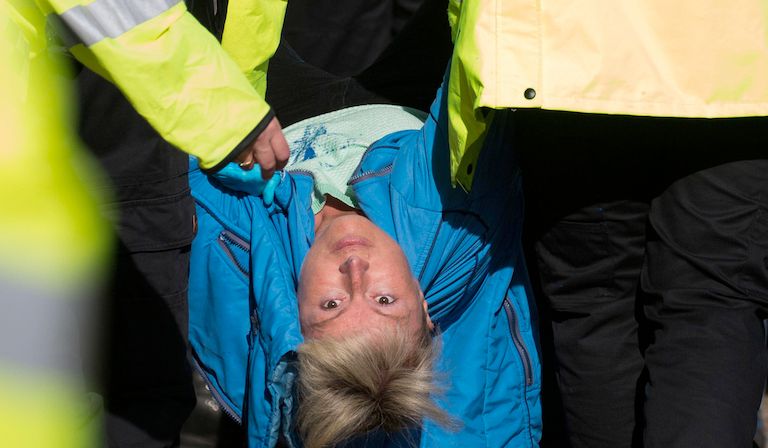
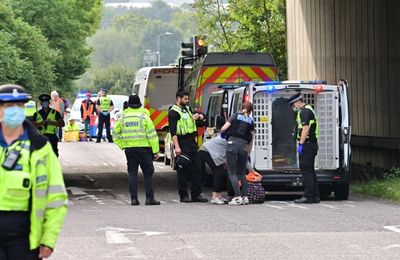
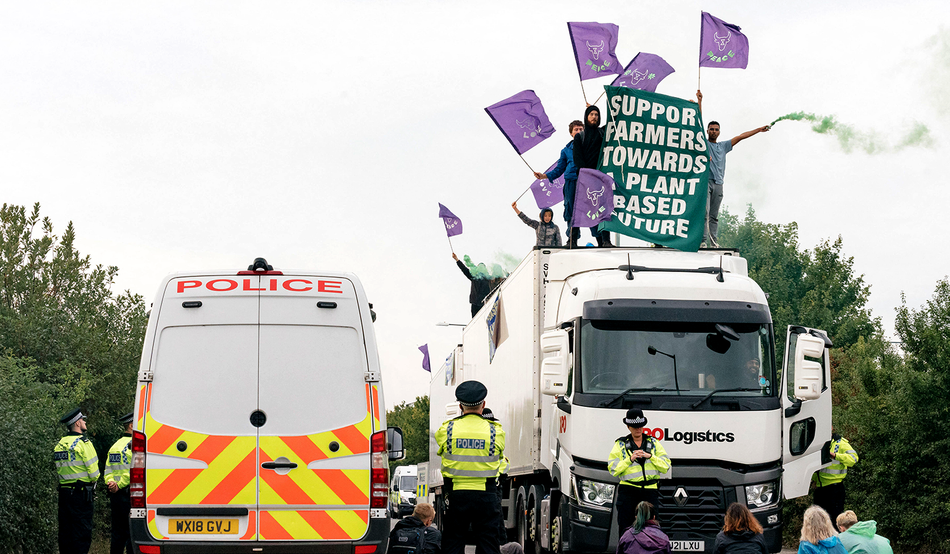
The protesters blocked what was a private access road at the Müller UK dairy works in the Midlands. They were prosecuted as a public nuisance under the new offence in Section 78 of the Police, Crime, Sentencing and Courts Act 2022, a provision which also abolished the old offence of “public nuisance”.
Following the words of Section 78(1)(b)(ii) of that act, the indictment alleged that the defendants: “without reasonable excuse, did an act, namely prevented access to and egress from the Müller UK production site, and that obstructed the public or a section of the public in the exercise or enjoyment of a right that may be exercised, or enjoyed by the public at large, intending or being reckless that it would have such a consequence.”
The defendants fought the case. They even applied for the prosecution to be discontinued on the basis that it did not have a case to enter. And, sensationally, they succeeded. The judge halted the trial. The legal point was simple: how could they be prosecuted for obstructing “the public in the exercise or enjoyment of a right” when the protest was on private land?
The prosecution appealed, so as to get the trial resumed. The Court of Appeal then sided with the prosecution, and said that that “[t]he public at large have a right to attend places and events or to use facilities and services which are offered to the public at large” and the fact that their right is subject to conditions did not alter this conclusion. In other words, the private road was available to the public, and so the offence was made out.
The Supreme Court does not hear many appeals from the criminal division of the Court of Appeal, but it chose to hear this one. And in a fascinating and informative majority judgment, it sided with the protesters against the prosecution and the experienced criminal appeal judges of the Court of Appeal. The judge had been right to halt the trial.
The relevant legal principle was simple. Having a permission, or even an ability, to enter private land does not create a right. It is instead a mere licence, which can be withdrawn. And the protest was on private land and so could not be prosecuted as a public nuisance under the offence charged. Pointon Way, the lane in question, was a private road and not part of the King’s Highway.
One justice suggested that interfering with the “right” of the public to go about their business at large could be prosecuted, but the majority rightly did not go with such vague wishy-washiness. Such an offence could not be sufficiently certain in its scope. The courts had to be strict in how they interpreted rights, especially in criminal cases.
The Supreme Court also pointed out the deficiencies of the prosecution by outlining how the offence could have been properly prosecuted, either under another limb of the new public nuisance offence, or for aggravated trespass—an offence actually introduced for incidents on private land. In their eagerness to prosecute, the police and the Crown Prosecution Service had blundered in the offence they selected.
But what is perhaps most interesting in this case about the right to protest is what is not mentioned, and what this may indicate about the direction of travel in other such cases. The Human Rights Act is cited only in passing, in relation to an earlier case. Its provisions were not expressly invoked by the Supreme Court in this case.
Instead, the Supreme Court decided a case about freedom of expression and protest on the bases of common law and statutory construction, and on the side of the defendants. Even though the Human Rights Act is still in force, this can be seen as very much a post-Human Rights case. It is almost as if the courts are proofing the law against any repeal of human rights legislation.