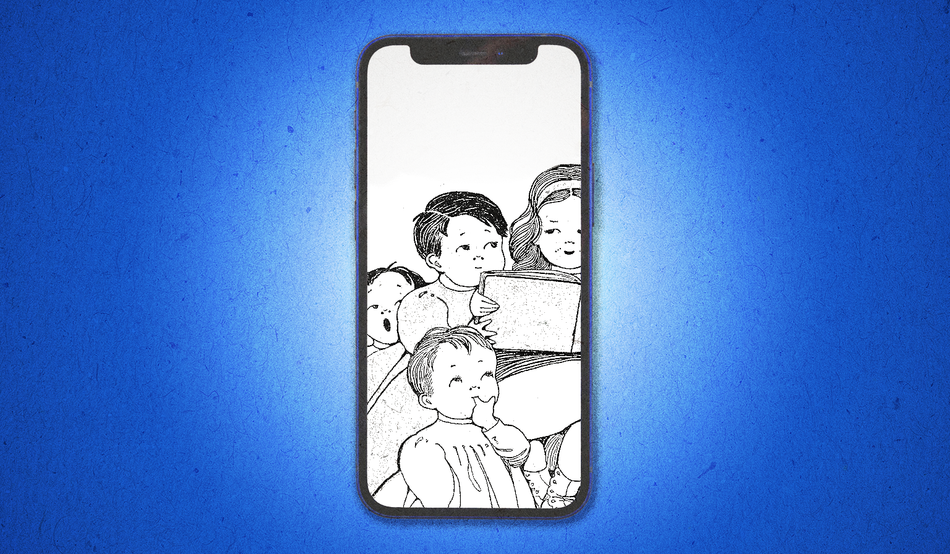
Keir Starmer’s proposal, made shortly before he resigned, to “give kids their childhood back” by banning under-16s from certain social media platforms drew the kind of criticism that greets any democratic attempt to govern the digital world. It was too crude, too late, too easy to evade, too intrusive to enforce, too inattentive to teenagers who find community online.
These concerns are real. A ban is a blunt tool. It will not, by itself, reform algorithms, dismantle surveillance capitalism, restore playgrounds or make childhood whole again.
But the most common objection—that it restricts childhood freedom—deserves closer inspection. We are told that young people should be free to communicate, explore, make mistakes and choose for themselves. This sounds liberal, modern and humane. Yet everything depends on what we mean by “free”.
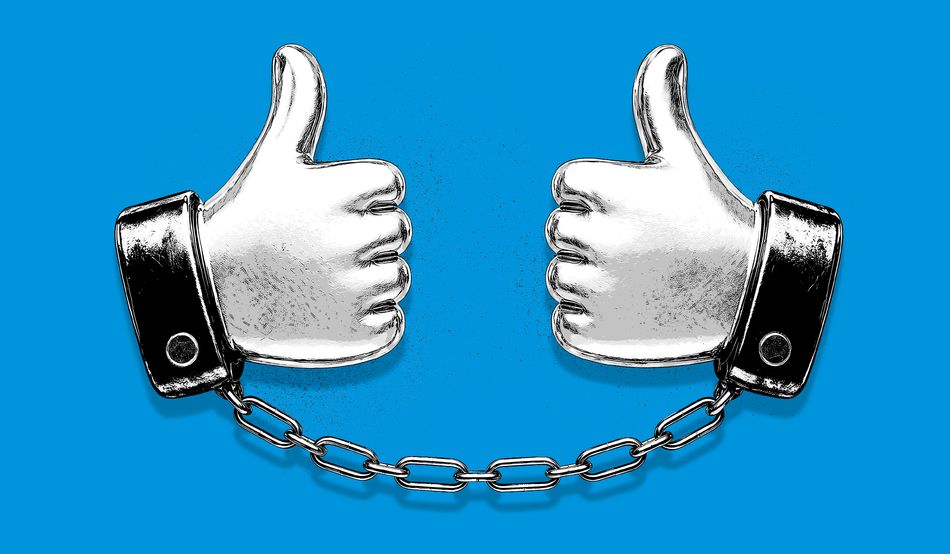
The platforms thrive on a thin picture of freedom: no interference, no state-imposed obstacle, no barrier between consumer and product. If a child can open the app, scroll the feed, post the image, join the chat, accept the terms and continue clicking, then she is free. The state has not stopped her. No censor has silenced her. She has chosen.
But choice alone is no indicator of freedom. It can be pressured, induced, manipulated, coerced or algorithmically engineered. To call a 13-year-old alone in her bedroom scrolling compulsively through an infinite feed “free” is to stretch the word past recognition.
A more serious liberal tradition understands freedom not as unfettered access, but as self-rule. To be free is not only to have options laid before us. It is to be capable of standing back from impulse, governing one’s attention, reflecting on one’s desires, and refusing to be used as someone else’s tool.
Freedom, in this stronger sense, is developmental. It depends on habits, relationships and institutions that help people become less governable by fear, compulsion, manipulation and appetite. To cultivate freedom in this robust sense is to help children grow into adults capable of making choices genuinely their own.
This is why the question of childhood freedom is so tricky. Children are persons in the making. Their powers of attention, judgement, friendship, imagination and self-command are still being formed. A society that gives corporations unfettered access to shape these powers cannot then congratulate itself on respecting children’s autonomy. It has not protected freedom. It has degraded the conditions under which genuine self-rule might become possible. It has produced frightening new forms of dependency.
Understandably, adults who grew up roaming the streets unsupervised worry about a culture that seems to treat childhood as a permanent safeguarding exercise. And of course, no one thinks wrapping children in cotton wool should be the ideal. But this critique vastly underestimates the extent to which tech now rules children’s lives.
Their friendships, humiliations, jokes, crushes, opinions and feelings are increasingly routed through private empires whose owners answer neither to parents nor teachers nor democratic publics. A change in ranking or recommendation can make a child visible or invisible, admired or ridiculed.
The tech barons now manufacture the realities in which selves, tribes and enemies are made. No old-fashioned nanny state ever dreamed of reaching so deeply into a child’s bedroom at night. The old fear of paternalism loses its force when the capacity to choose is precisely what corporate power has learned to exploit.
The point is not that children are helpless, that the state is especially wise, or that parents, schools and communities are obsolete. It is that no child, family, school or community confronts these platforms on equal terms. The teenager fears exclusion—their parents are told that everyone they know is there. Even those who dislike the system are trapped inside it. This is not a normal market in which isolated consumers reveal stable preferences. It is a coordination trap organised for profit. The state must play a part because some freedoms—especially the developmental kind—can only be secured collectively.
None of this means the UK ban is well-designed or sufficient. It also requires serious regulation of design, recommendation systems, data extraction and corporate accountability. It must guard against intrusive enforcement and preserve access to beneficial online resources. But insufficiency is not futility. Law often must begin by drawing a line before it has solved every surrounding problem.
For all its imperfections, the ban matters because it contests a governing premise of the digital age: that unfettered consumer choice is tantamount to freedom. No healthy democracy can accept that. Childhood is not a market opportunity, dependence is not consent and access is not the same as agency. As Starmer leaves office, his government deserves credit for insisting that the development of some human capacities cannot be left to the business model of the bottomless feed.