There are certain things for which the law can be used. In concrete and immediate human relationships, the law can impose sanctions when one person wrongs another. In civil law, a person can be sued for causing personal injury or for causing loss from breaching a contract. In criminal law, a person can be prosecuted for breaching an obligation imposed by the state.
But there are things for which the law is not that useful. Last year this blog discussed what is called “stochastic” violence or terrorism. This is the general and vague encouragement of hostile and lethal acts against groups and individuals by instigators using communications networks.
In such circumstances those who are culpable can be at least one step away from legal liability. There is often no clear line of causation, and the wrongful acts are too remote for any legal redress. Causation and remoteness are concepts which are fundamental for most of criminal and civil law. And unless one can show causation and immediacy, one often has no legal remedy. The instigators can then get away with it.
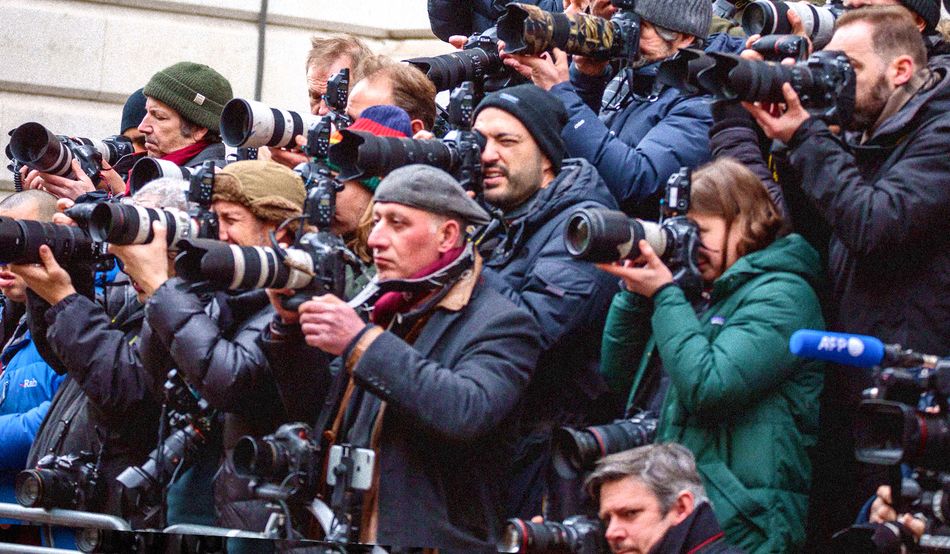
Similar to stochastic violence or terrorism is the pile-on by those on social media or mainstream media, or both. Here each individual contribution can be justifiable, at least in the view of that contributor. They will see what they have to say as legitimate and, if challenged, they will invariably assert the righteousness of being able to say what they want to say.
But in the aggregate, something quite ferocious, overwhelming and even lethal is created. In the olden days, even great celebrities only had exposure to the public for a limited period. Now with social media and 24-hour news anyone caught up in the news will have constant and relentless exposure from which there is no realistic escape.
And, of course, such unremitting hostility and abuse can have real consequences, sometimes tragic. Recent history shows that those caught up in such media storms may not survive the encounter.
But from a legal perspective there is the difficult question of what exactly is the legal wrong being committed? If each individual contribution is somehow “legitimate” when does the accumulation of those contributions become illegitimate?
This is a question with which the law now has to wrestle. When people came together to live in towns and cities there soon were laws about riots and disorder which meant mobs and mob-rule could be checked. But what can be done in confined physical spaces is less easy on open media platforms. One cannot meaningfully read out the Riot Act to those on social or mainstream media.
Some will call for “more regulation” but such general demands are difficult if not impossible to convert into practical measures. What regulations and on whom? What sanctions and what resources? Who will enforce such rules and how can they be challenged?
When the media was centralised in broadcasting houses and printing presses there could be some measure of actual control, but now anyone with an internet link can in principle publish to the world.
This is not to say that lawmakers should not try to find solutions to new problems. Earlier forms of anti-social activity have been met with legal responses and just because there is no immediately obvious legal solutions does not mean that they could not one day be devised.
But the problem of pile-ons, either by social media or mainstream media, is not primarily a legal one. It is a cultural and moral problem: many people think it is acceptable and justified to do things, with technological ease, which will have unfortunate real-world consequences for others. And until and unless they see what they do as wrong there is nothing the law can really do about it.
In the news there is the story of what happened to Jason Arday. The proper venue for looking at the circumstances of his death is a coroner’s inquiry (and not, at least as a first step, a public inquiry). There is not sufficient information available to form a firm view on the extent to which the mainstream and social media frenzy that preceded his death contributed to it.
That media frenzy which preceded his death, however, is not a new thing. There have been many instances over the last 20 or so years. The frenzies will happen again, unless there is a means to prevent them. And here it looks like there has to be a moral and cultural check, for it currently looks like there is nothing the law can do.