A prominent social media account has said that once the United States midterm elections are over, there needs to be a good look at the country’s constitution, which should be amended to ensure that what has happened over the last two years never happens again.
One can understand the sentiment, but such an approach is misconceived, if not naïve. For it does not matter whatsoever what form a constitution takes if those with power act unconstitutionally. In the US, there is already a constitution in place that means president Donald Trump could be checked and balanced at every step. But those with those checks and balances have chosen not to use them.
Codified constitutions are not a universal panacea. Russia, for example currently has a codified constitution with several liberal-looking provisions, but it counts for nothing. Weimar Germany also had such a written constitution. But constitutions are rarely the solution to political problems.
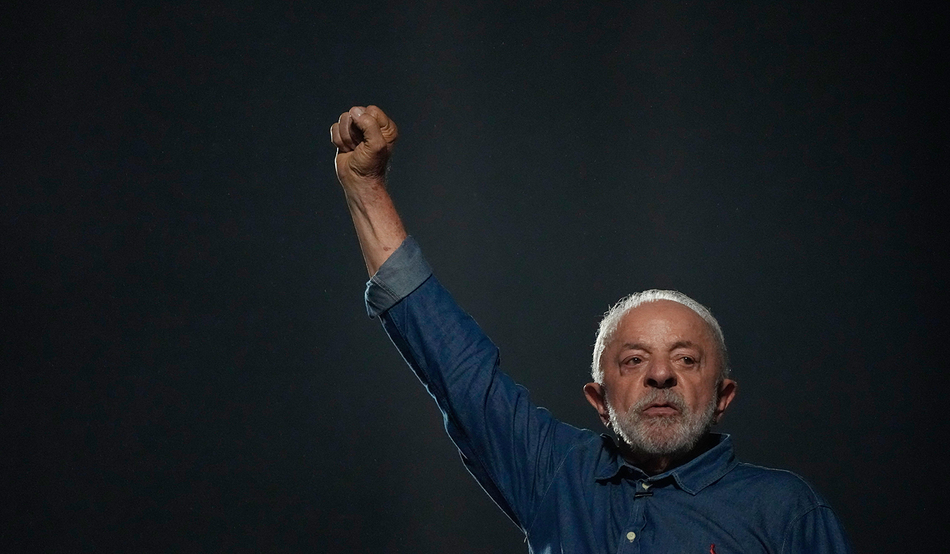
In the last week or so we have had the happy spectacle of several illiberals losing or not gaining political power. In Serbia, a parliamentary election returned a majority for the Student List, defeating the incumbent rightist government. In Brazil’s presidential election, the leftist incumbent Luiz Inácio Lula da Silva resisted a strong challenge by Flávio Bolsonaro. In Israel, the coalition of Benjamin Netanyahu lost a significant number of seats and the prime minster may even lose power.
All of these are, from a liberal perspective, welcome events. But each took a different constitutional form. Serbia and Brazil have codified constitutions, while Israel does not. One was a presidential election, the other two were parliamentary polls.
In each case there are examples of the rightists seeking to manipulate the political process, but in each case they failed. Constitutions may not be utopian, but they also are not necessarily dystopian either. As Viktor Orbán found out in Hungary, if there are even fairly free elections then power can be lost.
Now we have the US midterm elections next week, and soon after a general election in Spain and next year the French presidential elections. We will soon thereby have another set of results to affirm (or, less likely, counter) our political world views. These elections may continue with what appears a liberal turn. But in each instance it will be politics, and not constitutional texts, that makes the difference.
In the US, Trump’s federal government has sought to do everything it can to rig the midterm elections in his favour, but that does not look like it will succeed. He and his (diminishing) group of supporters are no doubt going to switch to delegitimising the election results instead, even though they will be in power when those elections are held.
If, as is expected, the Democrats make significant gains in the elections—even maybe gaining a majority in both houses of Congress—then there may be a resumption of some checks and balances, though there cannot be any quick solution to the problem of a federal judiciary and supreme court which is tame in the face of Trump’s abuses. But the memories of what happened over the last two years will linger. We now all know that the famed separation of powers in the US constitution failed when it mattered. That revelation cannot be unlearned.
When the US failed to convict Trump on his impeachment for the 6th January insurrection then it can be said that all else followed. Those with constitutional power failed to fulfil their constitutional duties then, and have failed since. But even if Trump had been convicted, Trumpism would not have gone away.
In Brazil, in contrast to the US, a former president—Jair Bolsonaro—was prosecuted and convicted for his role in plotting a coup. That was the right thing to do, but even then the recent presidential election was a close-run thing. Holding former presidents to account legally does not by itself solve political problems.
This can also be seen in France, where Marine Le Pen and her National Rally have a strong chance of success next year, notwithstanding her conviction for misusing European Union funds. Even if she does not stand, her party has substantial support. Holding her to legal account has made no real political difference.
Constitutional and legal problems, of course, require constitutional and legal solutions. But they are not an easy answer to political problems generally. And they certainly do not present quick wins against the electoral blocs of support behind illiberal and rightist politicians. Those are political problems that need political solutions, especially the organisation and mobilisation of political opposition. And that is far harder than amending a constitution.