
In April 2025 in Leeds, a 38-year-old man attacked two women with a crossbow after consuming immense amounts of misogynistic, anti-feminist and racist content online. He left behind a manifesto and an online footprint peppered with neo-Nazi and violent incel (involuntary celibate) references. Weeks earlier, UK police foiled a threatened Valentine’s Day massacre by a teenage boy, who was later sentenced for releasing personal information online, a practice known as “doxing”, to encourage attacks against his female classmates.
These incidents sit at the extreme end of a well-documented rise in violence against women and girls, which makes up nearly 20 per cent of all recorded crime in England and Wales. Incidents of rape and attempted rape in Scotland alone have increased over the past year by 11 and 14 per cent, respectively. Nonviolent misogyny is also a growing concern—in 2026 more than 23 per cent of teachers surveyed in the UK reported misogynistic abuse from a student, up from 17 percent in 2023. And 42 per cent of British parents have heard their sons make sexual, violent, or degrading comments about women and girls rooted in what they have seen online.
What’s happening in the UK is part of a global surge in misogynistic and anti-feminist attitudes and behaviour, galvanised by the tactical alignment of populist, authoritarian, and far-right politicians with social media grifters. They are weaponising men’s grievances, selling them the idea that dominance over women is the best path to achieve personal success and restore national prosperity. The effectiveness of that convergence is having a clear impact on everyday life, public safety and democracy itself in ways that call for urgent mitigation and prevention.
By nearly every measure we have from surveys around the world, gen Z men are backsliding in support for gender equality and feminism. They feel women’s rights have gone too far and see the pursuit of equal opportunities as having crossed over into infringement of their own rights. This isn’t just the stuff of the manosphere —a loose collection of online blogs, forums and websites united by virulent misogyny and belief in male victimhood. New data from a survey of 29 countries shows that younger men are less supportive of women’s rights and feminism than older generations—31 per cent of gen Z men, born between 1997 and 2012, compared with 13 per cent of boomer men, born between 1946 and 1964, agree that a wife should always obey her husband.
On top of that, what many boys and men say about gender equality diverges from their behavioural choices and beliefs. Recent Scottish survey data of boys aged between 11 and 18 shows that, while most endorse gender equality in formal statements, nearly half of them also say they agree that “boys who behave like girls are weak”, while a third hold girls to different standards than boys for sexual behaviour and think girls who wear revealing clothing are “asking for trouble”. Over a quarter think it’s not sexual harassment if you’re “just joking around”.
These shifts towards retrenched gender norms and misogynistic beliefs are showing up in everyday life. In Canada, a 2025 survey found that 80 per cent of educators had witnessed sexist or misogynistic behaviour, including using hurtful language, telling girls they can’t join in activities, policing other boys for being too “feminine” or saying that women should be the ones to do housework. In Australia, where teachers are reporting increases in misogynistic and sexist harassment, verbal abuse and physical assaults from their students, a recent survey showed that 23 per cent of gen Z men believe feminism should be resisted with violence.
Meanwhile, gender has emerged as one of the most powerful levers used by the illiberal and extreme right to mobilise voters and donors by convincing them that shifts in gender norms over recent decades have jeopardised family stability, moral order, even civilisation itself. These politicians are stoking the flames of gendered grievance by invoking fears of national collapse at the hands of an overly feminised, liberal, “woke” state. Their successful use of anti-feminist attitudes has shifted public sentiment towards a patriarchal, illiberal future.
The solution offered by right-wing authoritarians is a social and political reset that reasserts traditional gender norms, reduces women’s and LGBT+ rights, restores white birth rates and puts men back on top of traditional hierarchies. From Hungary to Poland, Germany and France to the United States, anti-feminist and anti-gender narratives are the backbone of an industrious playbook driving far-right success. By the far right, I mean the part of the political spectrum from the illiberal, authoritarian populism of someone like US president Donald Trump to the further extremes.
In the US, 57 per cent of men under 30 supported Trump in 2024—a significant jump from 2020. By contrast, most women under 30 voted for Kamala Harris. Similar trends have fuelled young men’s support for the Alternative for Germany party in Germany, consistent with widening gender gaps across the UK and several other European countries. In another noticeable shift in the US midterm elections, young white men voted for Democrats by a double-digit margin. But that shift appears to be driven by dissatisfaction with the economy rather than a rejection of Trump’s strong-man stances.
Rising misogyny is not a trivial trend. Misogyny and gender-based violence are risk factors for, or precursors to, multiple forms of extremism, and have provided warning signs for mass, publicand targeted violence including school shootings, terrorism and incel attacks. Misogyny and gender-based bigotry also often reinforce or act as online gateways to racist, anti-immigrant, antisemitic and Islamophobic ideas and violence in ways we have been slow to recognise and interrupt.
We too often overlook how gender is galvanising support for far-right movements around the world
How did we get here? My research team has spent the past two years mapping more than 100m gendered grievance posts across dozens of social media platforms. We’ve talked to nearly 300 young men and women in the US, Canada, Kenya and Jordan about their online worlds and the way they experience gendered messages on the internet. What we’ve learned suggests how much we miss by treating gender as a side issue. The far right is weaponising gender and we must pay attention—especially because the outcome has not only been seen in votes at elections, but in rising interpersonal, political and targeted violence.
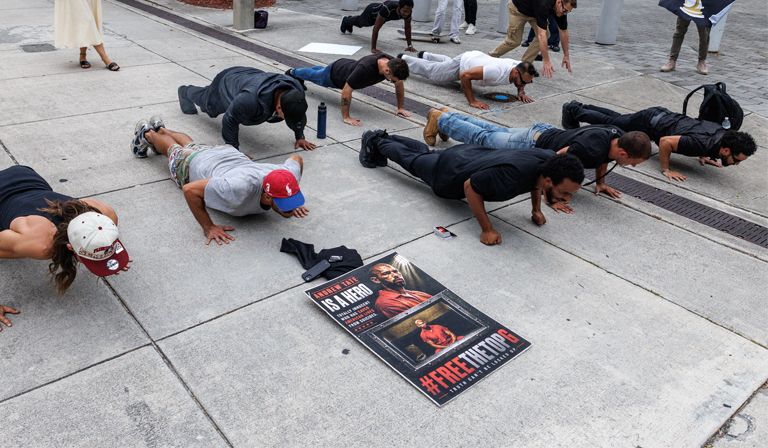
The surge in misogyny and sexism among younger men has been widely attributed to the impact of online content from influencers like self-described misogynist Andrew Tate, who faces pending charges for rape and human trafficking, describes women as men’s property and has advocated the use of violence against them as a form of punishment and control. In announcing a new strategy in late 2025 to tackle violence against women and girls, the British government noted that more than 40 per cent of men and boys in the UK view Tate favourably.
Tate’s popularity is waning—gen Z and older gen Alpha youth, those born between 2010 and 2024, increasingly see him as passé—but his influence is being replicated in a steady stream of content from thousands of misogynist influencers like him. Teenage boys see this kind of content within minutes of opening an app—without even searching for it.
But this isn’t just a teenage algorithm problem. In our interviews, many young men made it clear they don’t want this content, but they can’t get rid of it. “Regardless of how much I fought against it,” Malik, a 22-year-old from Canada, told us, “the Andrew Tate manosphere was dominating my For You page” on TikTok. Joshua, 23 and from the US, told us he too sees content that is “either semi-misogynist or full-on misogynist, or in that manosphere realm of influence”, even when he doesn’t engage or follow such influencers. “I see it on ads, TikTok, Instagram. I’ll get YouTube videos recommended, like the Andrew Tate podcast from two years ago.”
Male-directed online content often shows up when struggling and lonely teens search for help with specific problems, like building confidence. Instead, they find themselves receiving guidance on how to be a better or manlier or more successful man. Some influencers may offer genuinely useful advice, from how to make eye contact to tips for job interviews. But other content is deeply problematic. Influencers urge young men to embrace quick solutions on the path to adulthood that can lead to real harm, such as gambling addiction or infertility, and an embrace of dominance and aggression towards women as a means to dating success.

Harmful content appears so quickly in part because creators use outrage over gender to game algorithms in ways that generate profit through advertisements, paid promotions, merchandise and more. Algorithms fuelled by outrage and hostility, along with the isolation of the social media echo-chamber, inflates the importance of what might have been the opinion of a single popular influencer. As researchers show, this means that fragmented, once-fringe ideas and grievances are circulated, amplified and cohered into a more organised set of narratives that gain traction and staying power.
In my research lab’s mapping of online narratives, we find that personal disaffection about dating or a lost job becomes recast as collective injustice, emasculation, betrayal and retribution; grievances become channels for an organised political project of redemption and restoration of power. These narratives place the blame for young men’s disaffection at the feet of a liberal, mainstream and feminist media and public that depicts men as inherently violent or dangerous. In these online posts, men are presented as having been displaced and humiliated by the progress of women and minorities that has “gone too far”.
These narratives also instruct and coach men to resist. They are called to channel their anger at displacement from their rightful position and rise to heroically fight the system—with both votes for authoritarian leaders and subscriptions to paid content offering tactical strategies to get back on top. These efforts are moving the needle. A 2024 study found that 47 per cent of people in Britain believed efforts to achieve equal rights for women had “gone far enough”—up from 29 per cent in 2019.
It’s not just social media platforms that are a problem. A third of the global population play video games—and there is clear evidence that online and digital gaming communities incubate, channel and champion hostile sexist and misogynistic attitudes, dehumanising slurs,and other hateful content. This year, the Extremism and Gaming Research Network identified 96 violently misogynistic and anti-LGBT+ games and mods (modifications for existing games), including in the gaming platform Roblox, which is popular with children. These included games that recreated the 2016 Pulse nightclub shooting, an anti-LGBT+ hate crime in Orlando, rape simulators, and avatars of incel mass-shooting perpetrators.
To make matters worse, the ubiquity of violent pornography has rapidly transformed how young people learn about relationships and intimacy, linking men’s sexual pleasure to the violent and degrading objectification of women. A quarter of young adults aged between 18 and 24 say pornography is their most helpful source of information about how to have sex—porn which is substantially more violent and harmful than it used to be. They can also now create porn themselves. The 2025 release of a new editing feature in Grok—the AI chatbot developed by xAI, Elon Musk’s company—allowed users to create nonconsensual, altered images of individuals, including minors, and was immediately used to create millions of sexualised images of women and girls.
From 6th November, it will be illegal in England and Wales to possess or publish pornography that depicts choking, suffocation or incest. But far too many teens and young adults have already learned about sex and relationships through their consumption of violent and harmful sexual content. Researchers already know this can fuel sexual violence, skewing the beliefs of teenagers about whether people like to be hit, slapped, gagged or choked during sex, in part because viewers come to believe those behaviours are safe, pleasurable and do not require consent.
It’s hard to separate this context from the steady stream of global media coverage of horrific real-life incidents of violent sexual assaults and rape—from the Gisèle Pelicot case in France and the subsequent CNN investigation into a global online “rape academy” teaching men how to drug and rape their unconscious wives and girlfriends, to allegations of a fraternity gang rape and university negligence in the “Cornell 7” case. Together, the violent misogyny that is so present in pornography and real-life illustrates what happens at the intersection of male entitlement to women’s bodies and the violent dehumanisation of women.
Young men aren’t dupes. They recognise how they are being targeted and emotionally manipulated online bycontent they can’t control, and which subtly reconditions them towards anger and scapegoating. Leadr, an 18-year-old from the US, explained that his algorithms constantly “show me rage content… I always look at it, and I want to get angry, and then I realise… it’s engagement bait, wants my attention. It wants a click.” Women see how this content affects their male friends and partners, too. Tata, 21, tells us that men’s feeds are full of “how to be a man, or… if you want to get the girl, you have to do this… their feed is trying to make them more aggressive or angry.” Women experience plenty of real-life misogyny, as 19-year-old Kennedy tells us: her ex-boyfriend “had told me that if I knew how to cook better, if I knew how to clean better, I would have been a better girlfriend”.
Far too many teens and young adults have learned about sex and relationships through their consumption of violent and harmful pornography
This content is steeped in a culture of toxic self-optimisation, where male success is firmly tied to two key goals: landing a beautiful, “good” woman and having a lucrative career with the luxury trappings of holiday homes and sports cars. The route to those things requires becoming a “real man” with hypermasculine physical features achieved not only by working out religiously, but also taking steroids, sumpplements, or pursuing plastic surgery to achieve a chiselled, muscular look. It encourages getting rich quick while being your own boss (through gambling, sports betting, or crypto). And it also means overcoming the people standing in the way of that success (rejecting women’s rights and feminists, the “woke” liberal state, the establishment or mainstream corporate worlds). Kevin, a 22-year-old from the US, described a pipeline from banal to dangerous content, which often starts with promoting “empowerment” but ultimately feeds on negative, chauvinistic and self-centred ideas of “what they think a guy should become”. Online personalities take positive messages like “everybody should work out, be healthy, basically have ambition”, he says, but then “they just twist it”. The slippery slope from fitness content to dominance over women was clear in an interview with Theo, a 21-year-old American, who described how positive messages that resonate with men—“I should be hitting the gym, I should be strong, I should look good”—moved into content promoting having more “control over my family” and messages that say “my wife should take permission from me for everything”.
This content targets teenage boys and young men at a moment when many are struggling with isolation and a lack of agency over their futures. Gen Z men—who still report feeling tremendous pressure to be financial providers for their eventual families—are hyperaware of their uncertain economic futures in the context of stagnating wages and high housing costs. 42 per cent of 25-year-old British adults live with their parents—up from 25 per cent a generation ago. Alan, a 19-year-old from Canada, links the appeal of misogynistic content to real challenges in men’s lives. “Men who don’t have social support or friends in the real world… what happens is that they go online and they develop identities. They develop their own identity based around hating another group,” he says, which then develops into “harassment, real-world violence”.
For some men, misogynistic content offers a sense of power. Jane, a 24-year-old in the US, told us she could see men turn towards the manosphere to take “back some control… Understandably so, it feels like we have so little control of anything nowadays, that might be one way to… take it back.”
Women also told us that they see a parallel content stream emerging from women who are frustrated, angry or giving up on men amid rising misogyny. As a 19-year-old American woman named Sam reflected, “A lot of women are kind of becoming more radicalised… there are definitely a lot more women becoming more man-haters and becoming less willing to hear the perspectives of men.”
Considering what I’ve heard from young men and women over the past year, it’s easy to see why explanations of rising misogyny in offline worlds have centred on the online worlds where they spend time. But influencers aren’t the only ones peddling gendered resentment—politicians are also stoking and exploiting it.
Gender has always been politically charged during periods of social and economic change. During the Great Depression, a “marriage bar” across Europe and the US forced married women to give up scarce jobs to male breadwinners. In Nazi Germany, Hitler promised to restore social order in part by relegating women to roles focused on “Kinder, Küche, Kirche” (Children, Kitchen, Church). In the US during the Second World War, campaigns encouraged women’s work as a patriotic duty to fill labour gaps while men fought overseas—using recruitment campaigns like “Rosie the Riveter”. But as soon as the economic engagement of women became a threat to men’s jobs after the war, they were strongly pressured to return to roles as housewives.
Sexuality is also a convenient scapegoat for authoritarian and far-right leaders. Russian president Vladimir Putin has regularly used anti-LGBT+ rhetoric to ramp up homophobia, promote traditional values and the importance of the nuclear family and demonise so-called western degeneracy both to drive anti-queer, traditionalist beliefs and to distract the public from a stagnating economy.
In this sense, the global far-right groundswell pushing the restoration of traditional ideas around gender, sexuality, the family and the nation cannot be understood as a simple backlash to modern social change as women and LGBT+ communities have gained more rights, visibility and power. It is also a longstanding political project to reinforce patriarchal control and power.
The playbook centres on attacking gendered social changes through a lens of western anxieties about “civilisational erasure” and moral decay, often invoking religion to legitimise a “natural” or God-ordained hierarchy of the sexes and a valorisation of traditional gender roles. Anti-feminist narratives buttress a purposeful agenda with systematic efforts to put women back in the home, back in their place and away from voting or economic and public life. Tactically, this has meant attacks on women’s voting and reproductive rights as well as LGBT+ rights. In Hungary, Russia and across an increasing number of US universities, gender or women’s studies have been removed as academic disciplines, dismissed by far-right leaders as ideology masquerading as academic scholarship.
Once you see the connection, it’s very hard to unsee it. The question is: can we undo it?
Authoritarian leaders have deployed similar tactics to mobilise voters and donors as they reinforce patriarchal control, overturning reproductive rights, rolling back protections for domestic abuse survivors and LGBT+ communities, and running presidential campaigns that are explicitly anti-feminist.
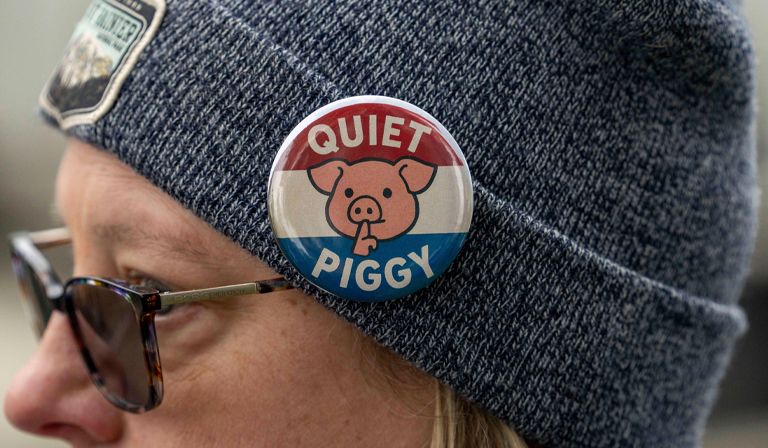
We also see hard-right leaders normalising misogynist language. Reform UK leader Nigel Farage has praised Tate as a defender of “male culture” who empowers “emasculated” boys. In the US, misogynistic and anti-LGBT+ rhetoric has long been central to Trump’s political persona. He recently told a female reporter to be “quiet, piggy”, while his defence secretary pledged to enforce the highest “male standard” in the military.
Authoritarian and far-right attacks on women’s rights are therefore a kneejerk defence of centuries-old patriarchal norms. But they are also an operational strategy and organising principle that exploits gender-based grievances to rally young men’s support, build resistance to gender equality and secure men’s supposedly rightful place in the world. In this sense, far-right and authoritarian politicians drive retrenched gender norms as an anti-democratic tactic, using gender as a wedge issue to persuade voters, reduce women’s reproductive and voting rights and secure more power.
The rise of the far right over the past decade-plus has been widely discussed as an outcome of rising anti-immigrant sentiment alongside tensions related to race, religion, economic grievance and nationalism. But we too often overlook how gender is galvanising support for far-right movements around the world. The far right is fuelling the growth of misogyny and also exploits that growth for its own gain.
Misogyny and gendered grievances are also fuelling mass violence, especially from the far right. On the one hand, the protection of women and girls is a constant rallying cry for far-right mobilisation, leading to egregious acts of violence against immigrants and ethnic minorities. In Charleston, South Carolina, during a white supremacist attack on a black church, the attacker told his victims he was doing it because “you’re raping our women”.
On the other hand, hatred of women,or previous acts of violence against them, are a constant throughline in the personal histories or motivations of mass violent perpetrators. Five people were shot and killed in 2021 in Plymouth by a 22-year-old man motivated by an extreme misogynist worldview. In the US, more than two-thirds of all mass shooters have a history of domestic violence or have killed a family member as part of their attack—usually their wives, mothers or children. Ideologically, white supremacist extremism has a central obsession with white birth rates, demographic change and the reproductive capacity of white women.
We also know that people who hold hostile sexist views are substantially more likely to express support for political violence and violent extremism. Recent data from Australia found misogyny was the strongest predictor of extremist beliefs across all types of extremism—including white supremacist, jihadi, and far-left beliefs. As Sara Meger, the study’s lead researcher, explained, all these extremisms share “an ideology that men ought to dominate women, that transgression of the natural gender order deserves punishment and that violence in service of restoring the natural gender order is legitimate”. Similar findings have been reported across national ideological contexts, showing that all forms of hate and hate-fuelled violence—including racist, anti-immigrant, antisemitic and Islamophobic ideas and attacks—are linked by the connective tissue of gender- based bigotry.
The Norwegian terrorist who killed 77 people—mostly children—in Norway and Utøya in 2011 left behind a manifesto laced with rants about the feminisation and Islamification of society, writing that his followers must familiarise themselves “with the concept of killing women, even very attractive women”. The Christ-church shooter who killed 51 worshipping Muslims in New Zealand opened his manifesto with the words, “It’s the birthrates. It’s the birthrates. It’s the birthrates.”
Nearly all far-right extremist attacks have a gendered component, including a personal history of domestic and intimate partner violence, stalking, sexual assaultor harassment, or are explicitly motivated by anti-feminism or misogyny. We are also seeing rising incel attacks motivated by an extreme hatred of women. In May, two teenage boys attacked a mosque in San Diego, killing three and leaving behind a manifesto full of blatant misogyny, dehumanising references to women and self-described identification with the violent incel community. In June in Montreal, a man inspired by incel ideology gunned down two people before being killed by police, leaving behind a 100-page manifesto expressing hatred towards women.
The irony is that we know violent extremists abuse women for personal, ideological and operational reasons. Dozens of international human rights and criminal court reports document the use of sexual and gender-based violence as a tactic of terror among Islamist groups such as IS, al-Shabaab, Hamas and Boko Haram—including rape, sexual assault and genital or sexual mutilation, sexual trafficking, sexual slavery and forced prostitution. These tactics are used to subjugate and terrorise communities, maintain territorial control, recruit and reward fighters, promote aspects of extremist ideology and finance terrorist operations.
Much less attention is paid to the repeated cases of neo-Nazis charged with the same kinds of exploitation, including running sexual trafficking and prostitution rings in the US and across Europe. In 2022, a neo-Nazi was arrested while plotting the mass rape of white women as part of a group called Rapekrieg. The ubiquitous trolling and harassment of women online and offline by far-right influencers and their followers often calls for or incites actual violence, including through rape and death threats targeting feminists or women who challenge conservative and right-wing positions.
Once you see the connection, it’s very hard to unsee it. The question is: can we undo it?
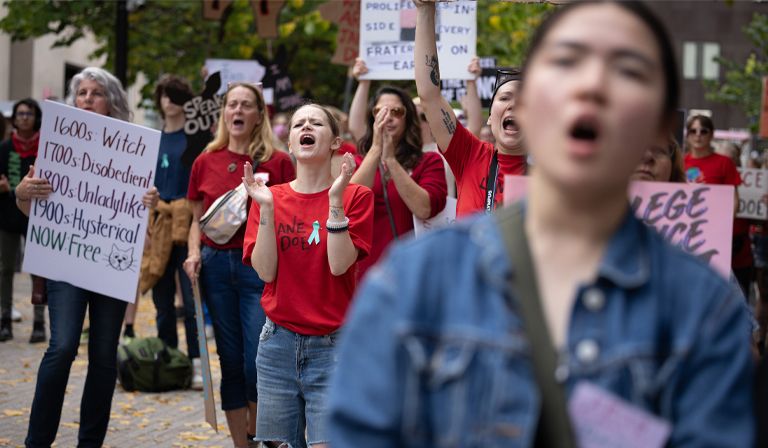
In the spring of 2026, after a US campus event, one young woman told me that her online world felt completely polarised by gender. Men’s posts were full of complaints about women being transactional in dating or about feminism having gone too far, while women were championing being a girl boss or calling for an American version of the feminist South Korean 4B movement, in which women renounce dating, relationships, childbirth or sex with men (all words that start with the letter ‘b’ in Korean). Are there any solutions, she asked?
She isn’t the only one asking. Parents, educators, mental health counsellors, violence-prevention experts and policymakers all want to know: what can be done about rising misogyny and its violent consequences?
We need all levers to address these rising threats with solutions focused on change and prevention at the system, individual and cultural level. Governments have the power to shape all three.
At the system level, we need effective legal and regulatory frameworks that hold tech companies accountable and protect ordinary people from harmful content, especially on social media platforms, in online games and in online pornography. Most global efforts have focused on keeping kids away from tech and social media entirely—through age-based social media bans and restrictions on addictive design features like autoplay and infinite scroll, or parent-led “screen-free childhood” movements.
While less time online is good for all of us, there is little evidence that banning is all that effective. Young people in our interviews overwhelmingly dismissed social media bans, pointing to how they can backfire, driving younger teens to fringe platforms or to simply evade the bans with VPNs (virtual private networks) that mask locations. Data from Australia, which implemented the world’s first social media ban for under-16s in late 2025, shows that after the first three months, social media use among children aged 10 to 15 fell by only 5 percentage points, from 86 per cent before the ban to 81 per cent three months after.
Policies at the system level should go beyond bans. In the UK, this includes continued enforcement of 2023’s Online Safety Act, ensuring heavy financial and criminal penalties for tech company violators. The regulator Ofcom’s current voluntary guidance on online harms against women and girls should become actual online regulation of misogynistic content. The government’s announcement in late October of the first-ever misogyny prevention fund—a £15m investment for rooting out misogynistic attitudes and supporting women and girls—is a welcome start. Policymakers can also advance national and regional strategies on men and boys—as Canada is planning to launch—to address challenges around men’s physical and mental health, along with the toxic content they are fed online. A new Lancet report argues that manosphere content leads to health harms and should be treated—much like tobacco and ultra-processed food—with public health interventions.
At the same time, efforts to mitigate the effect of online worlds won’t matter if we don’t find ways to help young people learn to establish their own limits for social media use and navigate what they see online, whatever age they are when they encounter it. As a generation that is “chronically online”, 24-year-old Kris explains, young people are aware of the way social media affects mental health. We “all know”, Kris told us, that “social media is rotting our brains”.
But, as they repeatedly told us, keeping content at bay isn’t sufficient because many kids will still manage to see it. The sort of content young people have told me they have accidentally seen—on school buses and in hallways, at lunch break and at birthday sleepover parties—haunts me. It includes videos of torture, beheadings, rapes and bestiality. Better content moderation will help, but there are always failures—like Meta’s February 2025 “technical error” that led users’ Instagram reels to be flooded with graphic violent content—an eventyoung people have repeatedly brought up with me in classroom conversations as an example of why bans and content moderation aren’t enough.
Children need help learning how to build their own agency and boundaries around screentime, along with structured spaces to process and talk to adults when they have seen something harmful. Young people describe how they developed these strategies themselves over time—taking social media holidays, locking up their phones, using tools that restrict usage or deleting specific platforms. But they wish their younger siblings and cousins didn’t have to do this on their own.
Young people also need help from adults to understand healthy relationships, consent and pleasure in the context of so much exposure to violent porn. Younger kids, the young people we interviewed insist, deserve access to support that they never got—including discussions about manipulative content. Kids should know when content is a performance designed to sell you something or to sell your time and attention to someone else.
The sort of content young people have told me they have accidentally seen—on school buses and in hallways—haunts me
One young man I interviewed for my podcast, Man Up, told me that the world would be very different “if more men had a relationship with another man like [my friendship with my best friend]”. He urged parents of young teens to promote healthy, vulnerable conversations, explaining that: “There are a lot of kids who want to talk about this stuff, but don’t have any places to do it, so they go to the internet.”
Individual change is possible. There are promising results from an 18-month pilot intervention spearheaded by the Christchurch Call Foundation in three countries (Canada, Jordan, and Kenya), aimed at countering misogyny, tech-facilitated gender-based violence and violent extremism. Peer-group intervention produced positive change among 18- to 35-year-olds. These included increases in knowledge about harmful gender norms and social media manipulation, in positive attitudes towards gender equality and in confidence to engage in productive dialogue about masculinity and gender norms.
We also have very strong evidence from a type of media and digital literacy called “prebunking”, which focuses on teaching people about the manipulative tactics of propaganda, conspiracy theories and online grifters to build resilience before they encounter harmful content. In videos as short as 60 seconds, my lab has found we can significantly improve people’s ability to recognise and reject harmful content, with effects lasting for at least a month after the intervention.
Governments should support policies that equip everyone with these kinds of evidence-based tools.
System- and individual-level changes are just superficial fixes if we don’t address the cultural beliefs that make misogyny so acceptable. We need to transform the kinds of dehumanisation and entitlement to women’s bodies that led 57 men in a Cornell University fraternity Snapchat group to see a message celebrating “free pu**y” from a woman incapacitated by drugs and alcohol and—instead of getting her help—respond by typing “shop still open?”.
The good news is that there is a burgeoning men’s wellness movement working to turn ideas about manhood towards caregiving and empathy, including through work engaging men as fathers and interventions with young people to embrace positive masculinities and build healthier relationships. But improving men’s wellness does not automatically translate into a reduction in misogyny or gender-based violence. Those outcomes also require cultural change that challenges patriarchal norms around control, dominance and gender role hierarchies.
Policymakers have the power to implement and scale cultural change programmes through education and public campaigns. They can work to transform pervasive online and offline cultures that package power over women as hallmarks of manhood, and that see violence against women as deserved punishment. Scotland is off to a good start. After calling violence against women and girls a “national emergency,” first minister John Swinney pledged to change “the culture of Scottish society”. This autumn, he vowed to introduce preventative misogyny education in schools and announced that Police Scotland is expanding an advertising campaign launched in 2021, “That Guy”, to urge men to be role models for younger generations as a means to counter toxic online messages about women.
London is also investing in programmes for men and boys, focused on role-modelling positive attitudes that promote respect and equality, as part of a £15.6m scheme “aimed at tackling violence and misogyny”.
But none of these solutions will get off the ground if leaders refuse to see the misogyny at the root of so much interpersonal and mass violence and democratic decline. Young people see very clearly that misogyny and gender-based violence are ignored, legitimised and enabled by some of our most prominent global leaders. In a discussion about the consequences of tech-enabled gender-based violence, 35-year-old Cyrus from Canada said, “It’s not just there’s no consequences, it’s a prerequisite for political approval.”
With everyday hatred of women gone mainstream, we need leaders to regularly and irrefutably condemn it and commit to addressing its effects on society. Policymakers need to stop treating online misogyny, gender-based harassment and violence against women as a private, local problem that is separate from national security and extremism. And we need public acknowledgement that domestic, intimate partner violence, mass violence and antidemocratic growth are in part fuelled by the violent retrenchment and reassertion of traditional patriarchy.
Cyrus’s view might seem overly cynical. After all, plenty of people are working hard to reverse course against the rising tide of misogyny and gender-based violence. But last year, after I briefed counterterrorism officials on the pipeline of misogyny to violent extremism, the first hand raised was by a senior European delegate who told the room: “We don’t have this problem,” in his country. “Besides, what are we supposed to do, dismantle all of patriarchy?” he asked.
If what we want is a safer world and thriving democracy, the answer should be an unequivocal yes.