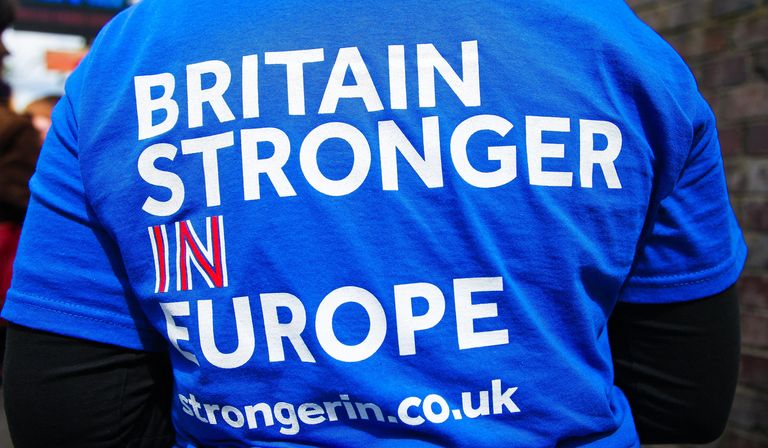
A popular prime minister able to peel off voters from left and right; American politics dominated by the figure of Donald Trump; French presidential elections in the coming year with a likely win for Marine Le Pen. Oh, and neverending political debate about whether the UK should be in the European Union.
It’s been a while, 2016. Welcome back.
That year, we were on the upslope to an era of populism. Liberal democracies were embroiled in debates about identity, press freedom, even the merits of Vladimir Putin’s Russia—all issues which incorrectly had been presumed settled. Since then, the last decade of our lives has been politically polarised, economically disappointing and peppered by unexpected crises, from the Covid pandemic to Ukraine to the Iran war.
Throughout the past decade of disarray, the tribunes of populism have repeatedly claimed that this political trend was an inevitable, welcome riposte to the scolds and elitists of post-Cold War liberalism. The vox populi had been oppressed and we were simply witnessing the return of truly popular democracy.
Yet increasingly we are learning that populism is not in fact that popular, particularly when in power. I am writing just after the US midterms, where Donald Trump lost both houses of Congress. It seems safe to say that Maga populism has not aided Republican electoral prospects.
In Hungary and in Serbia this year, authoritarian populists Viktor Orbán and Aleksandar Vučić have also suffered humiliating defeats. In Britain, Reform UK has found that, as the party has acquired more local power on councils, it has also gone down in the polls.
And that most mighty totem of populism, Brexit, is also now under question. Andy Burnham’s speech to Labour’s party conference in September was reported as bravely slaying the dragon of the pensions triple lock. Yet his planned pensions reforms are fairly piecemeal. The big—and strangely undercovered—news was his declaration that Brexit failed.

A month on, the old armies of Leave are struggling to, for want of a better word, reform. Even something about Nigel Farage’s enthusiasm for defending Brexit seems faintly off—like a newly divorced 50-something claiming to be excited about dating again. Kemi Badenoch would prefer to major on cuts to inheritance tax rather than bans on bendy bananas. The battle cry—something akin to “Rejoin sounds complicated and difficult, I wouldn’t do that if I were you” —is hardly Thermopylae.
Rejoin will indeed be complicated and difficult, but so was Brexit. And given the failure of Brexit to produce the economic boom or national pride its proponents prophesised, I suspect it will not be impossible to unscramble this particular egg. Already Burnham has indicated he would reopen once-unmentionable questions around free movement and payments to the EU. The upcoming UK-EU summit may trade lower tuition fees for European students for British access to the Made in Europe industrial programme. We are Breversing at pace.
A mirror-image return to the UK’s pre-Brexit era will not be simple or undistorted. Perhaps the EU will insist we join the Euro or Schengen, though I suspect not. It does feel unlikely the UK would get its cherished rebate back. But the noises coming out of European capitals are encouraging and the British public seems to have decisively shifted to majority support for Rejoin, even if the specifics remain tricky.
This would hardly be the first time a country has reversed a policy it initially adopted with the spirit of the convert. Three years ago, I wrote a blog post comparing Brexit to the Prohibition, the United States’s ban on alcohol in the early 20th century. There are some remarkable parallels if one simply subtracts a century.
Brexit had been bubbling around as an idea for a couple of decades but really took off in the mid-2010s, just as Prohibition did a century earlier. Like Brexit, it took a couple of years before Prohibition became law, being ratified by US states in 1919 and coming into force in January 1920. Just as Brexit was finally passed by parliament in 2019 and came into law in, you guessed it, January 2020.
By the mid-1920s, however, Prohibition had become unpopular. It took politicians a little longer to summon the courage to move to repeal rather than reform. But eventually, FDR ran on a campaign to end Prohibition in 1932, and it was gone in 1933. If history rhymes further, that would mean Burnham running a 2032 general election with a plan to end Brexit the following year. This promises a 2027 general election fought on rebuilding of ties with Europe in advance of re-entry.
So were the years from 2016 to 2026 just a dream, an ephemeral episode of Britain dallying with the kinds of populism that for over a century had seemed a bit, well, un-British? Do I detect a faint whiff of the continental?
Ironic, then, that it might be a renewed engagement with said continent that marks a return to a more grudging, diffident, awkward past: strident sloganeering replaced with core British values—grumbling and compromise. Hello again, 2016.