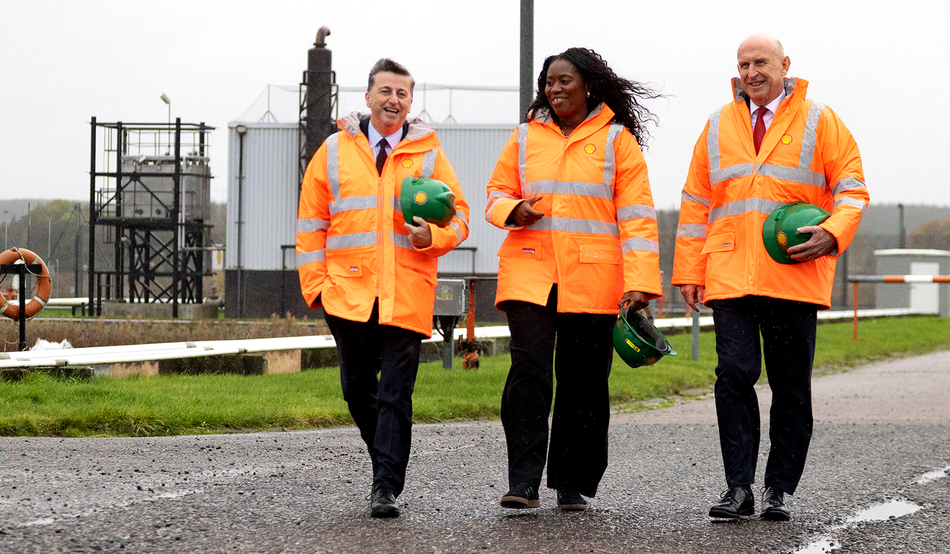
It was either a PR fail or an unintended admission of who pulls the strings. Politicians doing press interviews in hard hats and rolled-up sleeves is one thing. But when Miatta Fahnbulleh, the British energy secretary, appeared at Shell UK’s gas terminal in Peterhead to confirm the approval of the Jackdaw gas field, she was wearing an orange high-vis jacket emblazoned with the Shell corporate logo. The visuals, whether intentional or not, were very on-the-nose given the controversy that has surrounded Jackdaw ever since its discovery in 2005 and Greenpeace’s legal challenge in 2025.
This was just one of a volley of shots fired by the government in the desperate battle to lower energy bills in recent weeks. Andy Burnham told parliament that Jackdaw will “allow us to do more to help people with bills”. Yet Fahnbulleh contradicted him in subsequent interviews, saying “Jackdaw will not have an impact on affordability and bills”.
Jackdaw, and the even bigger Rosebank oil field, have nothing to do with domestic energy bills, and everything to do with geopolitical virtue signalling (US president Donald Trump praised Burnham for “getting it done”). Reopening the Jackdaw field could create just 27 new jobs. And rather than “make the UK a very rich country”, as an increasingly delirious Trump claimed, it merely slows the decline of almost totally depleted North Sea Oil reserves from 14 per cent a year, to 10 per cent, according to the Office for Budget Responsibility:
Fossil fuel industry lobbyists secured 506 meetings with newly elected Labour ministers in the government's first year in power, according to analysis by the advocacy group Fossil Free Parliament. BP, Shell and Equinor totalled a combined 100 meetings with ministers. Whether there’s a direct line from that to a minister announcing a landmark reopening of a gas field while wearing a Shell logo, I’ll let you decide.
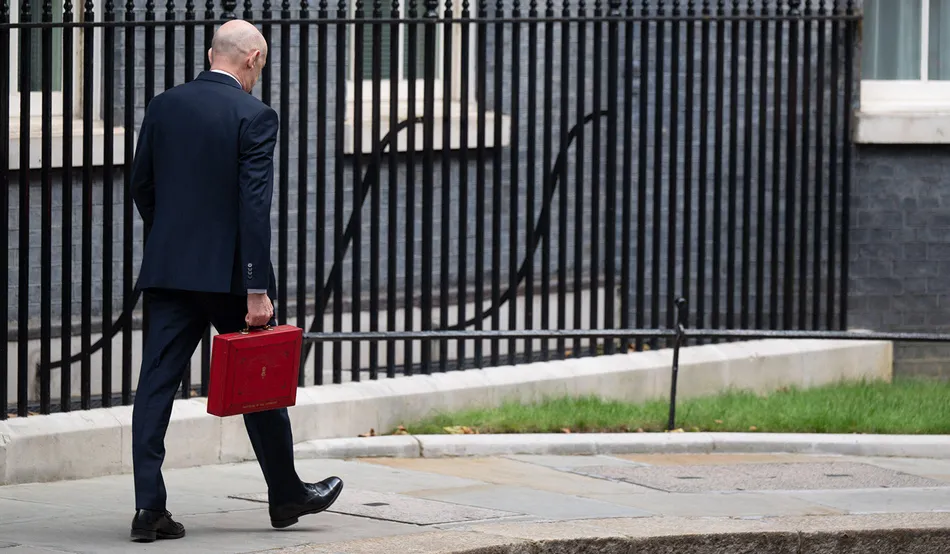
The Jackdaw shot across the bows, in the battle to lower energy bills, then, fell limply into the North Sea, leaving an oily residue in its wake. But what of the other shots fired? In his first budget last week, the chancellor, John Healey, took a scattergun approach. A one-off £100 payment to households in council tax bands A to D in England (nice, but another drop in the ocean, albeit at a cost of £2.6bn to the exchequer). Extending the VAT cut on electricity bills to July 2027 takes another £50 off (the cut was due to end in April, so this just gives people another three months). Moving green subsidy costs off gas bills and into general taxation (great, but when? And why not electricity at the same time?). Meanwhile the “Energy Debt Circuit Breaker” targeted debt relief which the government expects will save bill-payers around £30 by 2030 (big whoop).
Healey briefly put down the scattergun and picked up the shotgun in announcing that standing charges—the daily fixed cost you must pay to your supplier, irrespective of unit rates—will be scrapped from the gas bills of 23m households by 2027. MoneySavingExpert’s Martin Lewis, aka the “people’s chancellor” and long-term campaigner on this issue, was even given his own private meeting with the real chancellor ahead of the budget to inform him of this development. Afterwards, Lewis blogged, “About 60% of people will pay less due to this, 40% more. In reality, you will see the cost of the Standing Charge added to the unit rate instead—the price you pay for each kilowatt hour (kWh) of gas you use. This could add around 1p to each kWh of gas used.”
Another shot, then, that failed to hit its mark. The foe of Big Bills still stalks British households unscathed. The January 2027 energy price cap is still predicted to rise by 27 per cent—confirmation expected later this month, on 25 November—up from £1,723 currently to £2,192 (an increase of £465, making the £100 payments seem scant compensation).
How, then, do we reduce energy bills? UK energy bills are among the highest in Europe because the wholesale market uses a marginal cost-pricing model, meaning the price of the most expensive generator—which is almost always gas—sets the price for all electricity, even when cheap renewables generate power. Decoupling electricity from the gas price would see us finally realise the promise of cheap renewables (the government is currently, and seemingly forever, “seeking views” on this).
Next, we actually use that cheap, domestically generated renewable electricity instead of gas from increasingly volatile international markets (even if we did drill both Jackdaw and Rosebank, by the way, together they would only meet 2 per cent to 3 per cent of UK gas demand.). The Climate Change Committee (CCC) stated that the UK needs to transition away from gas boilers to meet net zero targets back in their February 2019 “UK housing: Fit for the future?” report, recommending that no new homes should be connected to the gas grid by 2025 at the latest. It’s now 2026, we’ve had two energy crises since, and new homes are still connected to the gas grid. Around 80 per cent of UK households have a gas boiler.
The necessary replacement, for both net zero and lower bills, is heat pumps, combined with urban district heat networks (as I wrote about in my January column). The CCC says that heat pump installations need to rise from around 60,000 in 2023 to nearly 450,000 by 2030 and 1.5m by 2035.
Here, one of Healey’s shots did hit its mark. But instead of taking down a foe, it felled an ally in friendly fire. He announced not an increase, but a £720m reduction in the boiler upgrade scheme, which gives people grants to switch from fossil fuel heating to low-carbon alternatives like heat pumps. “Low-interest” loans will now be preferred to grants. And spending on heat networks will be cut by £100m this financial year—a huge own goal for long-term bills reduction.
The Energy Saving Trust responded that reducing the boiler upgrade budget, together with losses of around £1bn in capital funding for the warm homes plan, “risks sending the wrong message” when only “increasing uptake of low-carbon heating technologies like heat pumps will increase the whole nation’s resilience to future price shocks.” Mike Childs of Friends of the Earth agreed that heat pumps should be rolled out at scale, arguing that this ought to be “funded by higher taxes on the super-rich gas and oil firms”. Meanwhile Ed Matthew of the climate change thinktank E3G called the chancellor’s cuts “profoundly short sighted”, saying they would “keep more households hooked on high-cost gas”.
Increasing defence spending by cutting the warm homes budget, while wearing a Shell logo, as energy bills continue to rise. It’s a little early for an “end-of-year” roundup, but that rather sums up 2026.