Here is a thought experiment: imagine the most awful of homicides, one which sickens you and society, and the killer is sentenced to a lengthy period of imprisonment, but the victim’s forgiving family begs for clemency and early release of the killer.
In those circumstances, should what the victim’s family wants be decisive? Or should the sentence set be a matter for the court? And should a decision about any early release be a matter for the prison authorities? Is criminal justice ultimately a private matter or a public matter?
And what happens if it is the other way around, with the victim’s family demanding a harsher punishment than that meted by the court? Or a longer period of custody than that deemed necessary by those in charge of the prisons?
A distinction can be made between private justice and public justice, at least in respect of criminal matters. Private justice is about the feud and the vendetta, revenge and retribution, and some say is a feature of early legal systems. Surviving written codes seem to set a tariff of adverse consequences for injuring a wife or a slave or a sheep.
Here an “eye for an eye” is both a description of what will happen and also perhaps a limiting principle: an eye, but no more than an eye. You can have your revenge and retribution, but no further. Things should only go so far, and not out of control. There is a form of equity, but there should also be self-restraint against escalation.
With public justice, however, matters are taken out of the hands of those who were wronged and put into the hands of disinterested officials. It will be a tribunal that decides on culpability and sanction. It will be third parties that execute the sentence of that tribunal, whether the punishment be capital, corporal, banishment, confiscation or incarceration.
The victim (if they survived) and their kin will still have a role. Justice will need to be seen to be done, at least by those affected by the crime. But the ultimate decision is that of what we now call “the state”. One common feature of large, organised societies is that it is the rulers that regulate what happens to criminals. This in turn helps ensure civil peace.
In the modern criminal justice system of England and Wales there is now substantial involvement by complainants and victims. Investigation and prosecution decisions can be reviewed and appealed. Judges will emphasise victim impact statements when sentencing. Special liaison officers will explain decisions to those affected by crimes.
But even with all this putting of the victim at “the heart of the criminal justice system” the key determinations are still made by others. Every decision, from investigation to prosecution to conviction to release, is made by someone not involved in what happened. Victims and their families have a voice, but the switches are still flicked by others.
And this is how it should be. The clamour by a merciful victim’s family should have no more sway than the clamour of a family who wants more punishment than the state can provide. This is the correct position not only in respect of individual sentencing decisions by a court, but also in respect of broader administrative decisions about managing the prison population.
Prisons and probation policy must be set in general terms by politicians with regard to overall resources. If there are not enough prison places then politicians need either to reduce the prescribed sentences, or build more prisons, or release early certain categories of prisoner.
And if politicians decide for early release, then all prisoners in that category should be treated similarly, with no regard to media notoriety or other factors. Otherwise there is a risk of private justice overwhelming public justice: making examples instead of due process.
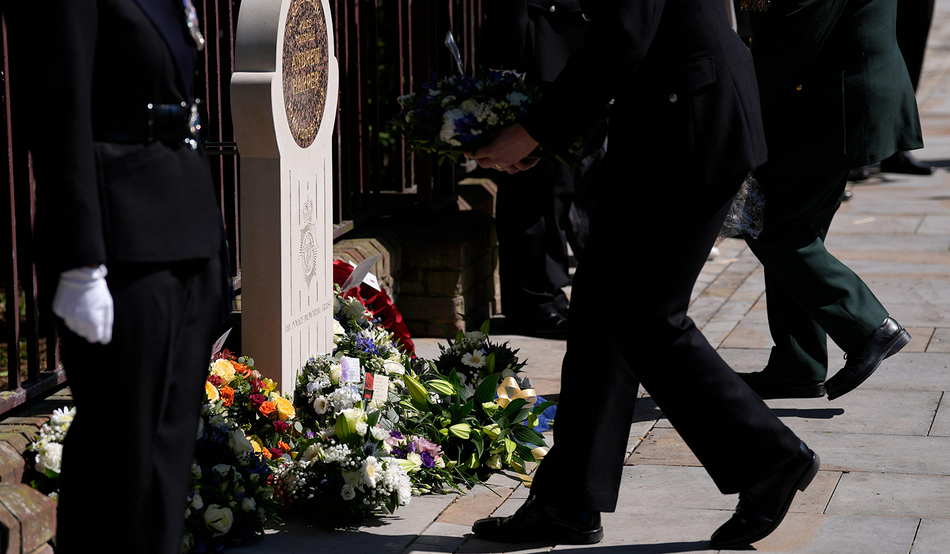
There will be individual cases, such as that of those convicted for the manslaughter of police officer Andrew Harper, where many will regard early release as an outrage. But the state should treat all those convicted of that offence the same, regardless of the media interest in a particular instance.
Either all those convicted for manslaughter should be considered for early release or they should not be. There should not be an approach of pick-and-choose, depending on what will avoid the front pages of newspapers.
This is, of course, a mess of the politicians’ own making, aided and abetted by a news media that will demand “tougher” sentences with no regard for how such punishments should be financed. Politicians and the news media effectively want harsh sentences on the cheap. They want the prisons to be full, but without building more prisons when they are full.
A criminal justice system is a public good. Yet if the state cannot show that there is a working justice system, then trust and credibility will be lost. The thing about public justice is that it requires public money.