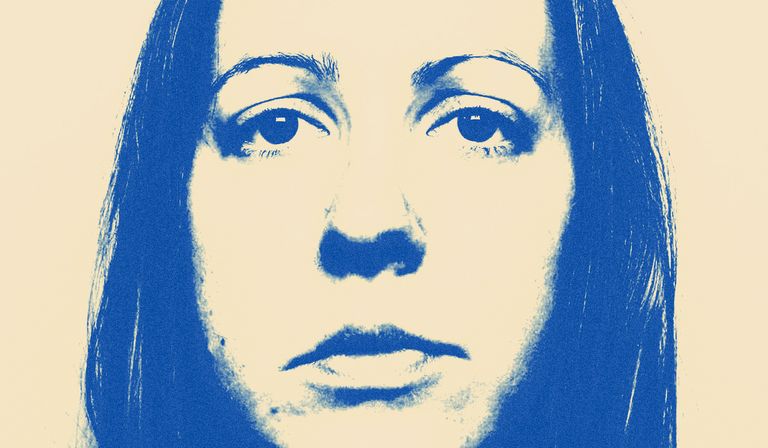
Let’s not talk about Lucy Letby, says my doctor friend. Not her trial and her 15 whole-life tariffs for murderous assaults on babies. Not in my kitchen. My psychiatrist friend bans the topic on her dog walk. Lady Justice Thirlwall, opening her 2024 inquiry into how Letby’s workplace failed to notice her crimes, dismissed questions about her guilt as “noise”.
My neonatologist friend, on the other hand, from the other side of the park, wants to talk of little else. But he’s from South Africa, and it does tend to be outsiders like us who make a noise about Letby. This includes social upstarts such as the healthcare worker-turned-barrister Mark McDonald. Also people with deplorable politics: Nadine Dorries, David Davis, Peter Hitchens. Also scapegoats and jailbirds: Amanda Knox, who has recently produced an excellent podcast about Letby, vindicated Libor trader Tom Hayes… and me.
We’d just disagree, says my doctor friend. We’d get upset. It’s true the fight has been long and desperate. On social media, the camps defending and attacking Letby have acquired battle tags—Letby Truther, Guilter, Pitchforker—and are worn, ragged and defensive as any army at the end of a siege. Some individuals have been lost for months to hand-to-hand combat, their utterances so specialised they have become encoded.
Others, though, have been spurred to extraordinary efforts of clarification. Phil Hammond of Private Eye, who began his reportage complacent about Letby’s guilt, has now written 38 lucid, thoughtful articles about her innocence. The Brazilian journalist Cleuci de Oliveira has investigated, informed, persuaded and never once lost her temper in three years of taking abuse as @LucyLetbyTrials on X. Christopher Morris began as a garrulous but indefatigable author of YouTube explainer videos about Letby and has now produced Reasonable Doubt: Examining the Case of Lucy Letby, a compendious, inelegant, shamelessly partisan, yet useful and admirable book.
Morris shows us the Letby case as a road trip through the largest, scariest mountains of unhappiness in Broken Britain, a tour of our national embarrassments. His relentless interviewing—70 individuals are included—produces mounds of detail, but also convinces us that the devil is in such details, and that the only way out, like going on a bear hunt, is through.
We start the tour with Our Holy NHS. The year is 2016, and we are in one of its most run-down hospitals, the Countess of Chester (COCH). The neonatal unit, as Morris meticulously details, has suffered a decade of austerity during which the typically cost-cutting, non-medical management had stripped the ward of many of its expensive, well-qualified nurses, with the 26-year-old Letby as one of the few left to look after the sickest babies, the one the others phoned to ask scarily basic questions about procedures.
That’s not all. The infrastructure of the unit has been allowed to deteriorate until sewage drips from the ceiling and comes up the pipes of the bathroom. Cots are crowded together, machines don’t work and nor do door-swipe mechanisms. Next door, the maternity unit is performing as badly as any of Britain’s scandalous maternity units, sending through babies already suffering injuries and infections. The whole is presided over by consultants apparently so nonchalant that they only take two ward rounds a week (two a day is best practice), so cackhanded that an inquest found that a baby died at the hospital after doctors misplaced his breathing tube, and seemingly so arrogant that they insist, despite everything, on the unit being registered at a high grade and accepting very unwell babies.
It was perhaps unsurprising that the number of baby deaths spiked. In 2016, the hospital management commissioned an inquiry from the Royal College of Paediatrics and Child Health which pointed out many of the factors above. In the meantime, the management had downgraded the unit so it took in less unwell babies—and the death rates moderated at once.
Around that time, though, some consultants had started to scapegoat Letby. When the unit was downgraded, one of them remembered that more than a year previously he had caught Letby standing idly by a cot containing a desaturating baby—though a contemporaneous note he wrote gives a different account. When this story was merged with other consultants’ concerns, Letby was put on desk duty and another inquiry into the deaths was commissioned. It found no evidence of deliberate harm.
Letby took out a grievance against the consultants. She won comprehensively
By now, we were deep in another plague of modern Britain: the toxic, absorbing, quasi-judicial, witch-hunt-friendly HR procedure. Spurred on by her furious parents, Letby took out a grievance against the consultants. She won comprehensively. The consultants were found to have bullied her with their allegations and were ordered to apologise. HR actions against the consultants were due to begin on the day they took their concerns to Cheshire Police.
One reason my doctor friend won’t let me talk about Letby is that she believes nurses, as a class, habitually make complaints against doctors and are favoured by management, which is also riddled with nurses. Could the two COCH consultants who went to the police have felt injured in a similar way? At the station, they seem to have been treated as impressive, convincing gentlemen. The police were unconvinced by the two investigations and the grievance. In time, in fact, they would arrest some of the management on suspicion of gross negligence manslaughter.
Letby was arrested at dawn and put in handcuffs. Her garden was dug up. Her garage was done over, her computer searched and every hospital case followed up. The police found a Post-it note on which, apparently on the instruction of her counsellor, Letby had written down her darkest fears—“I am evil I did this”—some handover notes which she said she had taken home by accident, some Facebook searches of the babies’ parents. At the hospital, there was the testimony of the consultants and Letby’s attendance on the sickest babies, but no direct evidence. No one in that very crowded unit had ever seen her do anything untoward.
Experts were contacted. Jane Hutton, a statistician, was dropped from the investigation after explaining that the figures about Letby were complex. Dewi Evans, a retired paediatrician who said he suspected deliberate harm within 10 minutes of reviewing the clinical notes, was retained. That is one of the things the Letby case reveals to us: our expert-witness system favours professionals paid to be adversarial over disinterested specialists.
Another is the power of the presiding judge in a trial—especially, in a high-profile case, over the press. In 2022, Letby began a 10-month trial in a glare of media interest. Judge James Goss granted anonymity to an unprecedented number of witnesses: not just to the babies and their families, but to nine clinical witnesses, including the consultant involved in the misplaced-intubation death examined at inquest. The workplace reports were never shown to the jury either, so the entire HR story and the possible motives it gave to Letby’s accusers were not paid sufficient attention. Letby herself, heavily medicated by now, was left to swing in the media’s wind.
And swing she did, with not only the tabloids sweating ghoulishly over her condemnation but also the BBC and the broadsheets. Only a month after the trial, after Peter Hitchens had raised the first doubt, a retrial on a single count was announced and UK public comment was shut down again in the interest of justice. All was as silent as my doctor friend’s kitchen. Not a peep of rudeness to be heard.
It took voices from abroad to interrupt the complacency: first an article by Rachel Aviv in the New Yorker shone a light into the darkness of the COCH neonatal ward; then, after Mark McDonald started acting for Letby, came an astonishing intervention from Shoo Lee of Canada, the expert whose paper on air embolism had initially been relied upon by Evans and the consultants. Lee thought Evans had misused his discoveries. Now he went on to reassess the full set of indictments with an international panel of neonatal experts, all, like McDonald, working pro bono. “We did not find any murders,” Lee said, presenting that review. Just a hospital that “would be shut down” were it in Canada.
Since that report, the Thirlwall Inquiry, despite its early interdictions, has published more and more documentation to support Lee’s thesis—and it has become ever clearer, even to the Sun newspaper, that the convictions are not safe.
Only new evidence can count. Letby’s team now believe they have that
But that does not bring us any nearer to an appeal. If our hospitals are Oliver Twist’s workhouse and our courts foggy as Bleak House, the Criminal Cases Review Commission (CCRC), set up in the wake of the Birmingham Six to assess miscarriages of justice, is the Circumlocution Office. The Court of Appeal was not interested in Lee’s report because that evidence could, in theory, have been presented at the original trial. Only new evidence can count. Letby’s team now believe they have that: new science over the insulin cases at the heart of the indictment, apparently overturning the tests at the time. Still, the CCRC will not say how many months or years Letby must wait.
Meanwhile, the once-confident Thirlwall Inquiry is delaying its report. Meanwhile, cases of babies who died a decade ago wait to be heard by the coroner, and all the parents of the children involved suffer torment. Meanwhile, in HMP Bronzefield, Letby waits out the best years of her life, a very well-behaved prisoner by all accounts, very tidy and constructive. Morris interviews several of her friends and colleagues and paints a picture of an ordinary, pleasant young woman, fond of cats and salsa dancing, dedicated to her job. She was marked out as a scapegoat only by her tendency to report all accidents and mistakes, even by doctors, and by being, like Amanda Knox, conspicuously pretty.
We are lucky Letby is alive. Lucia de Berk, a Dutch nurse indicted on very similar statistical mistakes to Letby, suffered a stroke while imprisoned and lived only 15 years after exoneration. Sally Clark, the solicitor falsely convicted of killing her babies, drank herself to death four years after being freed. Scapegoating, and I say this also for myself, is a deadly social force that has been much speeded up by digital information. We have to talk about it, and we have to talk about Lucy Letby. However hard it is to look at what we have done, however much noise it makes in the kitchen.
Reasonable Doubt: Examining the Case of Lucy Letby by Christopher Morris (Cinto Press) is available in hardback (£22) and paperback (£12.99) now