My latest detective novel, the police procedural whodunnit Phantom at the Feast (No Exit Press, £12.99) is the follow-up to The Fountain in the Forest (2018) and features the further adventures of Metropolitan police officer Detective Sergeant Rex King of Holborn Police Station. When the key witness in a trafficking investigation is brutally killed, DS King is sucked into an investigation that reaches back to the Miners’ Strike, to the Battle of Orgreave on 18th June 1984, and to the death during the strike of a union official at a fictional riot in Sheffield city centre.
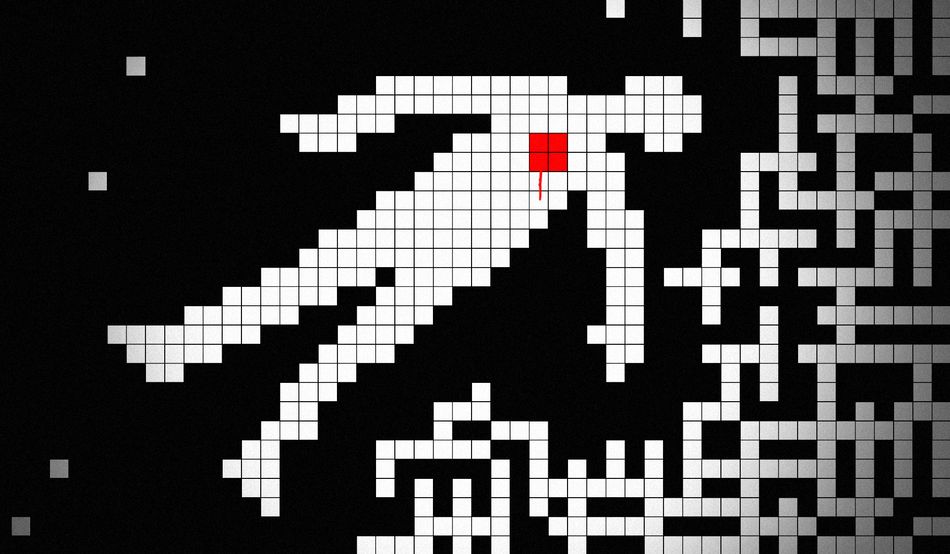
Crosswords feature in the plot. Rex King, whose reversible name (in crossword terms) is both clue and solution, has been doing the Guardian quick crossword all his life. At a crucial point in the story, those skills are needed by Rex to unpick a vital clue. But like The Fountain in the Forest, too, it’s a puzzle made from puzzles. Historical crosswords were my inspiration, my research source and, indeed, form the very fabric of the novel.
While certain acrostic puzzles and palindromic word squares date back to late antiquity, the modern crossword puzzle as we know it was born on 21st December 1913, when Liverpudlian journalist Arthur Wynne ran a new “Wordcross” puzzle in the New York World newspaper. The diamond-shaped puzzles became a staple whose popularity was not fully appreciated until an edition was printed sans crossword, prompting many letters of complaint.
Apparently, one fan of Wynne’s puzzles was the aunt of a young piano salesman named Richard Simon. In 1924, she asked if there was a book of crossword puzzles. There wasn’t, so Simon and his friend Max Schuster (editor of a motor industry trade journal) set up a company to publish one. That first ever book of crossword puzzles became an instant best seller for Simon & Schuster.
I lit upon crossword puzzles by accident. I’d wanted to write a novel exploring the legacy today of social transformations that immediately followed the Miners’ Strike, but hadn’t quite found a way in to the most salient period between the end of the strike in March 1985 and events near Stonehenge on 1st June 1985. On that day, a “playbook” of aggressive public-order policing, honed against pickets at the Orgreave coking plant near Sheffield, was seemingly applied with extreme violence against another “enemy within”: a convoy of hippies travelling to the Stonehenge Free Festival. The Battle of the Beanfield, as it’s known, remains one of the largest civilian mass arrests in British history.
Researching this period took me to the former British Library newspaper collection reading rooms in Colindale. I scrolled through old editions of the Guardian on microfiche, looking for Orgreave and Beanfield, but kept finding my attention snagged by the back pages. Those Steve Bell “If…” cartoons looked familiar, and I remembered that, living in Leeds in the mid-1980s, I’d do the quick crossword every day. Needing to take a break from the headache-inducing microfiche screen, I decided to redo one of the crosswords I’d first completed 30 years earlier. I’d thought it might be fun, but wasn’t prepared for the Proustian rush of memories and associations that was unleashed. These words I’d fretted over daily as a young man were—it turned out—part of the warp and weft of the time.
I thought immediately of Oulipo—the “Ouvroir de Littérature Potentielle”, or “Workshop of Potential Literature”, founded by François Le Lionnais and Raymond Queneau (the 50th anniversary of whose death is commemorated this year)—which proposed using “constraints”, arbitrary-seeming rules, in the production of literature. The Italian novelist and Oulipo member Italo Calvino famously used a deck of Tarot cards to write his novel The Castle of Crossed Destinies. He dealt the cards in a grid, then traced imagery up, down, across and diagonally; describing the Tarot as a visual crossword. Calvino’s fellow Oulipian Georges Perec had also written novels using “constraints”, most notably La Disparition, a “lipogram” written without the letter E. In the last years of his life, Perec was crossword setter for Le Point magazine.
Might these old ‘Guardian’ crosswords comprise what Oulipo would call a ‘lexical constraint’?
In the blinding flash of inspiration that novelists sometimes dream of, sitting there at Colindale, I wondered: might these old Guardian crosswords comprise what Oulipo would call a “lexical constraint”? What if I flipped Calvino’s idea and used these very crossword solutions as a kind of lexical Tarot, to divine a story about the social transformations of the mid-1980s and their legacy today? Might a chapter in a novel be written using all of the solutions from a particular crossword? Might successive chapters follow suit?
I discovered that those historical crossword solutions are more than mere marginalia. Like a time capsule—a cultural core sample from deep in the frozen continent of the past—the crosswords seem to capture the preoccupations and personalities of the time. They’re a rich seam of historical authenticity to be mined, producing a kind of ghostly haunting of the present. Following the constraint scrupulously can take a story in surprising directions. For example, when words like “erect” and “flagrante” (delicto) appear in a looming crossword source, it’s obvious that romance is in the air. But who’s going to fall in love with whom? Argh!
Crosswords also capture the subtle evolution of written language: small changes in usage, archaic hyphenations that have now disappeared (eg “tea-shop”), as well as more substantial cultural shifts. When Jacques Chirac appears in a Guardian crossword from 1985, it’s as a former mayor of Paris, not the future president of France.
At book events, audiences have been intrigued by my use of crosswords in these novels. That’s why we recently exhibited all 51 of the completed Guardian quick crosswords used to write Phantom at the Feast at Matt’s Gallery, London, as part of a display about the development of the novel. Regardless of any Oulipian inspiration, and far from being obscure, the crosswords are often the thing that people want to come and talk to me about. Almost everyone either is, knows or is related to a “crossword fiend”.
When the word “rebus” appeared as the solution to the clue “Pictorial pun (5)” in the Guardian quick crossword of 29th May 1985, Scottish postgraduate student Ian Rankin had only just begun, in March 1985, to write the first novel to feature Inspector John Rebus.
But reusing that crossword today as the source material for a chapter in Phantom at the Feast, it’s Rankin’s popular character that trumps the original definition, forcing Rex King’s colleague, the senior policeman DI Clifford Heath to discuss the reading matter his wife will take on holiday:
“She’ll take a pile of books. She’s into that Inspector Rebus. Got the lot she has. That’s her idea of fun – police work!”
They all laughed.
Interestingly, the most high-ranking real-life Metropolitan Police officer that I’ve spoken to since starting on this literary journey ten years ago is a crossword enthusiast himself, and goes by the nickname “Cryptic”.