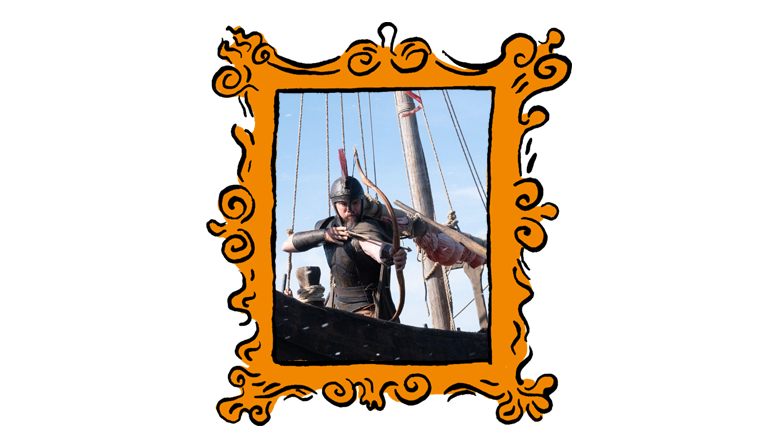
Christopher Nolan cannot be accused of playing it safe. While many of his peers might have looked for an easy, money-grabbing option after winning the Oscars for best picture and best director, as he did for 2023’s Oppenheimer—there are James Bond and Star Wars films to direct, after all—he decided, with suitably quixotic brio, to bring Homer’s epic poem The Odyssey to cinematic life, and in his preferred format of Imax to boot. As is customary with Nolan, he assembled an all-star cast, including his rep company of Matt Damon, Anne Hathaway and Robert Pattinson, as well as husband-and-wife actors Tom Holland and Zendaya, and set about attempting to film an epic that, judging by the meagre number of previous adaptations, is borderline unfilmable. How has he fared?
The actors, most notably Damon, have spoken of the experience of making The Odyssey with a mixture of awe and exhaustion, describing it as being closer to a 90-day military expedition than a straightforward shoot. The sheer level of fatigue and attrition is clearly up there on the screen, thanks to Nolan’s preference for practical effects over CGI wizardry. This gives everything an appealingly lived-in quality, from the far-flung settings—in a particular stroke of genius, the filmmakers travelled to the black sands of Iceland to create the Hades scene, in which the shades of murdered warriors chillingly emerge from the very earth—to the performances.
There has been a great deal of online scuttlebutt, largely led by Elon Musk and the winged monkeys of X, decrying the film for its historical infelicities and perceived pandering to woke sensibilities. This is ridiculous, and not borne out by the film, which is far from the revisionist exercise in tearing down Homer that some might have feared. Certainly, it’s far truer to the original text than the laughably prosaic Troy (2004) was to The Iliad. It is to Nolan’s credit that his screenplay, while occasionally mired in groanworthy moments of exposition and on-the-nose dialogue, manages to remain true to both the dark poetry of the original and the fine line that it treads between celebrating Odysseus’s heroism and castigating his arrogance and impudence.
Damon’s Odysseus is, as the narrative demands, a rugged leader of men, but he is also appealingly flawed, given to petulant outbursts and displays of poor temper. In one of the film’s most inspired sequences, he orders that he be bound to the mast in order to listen to the Sirens’ song—a privilege not extended to his men, who must put wax in their ears to blot out the temptation—and euphoria swiftly turns to agonising pain as Odysseus comes to terms with his hubris.
Nolan’s picture was made on a suitably epic budget of around $250 million, and every penny of it is up on screen. Classical scholars will no doubt have their say about the accuracy of the settings, weapons and costumes displayed—although, interestingly, the historian Tom Holland has already publicly praised the film, leading to an online spat with Musk—but this is as far away from the cheerily kitsch swords-and-sandals Hollywoodism of Ben-Hur (1959) and Quo Vadis (1951) as you might imagine. It lies somewhere between the more contemplative musings of Gladiator (2000) and Spartacus (1960) and, at its most sweeping, reminiscent of the world-building grandeur of Peter Jackson’s Lord of the Rings trilogy (2001-2003), creating its very own world of gods and monsters for audiences to delight in.
The Odyssey is a lengthy film, a few moments shy of three hours, and a violent one. There is a great deal of hack-and-slash; characters are brutally dispatched by fantastical giants without any compunction; and the scars written across Odysseus’s body recall the shot in Nolan’s The Dark Knight when Christian Bale’s Bruce Wayne shows Michael Caine’s butler Alfred the physical cost of his crimefighting as Alfred.
Make no mistake, this is an ur-Nolan film, packed full of allusions and thematic similarities to his earlier pictures—Odysseus, like Matthew McConaughey in Interstellar and Leonardo DiCaprio in Inception, is desperate to return home—although there is also a warm emotional undercurrent that is a particular relief for those of us who find the detachment of his often self-consciously intellectual work challenging. The final act, in particular—which has wisely been kept out of the oddly underwhelming trailers—features a deeply affecting scene of reconciliation and then a cathartic climax that remains true to the original narrative while finding its own inspired spin on Odysseus’s belated, bloody homecoming.
It might say more about contemporary cinema than it does about Nolan to observe that The Odyssey is the outstanding picture of 2026 so far. It has barely been challenged by the likes of Disclosure Day or even the highly enjoyable Project Hail Mary, but this reflects Hollywood’s unwillingness to take risks and produce this kind of daring, sweeping film more than once every few years. Ignore the manufactured controversy, find the biggest screen you can and immerse yourself in a truly visionary entertainment—but only after reading the articles, my own profile of Nolan included, in the Odyssey special in the summer double issue of Prospect.