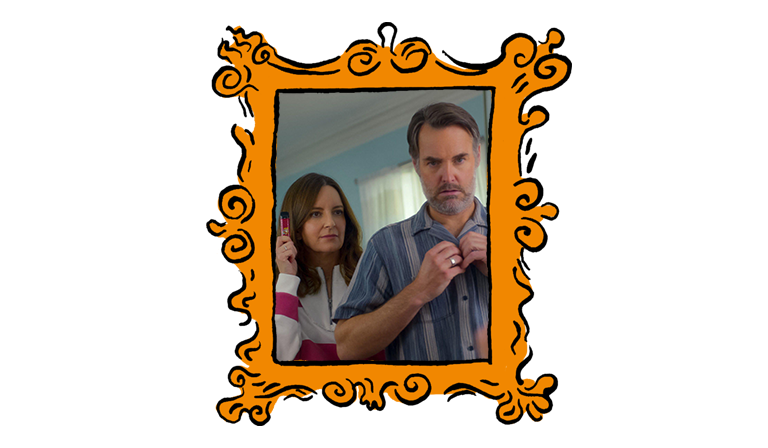
The Four Seasons, loosely based on the Alan Alda film of the same name, follows three couples in middle age, some of whom have known each other since college, across four holidays over the course of a single year. Those couples are Kate (Tina Fey, who also created the show) and Jack (Will Forte); Danny (Colman Domingo) and Claude (Marco Calvani); and Anne (Kerri Kenney-Silver) and Nick (Steve Carrell). Perhaps the most unrealistic element of the show is that a bunch of Americans would take four holidays in a year, but there we go: that is the premise. The first season came out last year, and the second at the end of May. It’s about how long marriages go through ebbs and flows, how friendships endure or falter in the middle years, and about how holidays bring difficult feelings to the surface.
Fey has a keen eye for the absurdities of how society views ageing. I often think of the “last fuckable day” sketch from Inside Amy Schumer, in which Fey, Patricia Arquette and Julia Louis-Dreyfus meet for a picnic to celebrate the last day before which the media decides you’re sexually attractive as a woman of a certain age. The Four Seasons gives her an opportunity to flex her comedic muscles on the subject of “being about 50”, but in a gentler way. It’s light entertainment, the kind of thing you could breeze through on weekday evenings without thinking too much of it. But it struck an unexpected chord with me.
Something that stands out is what the series doesn’t cover. Firstly, there is money. These characters live in comfortable houses and don’t seem under financial pressure that prevents them from taking those four annual breaks, one of which is to Italy. But I don’t think every show about well-off people needs to devote itself to handwringing about it, particularly if it’s a comedy. There are enough of those shows around to do the privilege-inspecting work.
Then there are their jobs. I can’t really remember what any of the characters even do for work. But it doesn’t especially matter: they aren’t at work while we’re watching them, they’re on holiday.
Most interesting of all, though, is that we don’t see much of their children. One of the couples, Danny and Claude, doesn’t have kids, although the second season sees them grappling with the question of whether or not they should. But the other two couples do. Kate and Jack have a daughter named Beth, and Nick and Anne have one called Lila. They hardly feature. They’re college-aged, and crop up in the odd flashback, never as the focus, and appear fleetingly in episodes. But the lives of their parents do not revolve around them, and the travails of their lives don’t really include them. At first, I found this a little odd. But then I found it refreshing.
This is a show about all the things that can happen to a person outside of being a parent. It makes room for how life might fan out in interesting and strange directions in middle age, how unusual configurations of people might constitute some kind of family.
Not that many of the characters aren’t stuck in their ways and afraid of change. But they do, by and large, break out of those comfort zones. In the first season, Anne is left by Nick, who swiftly finds new love with his dental hygienist, Ginny, who is in her thirties. Then Nick dies, and it’s revealed that Ginny is pregnant with his child. Eventually, after expurging the necessary rage, Anne finds meaning and forward momentum by letting Ginny move in with her for a time, and helping her raise the baby.
But even that is a short-lived development. By the end of the second season, Anne is living alone in Italy, having realised that being a proxy aunt for her dead husband’s child is fulfilling to some extent, but that she could be getting even more out of her middle age.
There is, for these characters, space for reinvention. Back when the first season aired in 2025, Jen Chaney wrote a piece about it for Vulture in which she said, “if you’re in your 30s or 20s or younger, The Four Seasons probably won’t be for you”. I don’t necessarily agree. I’m sure this show speaks loudly to Gen X, but I wonder if it has something particular to say to people in my generation, millennials in their 30s, specifically.
It can feel, at this age, like everyone is busy locking down into closed-off units: couples and their new children. This show is a refreshing reminder that, on the other side of the infinite demands of new parenthood, there is space and time for friendships to come back into focus and form the core of a life.